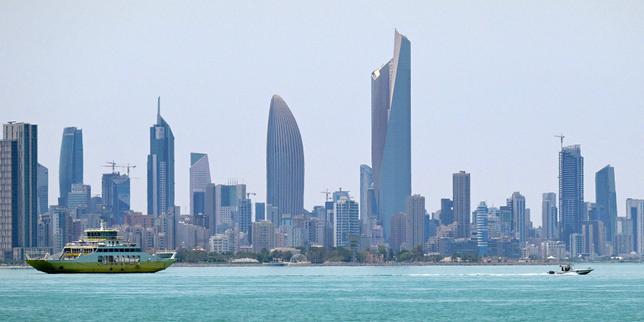
The skies over the Persian Gulf just lit up again, and it's time to toss out the old playbook. On Friday night, Iran launched seven ballistic missiles targeting Kuwait and Bahrain. This wasn't some minor skirmish or a routine show of force. It's a direct, aggressive escalation that proves the regional ceasefire is essentially dead.
Washington says its defenses held the line. According to U.S. Central Command (CENTCOM), American and allied air defense systems intercepted six of the Iranian ballistic missiles. The seventh didn't hit anything of note, reportedly failing to reach its intended target. Tehran claimed it slammed into the U.S. Fifth Fleet headquarters in Bahrain, but CENTCOM quickly called that propaganda, reporting zero U.S. casualties or major structural damage.
But looking only at the intercept stats misses the real point. The fact that these missiles were fired at all tells you everything you need to know about where this conflict is heading. Iran is no longer hiding behind its usual regional proxies. It's pulling the trigger directly from its own soil, targeting sovereign Gulf states that house U.S. military personnel.
The Trigger Behind the Salvo
This didn't happen in a vacuum. The missile barrage was a direct response to a heavy American kinetic action earlier in the day. Hours before the ballistic missiles flew, U.S. forces shot down four Iranian one-way attack drones over the Strait of Hormuz. Washington claimed these drones posed an immediate threat to civilian maritime traffic in one of the world's most vital oil chokepoints.
The U.S. military didn't just play defense. They launched immediate retaliatory strikes against Iranian coastal surveillance radar sites in Goruk and on Qeshm Island. Qeshm Island has become a frequent flashpoint because it sits right in the throat of the Strait of Hormuz, making it a prime spot for Iran to track and target international shipping.
Iran's Islamic Revolutionary Guard Corps (IRGC) didn't wait around to negotiate. They viewed the strikes on their radar sites as a major provocation and unleashed the seven ballistic missiles toward Kuwait and Bahrain. The logic coming out of Tehran is simple: if you host U.S. troops or let American jets use your bases to strike Iranian assets, your infrastructure is fair game.
Why Kuwait and Bahrain Are in the Crosshairs
You might wonder why Kuwait and Bahrain are taking the brunt of this instead of direct U.S. assets out at sea. It's all about geography and leverage. Bahrain hosts the U.S. Navy's Fifth Fleet, making it the central hub for American maritime operations across the Middle East. Kuwait houses thousands of U.S. troops at Camp Arifjan and Ali Al Salem Air Base.
This isn't even the first time Kuwait has been hit recently. Just days ago, a separate drone and missile strike breached local air defenses, causing extensive damage to Kuwait International Airport, killing one person, and sending over 60 people to the emergency room.
The Gulf Cooperation Council (GCC) states are realizing that their security is completely intertwined. An attack on a terminal in Kuwait City or a naval base in Manama is an attack on the entire economic stability of the region. Saudi Arabia, the UAE, and Qatar issued quick condemnations, but statement diplomacy isn't stopping the hardware flying through the night sky.
The Ceasefire Illusion Is Over
For months, diplomats have been trying to stretch the April ceasefire agreement, hoping it would hold the region together. It didn't work. The biggest structural flaw was that nobody could agree on the parameters. Tehran argues that Western actions and regional shifts invalidate the truce, while Washington insists its actions are purely defensive.
What we're seeing right now is a dangerous new normal. Iran used to rely heavily on groups in Yemen, Iraq, or Lebanon to do its dirty work when it wanted to pressure the West. Now, the IRGC is launching high-end ballistic missiles directly. They're trying to force Kuwait and Bahrain to rethink their defense pacts with the United States by showing them that the American umbrella can't stop every piece of falling shrapnel.
For global oil markets and maritime shipping companies, this means the threat level just went through the roof. If commercial flights are getting disrupted at major civilian airports and coastal radars are being blown up on both sides of the Gulf, insurance premiums for transit are going to skyrocket.
Navigating this next phase requires looking past the daily CENTCOM press releases. Gulf nations are going to have to decide whether to double down on American air defense integration or quietly open backchannels to Tehran to de-escalate the situation on their own terms. If Friday's seven-missile salvo proves anything, it's that sitting on the fence is no longer an option.
.jpg)