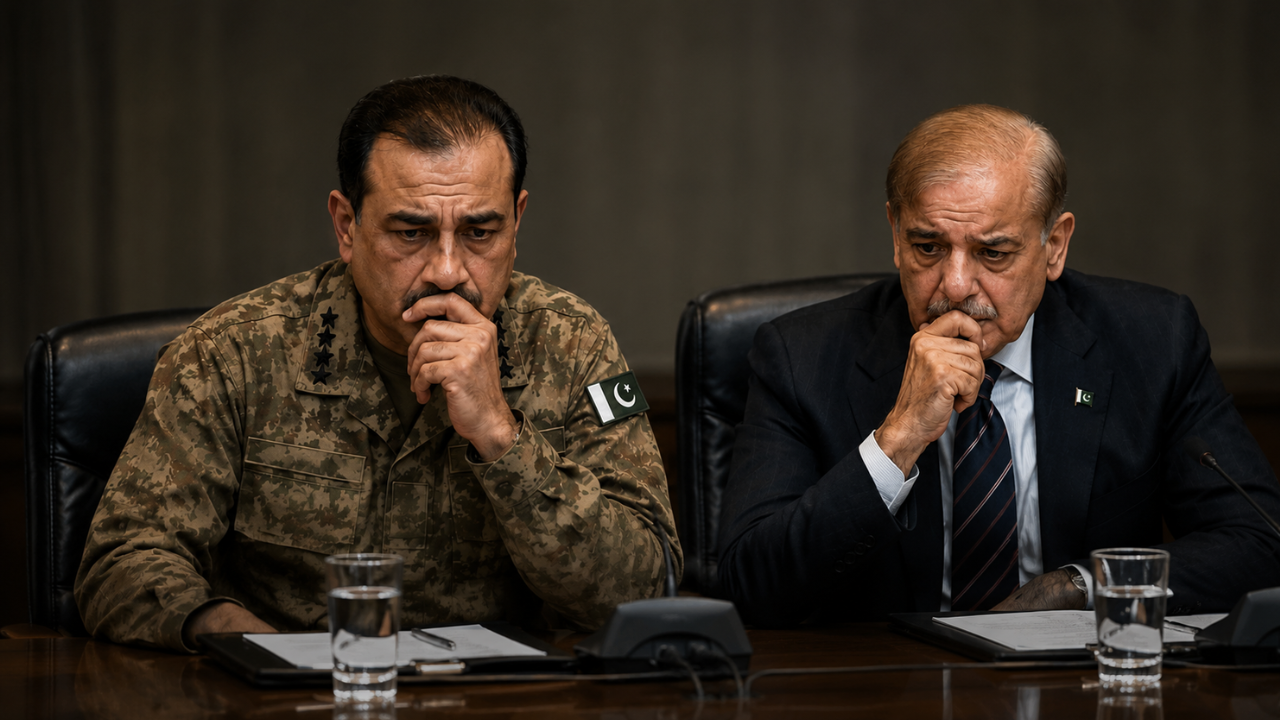
Pakistan’s geopolitical strategy has hit a wall of diminishing returns. For decades, the administrative and military apparatus in Islamabad has relied on a three-stage cycle of crisis management—deny the accusation, deflect the blame toward external actors, and eventually face the fallout when the evidence becomes impossible to ignore. This repetitive cycle, often referred to as the Islamabad Playbook, is no longer just a diplomatic annoyance for the rest of the world. It is an economic suicide pact.
The core of the issue lies in a fundamental disconnect between internal survival tactics and external credibility. When a nation repeatedly follows a pattern of obfuscation, it erodes the "trust premium" that international investors and lenders require. This isn't about moral posturing; it is about the cold math of sovereign risk. Every time a major international incident or financial scandal triggers the "deny and deflect" mechanism, the cost of borrowing for Pakistan rises, and the willingness of foreign partners to engage in long-term infrastructure projects shrinks.
The Mechanics of Deny and Deflect
The pattern begins with an immediate, blanket rejection of any wrongdoing or institutional failure. Whether the subject is a breach of international security protocols, a financial discrepancy involving IMF mandates, or the harboring of non-state actors, the first response is a scripted dismissal. This is rarely a nuanced defense. Instead, it is a blunt instrument designed to buy time for internal consolidation.
Once the initial denial is out in the open, the deflection phase kicks in. This usually involves pointing the finger at a traditional regional rival or citing a "foreign conspiracy" to destabilize the state. By framing the crisis as an attack on national sovereignty, the leadership manages to rally domestic sentiment. This maneuver effectively shifts the public conversation from the facts of the case to the perceived motives of the accuser.
The problem is that this strategy treats the global community as a domestic audience. It assumes that if you repeat a narrative loudly enough at home, the international intelligence and financial communities will somehow lose track of the hard data. They don't. Satellite imagery, bank records, and intercepted communications do not care about nationalist rhetoric.
The Economic Consequences of Shifting Narratives
Credibility is a currency. Currently, Pakistan is bankrupt in that regard. When the "get caught" phase of the cycle inevitably arrives, the damage is multi-layered.
Take, for example, the ongoing negotiations with the International Monetary Fund (IMF). The IMF functions on transparency. When a government provides data that is later found to be massaged or incomplete, the subsequent "correction" isn't just a technical adjustment. It results in harsher conditionalities. The lender of last resort adds layers of oversight because the word of the borrower is no longer sufficient. This translates to higher taxes on the local population and more aggressive cuts to public services—measures that further destabilize the social fabric.
The Investor Exit
Foreign Direct Investment (FDI) avoids ambiguity. An investor looking at a twenty-year horizon needs to know that the local government will stand by its agreements and acknowledge its shortcomings. When a state is caught in a loop of denial, it signals to the world that the rule of law is secondary to the preservation of institutional image.
- Risk Premiums: Insurance and interest rates for projects in the region skyrocket to account for "unforeseen" political volatility.
- Capital Flight: Local elites, sensing the impending "get caught" phase, move their wealth into offshore accounts or real estate in Dubai and London.
- Brain Drain: The most capable professionals exit the country, tired of navigating an environment where facts are flexible and merit is overshadowed by loyalty to the official narrative.
A Broken Feedback Loop
Internal reform is impossible without an honest assessment of failure. By defaulting to denial, the Pakistani state prevents itself from learning. If every mistake is the fault of an external enemy, there is no reason to change the internal processes that led to the mistake in the first place.
This creates a stagnant bureaucracy. Middle-level officials realize that truth is a liability. If they report a genuine problem up the chain of command, they risk being seen as a weak link or, worse, a traitor to the official "deflect" strategy. Consequently, problems that could have been solved with a minor course correction are allowed to fester until they become national catastrophes.
Case Study of Institutional Denial
Consider the handling of international grey-listing regarding terror financing and money laundering. For years, the official stance was that the nation had done everything necessary and that any remaining concerns were purely political. It was only when the threat of total financial isolation became imminent that the necessary legislative changes were pushed through.
This reactive approach is the hallmark of the playbook. It is a "just-in-time" governance model that only addresses reality when the gun is at the collective head of the nation. It is exhausting for the citizens and infuriating for the international community.
The Regional Impact of Predictable Unpredictability
Stability in South Asia is a delicate balance. When a major player in the region uses deflection as a primary tool of statecraft, it forces neighbors to adopt a more aggressive posture. Communication channels break down because no one believes what is being said on the other end of the line.
This leads to a "verification gap." Instead of diplomatic dialogue, neighbors and global powers resort to unilateral actions—sanctions, surgical strikes, or economic boycotts—because they have concluded that talking to Islamabad is a waste of time. They expect the denial. They are waiting for the deflection. They are simply biding their time until the "get caught" moment provides the leverage they need.
The Role of Independent Media
In a healthy democracy, the media acts as a circuit breaker for this cycle. Journalists should be the ones pointing out the holes in the "deny and deflect" strategy before the international community has to. However, the pressure on the Pakistani press is immense. When the state narrative is framed as a matter of national survival, dissent is treated as subversion.
This leaves the public in a vacuum. They are fed a diet of triumphant denials, only to be hit with the sudden, crushing reality of a diplomatic or economic setback. This creates a cynical populace that trusts nothing—not the state, not the media, and not the international community. A society that lacks a shared set of facts cannot move forward.
Breaking the Cycle Requires More Than Rhetoric
Reversing this trend is not a matter of better PR. It requires a fundamental shift in how the state views its relationship with the truth.
- Institutional Accountability: There must be consequences for officials who provide false information to the public or international bodies.
- Transparent Data: Economic and security metrics should be handled by independent agencies that are insulated from political or military interference.
- Strategic Honesty: Recognizing a failure early is a sign of strength, not weakness. It allows for a controlled response rather than a desperate scramble.
The "deny, deflect, get caught" pattern is a relic of a pre-digital age where information could be contained. In a world of open-source intelligence and real-time financial tracking, there are no secrets. Every attempt to hide a mistake only serves to magnify the eventual fallout.
The Islamabad Playbook is failing because the world has stopped buying the script. The cost of maintaining the illusion is now higher than the cost of fixing the reality. Until the leadership realizes that their greatest enemy is not across the border, but their own refusal to face the mirror, the cycle will continue to drain the nation's potential.
Stop looking for the conspiracy and start looking at the ledger.