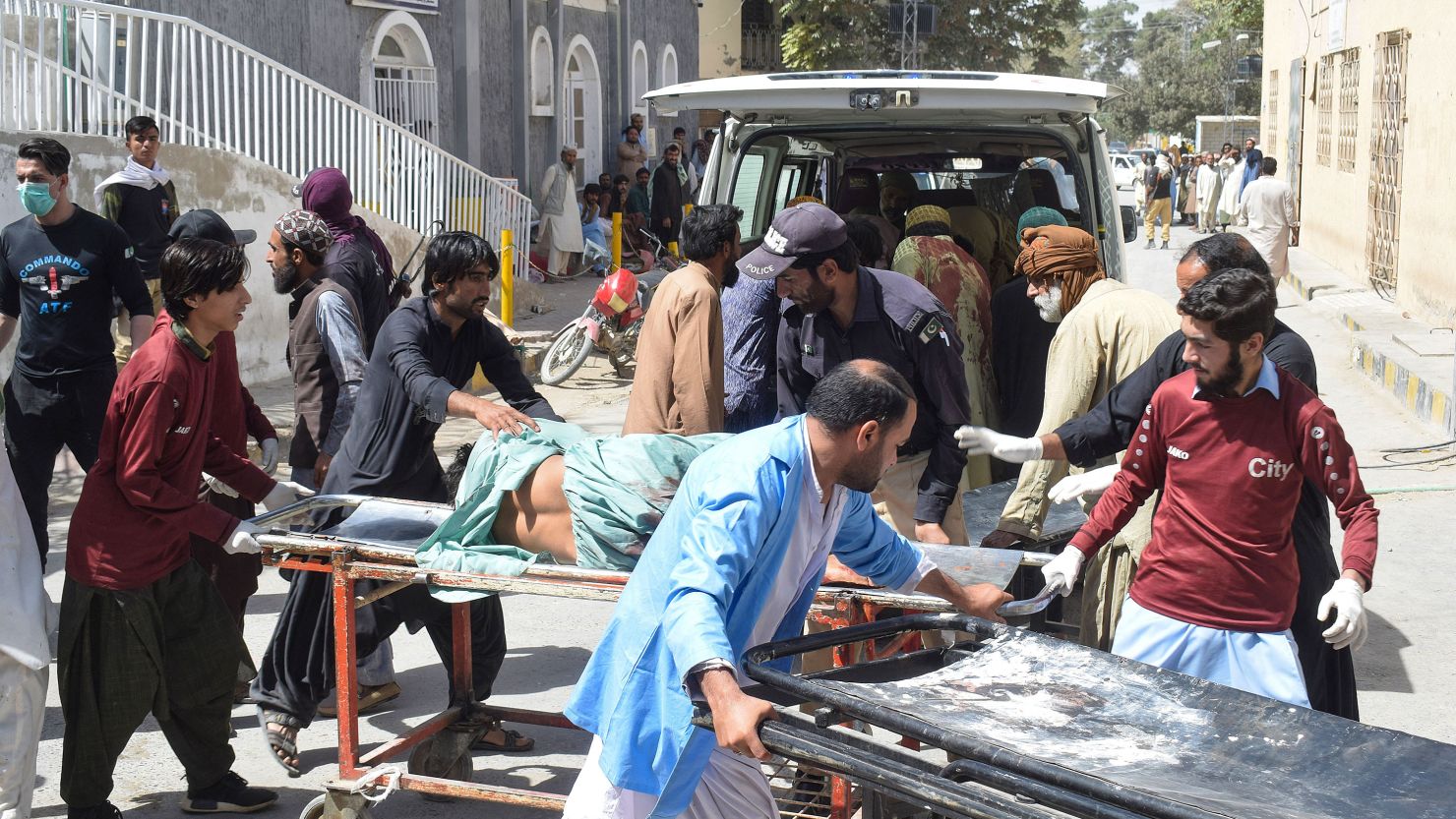
Two men are dead in front of a Gurdwara in Italy. The headlines are already following the script. They want you to look at this through the lens of "immigrant violence" or "religious friction." They want to paint a picture of a community in crisis, isolated from the rolling hills of the Italian countryside.
They are wrong. They are missing the structural reality of how labor and social safety nets actually function in the 2020s. Read more on a related subject: this related article.
When a shooting happens outside a religious center, the lazy consensus is to blame "radicalization" or "spillover politics" from the subcontinent. This isn't journalism; it’s a failure of imagination. I’ve spent years tracking the intersection of diaspora economics and localized power structures. What happened in Italy isn't just a tragedy—it is a brutal symptom of a parallel state that European governments are too terrified to acknowledge.
The Sikh Community Isn’t a Minority It Is the Backbone
Stop calling these victims "outsiders." If you’ve eaten a piece of Grana Padano or spread Gorgonzola on your bread today, you’ve likely consumed the labor of the Sikh community in the Po Valley. They aren’t just living in Italy; they are keeping the Italian dairy industry from a total collapse. Further reporting by Associated Press explores related perspectives on the subject.
Mainstream reporting treats the Gurdwara as a mere place of worship. That is a fundamental misunderstanding of the institution. In the absence of a functional Italian integration system, the Gurdwara serves as the bank, the employment agency, the courtroom, and the cafeteria. When the state abdicates its responsibility to regulate labor and protect workers, the "temple" becomes the de facto government.
Violence in these spaces isn’t "religious." It is a struggle for control over the only infrastructure that matters.
The Myth of the "Isolated Incident"
Law enforcement loves the phrase "isolated incident." It’s a sedative. It suggests that if we just lock up the shooters, the problem dissolves.
Imagine a scenario where the Italian labor market is so rigid and bureaucratic that thousands of essential workers are forced into a "grey zone." In this zone, disputes aren't settled in a courtroom in Rome. They are settled on the street. When you have a shadow economy, you eventually get shadow justice.
The mainstream media focuses on the who and the where. They ignore the why.
- The Caporalato System: Illegal gangmastering in Italian agriculture is a multi-billion dollar enterprise.
- The Enforcement Gap: Local police often lack the linguistic or cultural fluency to intervene before tensions boil over.
- The Credit Crunch: When traditional banks won't lend to migrant workers, informal lending circles take over. Where there is unregulated debt, there is eventually violence.
By focusing on the "tragedy" of the shooting, we ignore the economic conditions that made the violence inevitable.
Why We Misread Diaspora Friction
The "lazy consensus" assumes that the Sikh diaspora is a monolith. It isn't. There are deep, simmering class tensions between the established landowners who arrived in the 90s and the new wave of precarious workers.
The media wants to make this about "foreign politics." I’ve seen this play out in Canada, the UK, and now Italy. It’s easier to blame distant political movements than it is to admit that the European labor model is built on a foundation of exploited, invisible workers who have been left to police themselves.
The shooting outside that Gurdwara wasn't an attack on a religion. It was a breakdown in the informal governance that keeps the Italian economy running. If you want to stop the killings, you don't need more police around the temple; you need to dismantle the exploitative labor loops that force these communities to operate in the dark.
People Also Ask: The Wrong Questions
Is it safe for tourists near Gurdwaras in Italy?
This is a peak "privilege" question. The danger isn't to the tourist; it's to the worker trapped in a system with no legal recourse. The Gurdwara is one of the safest, most hospitable places in Italy for anyone seeking a meal. The violence is internal, professional, and targeted—a direct result of a lack of state-level oversight in the labor markets.
Is this related to Khalistan or Indian politics?
The media loves this narrative because it’s "sexy" and involves international intrigue. The reality is usually much more boring and much more grim: it’s about territory, labor dominance, and debt. Stop looking for a grand political conspiracy when there is a clear economic one right in front of your face.
The Price of Invisible Labor
Italy’s "Made in Italy" brand is worth billions. That brand relies on the perception of artisanal, traditional Italian farming. If the world realized that the "traditional" farmer is actually a Punjabi man working eighteen-hour shifts for sub-minimum wage, the brand loses its luster.
The state keeps these communities in a legal limbo because it’s profitable. But limbo is a violent place. When you deny people a seat at the table of the formal economy, they will build their own table—and they will defend it.
The real scandal isn't that a shooting happened. The scandal is that it took a double homicide for anyone to even notice the Sikh community existed in the heart of Lombardy.
We are watching the birth of a new European socio-political reality. One where the state is a ghost, and the Gurdwara—or the Mosque, or the community center—is the only thing standing between order and chaos. When those institutions fail or turn on themselves, the blood on the pavement is the price of that transition.
Stop looking for "motives" in the gunmen. Look for the motives in the regulators who let the shadow economy thrive.
The Italian government doesn't want to solve this because solving it means paying more for cheese. It means acknowledging that the "Italian way of life" is subsidized by the very people they refuse to protect.
The bullets are just the interest payment on a decades-old debt of social neglect.
Stop reading the headlines about "violence outside a temple." Start reading the data on agricultural labor exploitation. That is where the bodies are actually buried.
Get real or get out of the way.