You don't need to know his face to know his work. If you've ever giggled at a sarcastic comeback on Friends, roared at Jack McFarland crashing through a door on Will & Grace, or felt a lump in your throat watching the barflies at Cheers, you were watching the handiwork of James Burrows.
The legendary director died at age 85. Following his passing, a wave of grief and gratitude flooded social media from the actors who became household names under his watch. The public tributes from the casts of Friends and Will & Grace weren't just standard Hollywood PR fluff. They read like devastated kids losing a patriarch.
That is because "Jimmy" Burrows wasn't just a guy shouting "action" from behind a monitor. He was the architectural mastermind of modern American laughter.
The Director Who Made Sitcom Actors Feel Safe
When news of Burrows' death broke, Debra Messing posted a raw, emotional note on Instagram. She called him a "revolutionary in television" and, more tellingly, "our TV dad". Messing noted that Burrows did something incredibly rare in the comedy world: he genuinely trusted his actors. He let them play, fail miserably during rehearsals, and hunt for the physical comedy beats that made Will & Grace an absolute juggernaut.
Her co-star Eric McCormack echoed that sentiment, calling Burrows an "800 lb gorilla of television comedy" who left a permanent footprint on the industry. Burrows famously directed every single episode of Will & Grace across its original run and its revival. Think about that level of stamina and creative singular vision. It is practically unheard of in modern television.
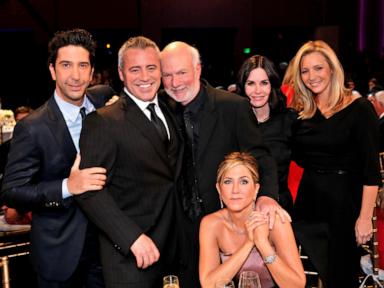
Over on the Friends side of the lot, the tributes were just as deeply personal. Matt LeBlanc made a rare return to social media to call Burrows a true icon. David Schwimmer wrote an essay-length tribute explaining why Burrows mattered so much to the six young actors who were suddenly thrust into global superstardom in 1994.
"His warmth, humility and generosity made us feel safe, like family," Schwimmer wrote. "He looked out for us, on camera and off."
Schwimmer hit on the exact reason why Burrows was a genius. He created a sandbox where actors could take massive creative risks without the fear of looking stupid. If you don't feel safe, you can't be funny. Burrows knew that instinctively.
Blending the Script with Real Chemistry
The average television viewer rarely thinks about the director of a multi-camera sitcom. We tend to think the actors make up the jokes or the writers do all the heavy lifting. But the sitcom is a theatrical medium. It's taped in front of a live studio audience. It requires a precise understanding of pacing, spatial awareness, and physical blocking.
In his 2022 memoir, Directed by James Burrows, he explained his philosophy simply: he always chased the sweet spot where a great script met great performance and genuine performer chemistry. He didn't just stage scenes; he orchestrated them like a musical conductor.
Take the pilot episode of Friends, which Burrows directed. He was the one who insisted that the cast hang out together off-set to build a genuine bond. He even took them on a trip to Las Vegas before the show aired, telling them to enjoy their last moments of anonymity. He saw the magic in their chemistry before the rest of the world caught on.
He did the same for Taxi, Cheers, and Frasier. He had an uncanny eye for casting and an even sharper ear for the rhythm of a joke. If a line wasn't working during Tuesday rehearsals, he didn't panic. He would huddle with the writers, tweak a single word, move an actor three inches to the left, and suddenly the joke would bring the house down.
The Legacy of More Than a Thousand Episodes
It's easy to throw around the word "legend," but Burrows' stats back it up. He directed more than 1,000 episodes of television. He won 11 Emmy Awards. He co-created Cheers, meaning he helped give us Sam and Diane, one of the greatest "will-they-won't-they" dynamics in fiction.
He wasn't a dictator on set. He was famous for wanting to wrap up rehearsals early so he could make his golf tee time. He treated his crew with respect, famously learning every single stagehand's and production assistant's name. In an industry notorious for chewing people up and spitting them out, Burrows ran a set based on kindness and mutual respect.
If you want to honor his legacy, stop scrolling past old sitcom reruns. Turn on an episode of Cheers, watch the physical comedy of Will & Grace, or put on the Friends pilot. Pay attention to how the characters move, how they use the space, and how the pauses between the lines land just as heavily as the jokes. That's the invisible hand of Jimmy Burrows, the man who quietly spent fifty years teaching us how to laugh together.