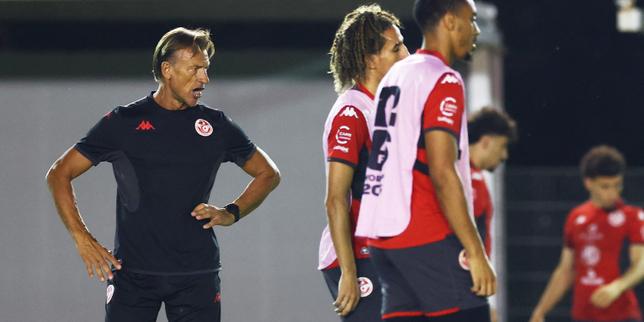
You can't fake the sort of brutal, swollen black eye that Jan Paul van Hecke has been rocking at the 2026 World Cup. It is huge, dark purple, and looks like it belongs in an elite boxing ring rather than on a soccer pitch. When the Netherlands took the field for their intense group stage battle against Sweden, fans weren't talking about tactical formations or passing percentages. Everyone was staring at the right side of Van Hecke’s face.
The image of the newly signed £52 million Tottenham Hotspur defender playing through diminished vision is exactly what tournament soccer is about. It's gritty, painful, and messy. While competitor blogs want to simply show you a picture and call it a battle scar, the story behind this injury shows what it takes to survive elite international soccer. Meanwhile, you can read related stories here: The Planet That Stops Spinning for Ninety Minutes.
The Aerial Clash That Blinded a Defender
The damage happened during the Netherlands' opening Group F match against Japan in Dallas. It was a frantic 2-2 draw, but the defining moment for the Dutch defense came during a brutal aerial challenge.
Japan's forward Daizen Maeda went up hard, hunting for a loose ball. He didn't just win the space; his boot caught Van Hecke directly in the face with full force. The impact was sickening. Van Hecke managed to win the initial header, but the trailing boot of Maeda left the 26-year-old center-back with massive, instantaneous swelling. To explore the complete picture, check out the recent analysis by FOX Sports.
Most players would look at the bench. Van Hecke didn't. He stayed on the pitch for the full 90 minutes.
During the second half, the swelling got significantly worse. Blood pooled under the skin, creating a massive hematoma that began to close his right eye entirely. After the final whistle, Van Hecke admitted to the Dutch medical staff that his vision was severely compromised. When you're trying to track elite forwards at a World Cup with only one fully functioning eye, you're playing on pure instinct.
Turning Up to Your New Club Looking Like a Warrior
If the timing on the pitch was dramatic, the timing off the pitch was wild. Just days after taking that boot to the face, Van Hecke finalized his massive £52 million transfer from Brighton to Tottenham Hotspur.
Spurs fans expecting a polished, media-trained presentation video got something else entirely. The club's official announcement clip, filmed from the Netherlands' base camp in Kansas, featured their expensive new signing looking like he’d just completed twelve rounds with a heavyweight champion.
Social media erupted immediately. Tottenham supporters didn't mind the bruising; they loved it. The general consensus online was clear: Spurs just bought a literal warrior. His international teammate Micky van de Ven joked about the situation, but praised the center-back's toughness for even standing in front of the cameras.
It's a bizarre way to start a new club chapter. Usually, a £52 million player is protected like a priceless piece of art. Van Hecke showed up to his new fan base with his face smashed open, ready to play.
The Medical Reality of Playing with Reduced Vision
Playing professional sports with an eye injury isn't just about pain tolerance. It changes how you see the game, literally. A severe black eye causes specific issues that complicate high-level defending:
- Loss of Depth Perception: When one eye swells shut or loses visual acuity, your ability to judge the speed and distance of an incoming ball drops significantly.
- Peripheral Blind Spots: Attackers love to exploit a defender's blind side. With a swollen right eye, tracking a winger making a back-post run becomes a massive guessing game.
- Risk of Secondary Orbital Fracture: Playing through a facial hematoma means any subsequent blow to the same area could easily fracture the delicate bones surrounding the eye socket.
Despite those risks, Ronald Koeman named Van Hecke right back into the starting lineup next to Virgil van Dijk to face the physical threat of Sweden's Alexander Isak and Viktor Gyokeres. The Dutch medical team evaluated him thoroughly, checking for signs of concussion or internal eye pressure before clearing him to play.
How to Manage a Severe Sports Black Eye
If you play rec sports or competitive soccer, you're going to get hit in the face eventually. You probably won't have a £52 million transfer hanging in the balance, but you still need to treat the injury properly to avoid permanent vision issues.
First, use ice immediately. Apply a cold compress for 15 minutes at a time during the first 24 hours to keep the swelling from completely closing the eye. Don't press hard against the eyeball itself; keep the pressure on the surrounding brow and cheekbone.
Second, avoid aspirin or ibuprofen during the first few hours if the bleeding hasn't stopped. Those medications thin the blood and can actually make the bruising look much worse. Stick to acetaminophen for the initial pain.
Third, look for red flags. If you experience double vision, flashes of light, floating spots, or an inability to move your eye in all directions, stop playing immediately. Those are signs of a detached retina or an orbital fracture, requiring an emergency room visit, not a tough-guy attitude. Keep your head elevated even when sleeping to allow fluid to drain away from the face naturally.