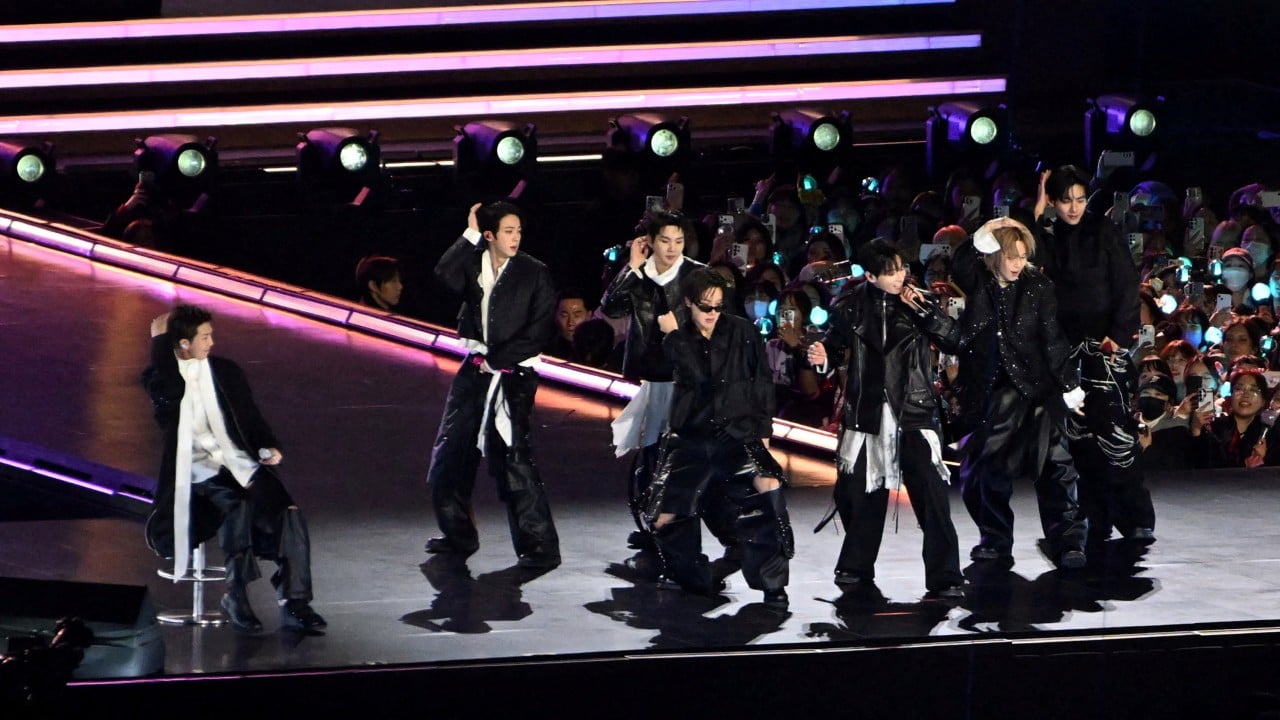
The international music press is currently drowning in a wave of predictable euphoria over the announcement that BTS will play three nights at Hong Kong’s new Kai Tak Stadium in 2027. Promoters are high-fiving, tourism boards are projecting record-breaking revenue, and the collective commentary reads like a regurgitated press release about the triumphant return of live music to the region.
They are all looking at the wrong metrics. You might also find this similar coverage insightful: The Economics of the Armchair Detective: Quantifying the Global Value and Legacy System of Sherlock Holmes.
Hosting a massive stadium tour is not a simple equation of selling tickets and flashing lights. It is an industrial logistics exercise. While the mainstream narrative celebrates the sheer scale of a 50,000-seat mega-venue finally landing in Hong Kong, anyone who has actually managed large-scale stadium operations knows that the city is walking into a massive operational ambush.
The "lazy consensus" says this residency is a guaranteed win for Hong Kong’s economy and a flawless comeback vehicle for K-pop's biggest act. The reality? This three-night run will expose deep infrastructure vulnerabilities, test the limits of modern crowd dynamics, and potentially sour international promoters on the venue before it even finds its footing. As reported in recent articles by IGN, the effects are significant.
The Capacity Fallacy: Why Big Stadiums Fail Small Economies
The headline numbers look intoxicating. Three nights. 150,000 tickets. Hundreds of millions of dollars in potential economic injection. But stadiums are financial chameleons.
Promoters love to talk about capacity, but they rarely talk about throughput. I have watched organizers burn through seven-figure sums because they confused a venue's seating capacity with its ability to actually process human beings efficiently.
Kai Tak Stadium is built on the old airport runway. It is a geographic tongue jutting out into the harbor. While visually spectacular, it creates a textbook dispersal bottleneck.
The Math of Disaster Dispersal
Let us break down the physical reality of moving 50,000 hyper-energetic fans out of a single footprint simultaneously:
- The Mass Exodus: A standard stadium show empties over a compressed window of roughly 45 minutes.
- The Transit Bottleneck: Unlike established stadium districts in Tokyo or Seoul, which sit atop multi-line subway matrixes designed for heavy industrial transit, Kai Tak relies on a localized rail extension and ferry piers.
- The Surge: Even if the MTR runs trains at maximum frequency—roughly every two minutes—each train only carries around 2,500 passengers. That covers maybe 75,000 people over an hour if everything works perfectly. It will not.
When you pack 50,000 people into an isolated peninsula, the exit strategy matters more than the entrance. If the first night results in a three-hour gridlock where fans are stranded in the humidity, the narrative shifts instantly from "historic concert" to "PR nightmare." We saw this exact scenario play out with various events at Wembley and MetLife Stadium over the years; local infrastructure failure eclipses the performance on stage every single time.
The Crowd Dynamics Risk That No One is Discussing
The industry treats all crowds as uniform entities. This is a fundamental mistake. A football crowd of 50,000 behaves entirely differently from a pop music crowd of 50,000.
Football crowds disperse in predictable, highly tribal, but ultimately distributed patterns. They hit the local pubs, they split by team allegiances, and they tend to have a higher tolerance for grinding transport delays. Pop fandoms—specifically highly organized, synchronized global communities like BTS's ARMY—move as a monolithic block.
The Merchandise and Queue Crisis
Pop fandoms do not arrive an hour before kickoff. They materialize 12 to 24 hours in advance.
- The Footprint Strain: Kai Tak is designed as a sports park first. It assumes spectators arrive in waves, watch a match, and leave. It is not built to sustain a city within a city for three consecutive days.
- The Supply Chain Nightmare: The sheer volume of merchandise sales for an act of this scale requires massive, secure distribution hubs within the venue footprint. If you do not have dedicated, isolated logistics channels for supply trucks to replenish inventory while thousands of fans are queuing, the entire perimeter locks up.
I have seen venues lose half their projected food, beverage, and merchandise revenue simply because the physical layout forced supply staff to fight through the crowd to restock. In a brand-new stadium still working out its operational kinks, this is a recipe for chaos.
The Financial Truth: Who Actually Wins?
The government press releases will tell you that mega-events like this revitalize local retail and hospitality. That is a myth built on flawed economic impact models.
When an international stadium act comes to town, the vast majority of the capital generated does not stay in the local ecosystem. It flows directly back to the artist management agency in Seoul, the global promoter handling the tour routing, and the international production houses managing the staging.
+---------------------------+-----------------------------------+
| Revenue Destination       | Reality Check                     |
+---------------------------+-----------------------------------+
| Ticket Sales (Gross)      | 80-85% flows directly out of HK   |
| Hotel Bookings            | Temporary spike, offset by flight |
|                           | aversion from regular business    |
| Local Retail              | Minimal impact; fans spend        |
|                           | inside the stadium venue gates    |
+---------------------------+-----------------------------------+
The leakage rate for major music tours is staggering. The local economy is left with the cleaning bill, the policing costs, and the infrastructural wear and tear, while the actual profit margins are expatriated immediately.
To make stadium shows truly viable for a city, the venue needs to operate as an integrated commercial ecosystem where local vendors own the primary touchpoints. Kai Tak's current corporate structure favors massive, centralized concessionaires, meaning the independent local businesses that actually need the post-pandemic boost will be locked out entirely.
Dismantling the Premise: The Wrong Show for the Wrong Time
People keep asking: "Is Hong Kong finally back as an entertainment hub?"
That is the wrong question. The right question is: "Is a massive, untested stadium the correct tool for a city trying to redefine its cultural footprint?"
Chasing stadium mega-gigs is a lazy strategy. It relies on sheer scale rather than cultural curation. Cities like Tokyo and Singapore do not succeed just because they have big rooms; they succeed because their venues are backed by predictable, hyper-efficient regulatory environments, seamless regional flight connectivity, and a local music ecosystem that feeds off the international presence.
Dropping a massive K-pop residency into a brand-new venue without a robust, battle-tested local event management pipeline is putting the cart before the horse. It is a high-risk gamble masquerading as a sure thing.
Stop looking at the ticket sales charts. Stop reading the sanitized tourism forecasts. Watch the transit gridlock on night one. Watch the perimeter crowd control. That is where this concert will be won or lost. If the infrastructure buckles, the size of the stadium won't matter at all; it will just be a bigger monument to a massive operational failure.