You can't digitize love. That's the core message behind a surprisingly raw, deeply personal essay written by Kate Middleton following her recent solo trip to Reggio Emilia, Italy. It wasn't just another standard royal photo op. The Princess of Wales used the moment to issue a sharp warning about what she calls our "increasingly digitalised world."
Her timing couldn't be more deliberate. The essay and a batch of fresh, candid photographs dropped the exact same week the UK government announced a sweeping social media ban for kids under 16. It's a massive political shift, and Kate just threw her royal weight right behind it.
Instead of hiding behind polite palace statements, she chose to confront the screen-time crisis head-on. She's urging parents and communities to ditch the screens and start prioritizing raw, human connection. Here's a look at why this specific Italian trip marks a major turning point for her public mission and what it says about the way we live now.
The Warning About a World Lived Through Screens
Let's look at the numbers first. Most toddlers are staring at tablets before they can even form full sentences. It's a reality that clearly worries the princess. In her essay, published through her Royal Foundation Centre for Early Childhood, she pointed out that so much of our daily lives is now mediated through glass.
"In an increasingly digitalised world, where so much of life is mediated through screens, the need for genuine human connection has never been greater."
She isn't just preaching from a palace balcony either. We know from previous interviews with Prince William that they run a strict tech household. Their own kids—George, Charlotte, and Louis—aren't allowed to have mobile phones.
The essay reveals a striking interaction that happened right at the school gates of Lambrook School in Berkshire. Another parent asked Kate a simple question: "If we could all do just one thing, what would it be?" Her answer? Prioritize love. She clarified she doesn't mean romantic, sentimental nonsense. She means quiet, unconditional presence, patience, and the ability to find joy in ordinary things. It's a direct challenge to the constant algorithmic dopamine loops that dominate childhood today.
What Italy Figured Out Decades Ago
So why did she go to Reggio Emilia? Because this small northern Italian city figured out something decades ago that the rest of the world is desperately trying to relearn.
Following World War II, the communities around Reggio Emilia built an educational philosophy from scratch. They rejected rigid, top-down instruction. Instead, the Reggio Emilia approach treats children as driven, capable individuals who learn through relationships with others and their environment.
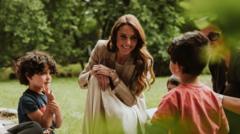
In this system, nature is famously referred to as the "third teacher." Kate spent two days touring local preschools, including the Salvador Allende and Anna Frank facilities. She didn't just stand back and smile. New images show her squatting down to eye level with toddlers, mixing into their creative projects, and even helping prepare a local lunch at a rural agriturismo.
What she saw there was a living blueprint. The Italian method proves that when you surround children with community, nature, and active listening, they build strong emotional foundations. Kate argues that these qualities—empathy, humility, and raw curiosity—are exactly what kids lose when their childhood gets swallowed by an iPad.
The New Divide and Conquer Strategy
Beyond the early childhood data, this trip reveals a lot about the future of the British monarchy. It was Kate's first overseas working trip since 2023, following her time away for cancer treatment. Royal watchers noticed a massive shift in her energy. Her body language wasn't stiff or carefully staged. It looked genuinely joyful, relaxed, and highly focused.
Experts are calling this trip a new blueprint for how the Prince and Princess of Wales will handle their global roles. Expect to see them divide and conquer.
By traveling solo, Kate can deep-dive into her specific passions—like early childhood development—without the massive media circus that follows her and William as a couple. It also allows them to maintain their rule of keeping one parent at home with the kids. It’s a lean, efficient approach that fits perfectly into a modern, slimmed-down royal family.
Moving From Screens Back to Reality
Kate’s essay makes a profound psychological point that most modern parents know but hate to admit. If healing later in life is all about rediscovering our most important connections, then our real job as adults is to make sure kids never lose those connections in the first place.
You don't need a royal budget to act on this. The next steps are incredibly basic, yet incredibly difficult in a tech-obsessed culture. Turn off the screens during dinner. Take your kids into the woods or a local park and let them get dirty. Stop treating creative playtime as an afterthought. The goal is to build environments where children learn to relate to real people and the real world, rather than scrolling through an abstract, distant digital universe.
Kensington Palace has already confirmed that Kate is asking her team "Where next?" She wants to take this global tour of early childhood solutions even further. But the real work doesn't happen in palace boardrooms or Italian preschools. It happens in our own living rooms, the moment we decide to put the phones face down.