You can't just slap your name on a national monument because you packed the board.
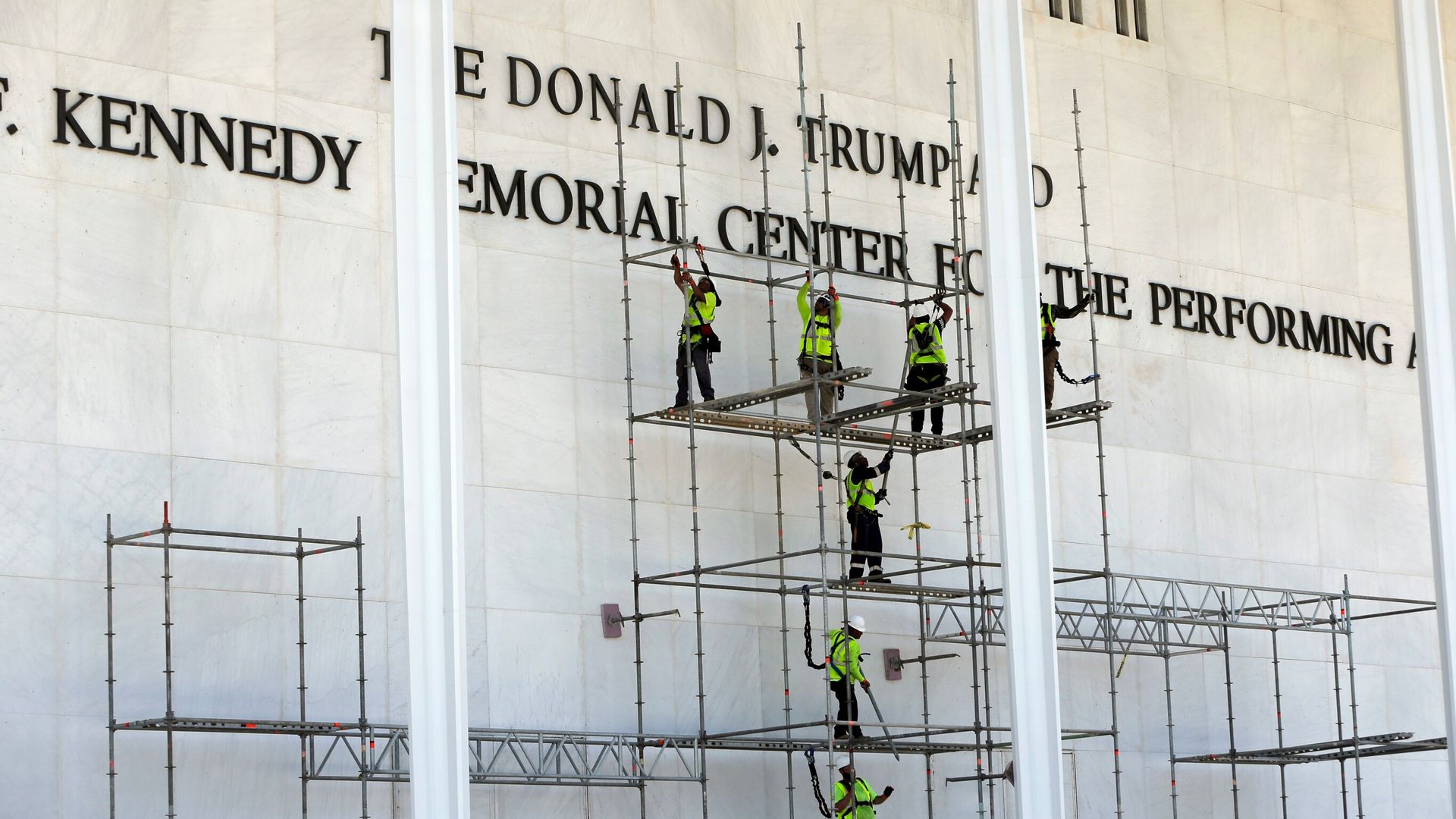
That is the blunt lesson the Trump administration learned in the dead of night this past weekend. Early Saturday morning, under the cover of a massive plastic tarp and a lingering summer thunderstorm, workers in hard hats systematically pried the letters "The Donald J. Trump and" off the marble facade of the John F. Kennedy Center for the Performing Arts.
By sunrise, a notice of compliance hit the federal court docket. The website was scrubbed. The YouTube channel was wiped. The email signatures were reverted.
This wasn't a voluntary rebranding. It was a forced retreat executed hours after a federal appeals court flatly rejected a desperate, eleventh-hour effort to stall a judge's order. It marks a major, highly visible defeat in the administration's aggressive campaign to reshape Washington institutional life. But if you think this is just a petty squabble over a building sign, you are missing the actual story.
The Overreach That Broke the Statute
To understand how giant letters spelling out Trump's name ended up on the side of D.C.'s marquee cultural hub in the first place, you have to look back to December.
Shortly after returning to office for his second term, Trump systematically purged the Kennedy Center's board of trustees. He replaced veteran arts patrons with political loyalists, who promptly elected him board chair. Within months, this reconstituted board voted "unanimously" to rename the legendary venue the Trump-Kennedy Center. To add a layer of farce to the drama, Justice Department lawyers later had to concede that the massive exterior signage had actually been purchased and prepared before the board even held its official vote.
The blowback was immediate, fierce, and bipartisan. Arts figures boycotted. Ticket sales plummeted to historic lows. The Kennedy family openly revolted, stating that the renaming defiled a living memorial to the assassinated 35th president.
Then came the legal hammer. Democratic Representative Joyce Beatty of Ohio, an ex-officio board member who was literally muted on a Zoom call when she tried to object to the renaming, filed a lawsuit.
U.S. District Judge Christopher Cooper tore the board's defense to shreds in a scathing 94-page opinion. His logic was simple. Congress created the center in 1964 as the sole national monument to JFK in the nation's capital.
"Congress gave the Kennedy Center its name," Judge Cooper wrote. "And only Congress can change it."
The board tried to argue that changing the name was necessary for a $257 million "revitalization project" and that removing Trump's name would cause "irreparable harm" to fundraising. They claimed donors would back out. They claimed the building was in "bad shape" and facing "total collapse." The courts didn't buy it.
The Secret Shutdown and Artistic Rebellion
The name change was actually a smokescreen for a much bigger structural play. Along with the rebranding, the Trump-aligned board approved a plan to completely shut down the Kennedy Center for two full years starting July 5, 2026.
Think about that. Shuttering the nation's premier performing arts venue entirely, forcing working artists and local staff into limbo.
The administration claimed the two-year closure was the only safe way to repair rusted beams and crumbling parking garage ceilings. But lawyers representing Rep. Beatty exposed a different reality. The center's career staff already had a perfectly viable maintenance plan that kept the building open during routine repairs. Norman Eisen, one of the attorneys on the case, leveled a sharp accusation: the total shutdown was a political stunt designed to spare Trump the embarrassment of having his name attached to a building that artists and audiences were actively fleeing.
Judge Cooper's ruling didn't just order the letters off the wall; it aggressively halted the scheduled July shutdown.
What Happens Next
The letters are gone, but the underlying tension hasn't evaporated. The administration still has an active appeal on the main lawsuit, though their chances look incredibly slim given the explicit statutory language protecting the memorial.
If you are an arts administrator, a local donor, or someone holding tickets for upcoming shows like the Mark Twain Award for American Humor, here is what you need to watch right now.
First, track the institutional compliance. The internal general counsel memo already forced employees to update letterheads and digital footprints. If you receive communications from the venue, ensure it uses the legal title: The John F. Kennedy Center for the Performing Arts.
Second, monitor the performance schedule. Because the courts blocked the July 5 shutdown, the season is legally bound to continue. Do not cancel your plans or assume the doors are locked.
Finally, expect erratic political fallout. Trump has already blustered on social media about transferring the entire institution to the Commerce Department or letting it sit in administrative limbo. It's empty rhetoric. Federal law explicitly vests the management of the center in its trustees, not the executive branch. The institution belongs to the public, and for now, the rule of law just took its monument back.