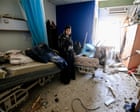
A hospital under fire leaves no room for error. The lights blink out, backup generators sputter, and the sudden, violent shake of an explosion shatters the windows. Doctors are forced to unplug patients from life-support machines in the dark while the walls literally crumble around them. This isn't a hypothetical horror movie scenario. It's the exact situation medical workers faced this week in southern Lebanon.
Three separate hospitals were hit by nearby Israeli airstrikes in less than seven days. The attacks killed at least nine people and wounded more than 150. Among the injured were dozens of doctors, nurses, and administrative workers who were simply trying to do their jobs. What makes this wave of destruction particularly grim is that it's unfolding despite an active, though clearly failing, ceasefire agreement brokered back in April.
When the healthcare system of an entire region is systematically dismantled, it leaves a vulnerable population with absolutely nowhere to go.
The Destruction of Tyre and Tebnine's Last Lifelines
The geography of these strikes shows a clear pattern that is suffocating what remains of the medical infrastructure in southern Lebanon. The violence centered around Tyre, Lebanon's fourth-largest city, and the town of Tebnine.
On Monday, a massive airstrike flattened a building directly across from the Jabal Amel hospital in Tyre. The sheer force of the blast ripped through the facility, knocking out the main power grid and turning the first floor into a wreckage of shattered glass and twisted metal. Four people died instantly. Out of the 127 people wounded in that single attack, 39 were hospital staff members, including four doctors and 27 nurses. Four of those medical workers ended up in their own damaged intensive care unit fighting for their lives.
Just days before the horror at Jabal Amel, similar strikes damaged Hiram Hospital, another crucial facility in Tyre. Then, on Wednesday, Israeli forces targeted the immediate vicinity of the Tebnine Governmental Hospital. This specific facility is the only operating trauma hospital left in the area. It has now been hit four separate times over the last few months.
Wael Mroueh, the director of Jabal Amel, admitted that while staff psychologically prepared themselves for the risks of working in a war zone, nobody expected a strike of this magnitude right on their doorstep. The psychological toll on these workers is immense, yet they remain the final barrier between life and death for thousands of displaced civilians.
The Myth of the Safe Zone
The broader issue here is the complete collapse of any remaining "safe zones" in southern Lebanon. The Israeli military has been issuing massive, blanket evacuation orders that cover roughly 40 kilometers north of the border, forcing people out of more than 300 towns and villages. This includes the entire city of Tyre.
When hundreds of thousands of people flee their homes, they naturally flock toward hospitals, thinking these institutions offer international legal protection. Instead, they find themselves caught in the crosshairs. The World Health Organization (WHO) noted that these specific hospitals were some of the last functional facilities in an area already completely overwhelmed by mass human displacement.
The third major hospital in Tyre managed to escape physical damage this week, but it's currently buckling under the pressure. It has been entirely inundated with a relentless influx of critical patients transferred from the damaged facilities. You can't run a healthcare system when the secondary hospitals are forced to act as frontline trauma units while running on empty.
Explaining the Broad Collapse of Humanitarian Rules
The international community loves to talk about the laws of war, but on the ground, those rules feel completely irrelevant. The WHO reports that since this broader escalation started, there have been 191 verified attacks on healthcare facilities and personnel in Lebanon alone. Those attacks have claimed the lives of 128 health workers and patients.
The strategic fallout of hitting these facilities extends far beyond the immediate casualties.
- Forced Evacuations of Critical Care: Patients hooked up to ventilators or undergoing emergency surgeries can't just jump up and run when an evacuation warning is issued. Moving them often seals their fate anyway.
- Drying Up Medical Supplies: Blood banks, specialized medications, and clean surgical environments require stable electricity and logistics. Bombing nearby buildings cuts off the local supply chain.
- The Brain Drain of First Responders: When doctors and nurses are systematically killed or critically injured, you lose decades of localized trauma expertise that cannot be replaced overnight.
Israel routinely asserts that its targets are strictly Hezbollah personnel and infrastructure, claiming that any damage to nearby civilian buildings is collateral or the result of secondary explosions from hidden weapons caches. However, the reality for the civilian population remains unchanged. Whether targeted directly or caught in the radius of high-yield explosives, the hospitals are failing, and the humanitarian crisis is worsening by the hour.
What Happens When Global Politics Fail local Patients
The timing of these hospital strikes highlights a massive disconnect between high-level international diplomacy and the bloody reality on the ground. These attacks ramped up right as political leaders were attempting to solidify a lasting peace agreement.
United States President Donald Trump and various international mediators have been pushing for a resolution to halt the fighting. Yet, local factions and the Israeli military continue to trade heavy blows. Netanyahu ordered an expansion of operations just before direct talks were scheduled. Meanwhile, Hezbollah continues to fire retaliatory rockets into northern Israeli cities like Kiryat Shmona and Safed.
While politicians negotiate borders and maritime access in comfortable diplomatic rooms, the people in Tyre and Tebnine are left counting body bags.
If you want to support the relief efforts or help get vital supplies to the medical staff still operating in these dangerous conditions, consider looking into verified international aid networks. Organizations like the Lebanese Red Cross and the WHO's emergency response funds work directly on the ground to provide medical supplies, fuel for hospital generators, and emergency transport for wounded civilians. Standing by and watching the complete erosion of healthcare protection hurts everyone, regardless of where the borders are drawn.