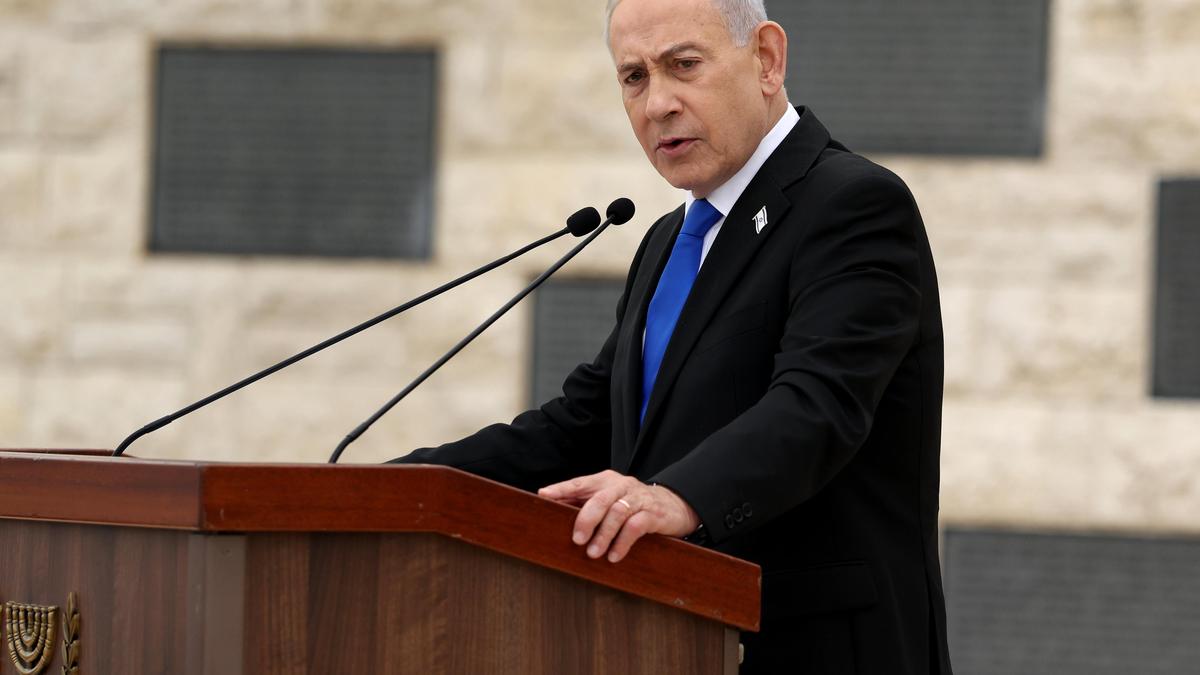
The white flags over southern Lebanon are currently being shredded by the very hands that raised them. While Prime Minister Benjamin Netanyahu tells his cabinet that Hezbollah is dismantling the April 17 truce, the reality on the ground suggests a more cynical process. Both sides are not just violating a ceasefire; they are using it as a tactical pause to reposition for a conflict that has outgrown the borders of the Litani River.
The current ceasefire, recently extended through mid-May, was sold to the international community as a diplomatic breakthrough. Instead, it has become a violent gray zone where the definitions of "defense" and "aggression" have lost all meaning. When fourteen people died in southern Lebanon this past Sunday—marking the deadliest day since the truce began—the diplomatic narrative of "de-escalation" officially shifted into the realm of fiction.
The Architecture of a Failed Truce
The fundamental flaw of the April agreement lies in its structural ambiguity. Brokered by the United States, the deal established a ten-day cessation of hostilities that has since been stretched by necessity rather than success. Israel maintains a "yellow line," a ten-kilometer deep buffer zone inside Lebanese territory where it reserves the right to strike "imminent threats."
This "yellow line" is not a border; it is a permanent fuse. By maintaining troops on Lebanese soil while expecting a militant group to remain dormant, the deal created a mathematical impossibility. Hezbollah, which was never a formal signatory to the agreement, views the continued presence of the IDF as an active occupation. Israel, conversely, views any movement of Hezbollah personnel toward the border as a "planned attack" justifying an immediate strike.
The result is a feedback loop of violence. On Sunday, Hezbollah targeted Israeli troops inside Lebanon, claiming they were responding to the "occupation." Israel responded with airstrikes on villages like Kfar Tibnit and Zawtar al-Sharqiyah, citing the right to self-defense. This is not a ceasefire being "dismantled" by one side; it is a ceasefire that never actually existed as anything more than a change in the rules of engagement.
The Trump Factor and the Scapegoat Strategy
Inside the Israeli security establishment, the mood is far from the confident rhetoric seen in televised cabinet meetings. Reports from military circles suggest a growing rift between the IDF leadership and the Prime Minister’s Office. Senior officials have characterized Netanyahu’s recent orders to strike "with force" as a political smokescreen.
The pressure is twofold. Locally, the Prime Minister must satisfy a domestic audience that demands the total neutralization of Hezbollah. Internationally, he is navigating the complex demands of a U.S. administration that views the Lebanon truce as a cornerstone of its broader regional strategy, specifically tied to the ongoing friction with Iran.
Netanyahu is currently walking a tightrope between these two realities. By publicly blaming Hezbollah for the "dismantling" of the truce, he creates a narrative path toward a full-scale resumption of hostilities if the diplomatic track fails. It is a classic move in the geopolitical playbook: define the enemy’s actions as the sole cause of a deal's collapse to ensure that when the bombs start falling again, the blame is already pre-packaged and delivered.
The Ghost of Black Wednesday
To understand the current volatility, one must look back to April 8, the day Lebanese locals now call "Black Wednesday." In a ten-minute window, the Israeli Air Force launched Operation Eternal Darkness, hitting over 100 targets across Lebanon, including central Beirut. The scale of the destruction—over 300 dead in a single day—effectively broke the back of any lingering trust between the negotiating parties.
While Israel claimed it was hitting "terror targets," the sheer volume of civilian casualties and the destruction of nine bridges over the Litani River served a different purpose. It was a demonstration of total air superiority designed to force Lebanon into a peace agreement that includes the disarmament of Hezbollah.
However, the strategy has backfired. Instead of cowing the militant group, it has unified Hezbollah’s base and made the Lebanese government’s position at the negotiating table nearly untenable. The Lebanese ambassadors who met in Washington for direct talks this month were immediately lambasted by Hezbollah leadership for participating in a "disgraceful photograph" while their villages were still smoldering.
The Humanitarian Price of Tactical Delays
The math of this conflict is measured in displacement. Before March 2, the number of displaced persons in Lebanon was manageable, hovering under 100,000. Today, that number exceeds 1.2 million.
Southern Lebanon is currently a landscape of shuttered shops and empty schools, where the "yellow line" serves as a barrier to any sense of normalcy. The UN Flash Appeal for humanitarian aid remains critically underfunded, receiving only a fraction of the $308 million required. This lack of international support creates a vacuum that non-state actors are more than happy to fill, further eroding the sovereignty of the Lebanese state that the ceasefire was supposedly designed to protect.
When the Israeli military tells residents to evacuate seven towns north of the Litani—areas technically outside the initial buffer zone—it signals that the theater of war is expanding, not shrinking. For the million-plus people currently living in collective shelters, the technicalities of "truce extensions" are irrelevant. They see the bridges being destroyed and the mosques being leveled, and they understand what the diplomats refuse to admit: the ceasefire is a pause button, not a stop button.
The Deadlock of Disarmament
The core issue that will likely sink any hope of a permanent deal is the demand for Hezbollah’s disarmament. For Israel, this is a non-negotiable security requirement. For Hezbollah, its arsenal is its reason for existence and its only leverage against a superior conventional military.
The Lebanese government, caught in the middle, has no physical capacity to enforce disarmament. Expecting the Lebanese Armed Forces to forcibly strip Hezbollah of its missiles is a fantasy that ignores the internal political reality of the country. Consequently, the "negotiations" in Washington are focused on a goal that neither side can actually deliver.
As long as the broader regional conflict with Iran continues to simmer, Lebanon will remain the primary outlet for that pressure. The ceasefire is currently being held together by the thin thread of U.S. diplomatic prestige and a mutual desire to avoid a total regional conflagration—at least for a few more weeks.
The "dismantling" Netanyahu refers to is simply the inevitable return to a baseline of conflict that the April 17 agreement failed to address. You cannot build a lasting peace on the foundation of an ongoing occupation and a refusal to acknowledge the internal power dynamics of the opposing side. We are not watching a ceasefire fail; we are watching a temporary arrangement reach its natural, violent expiration date.