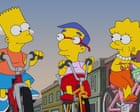
The restoration of the Québécois voice cast for The Simpsons represents more than a victory for regional identity; it is a case study in the high-stakes friction between globalized distribution efficiency and local market retention. When Disney+ initially launched with the "International French" (VFI) dub for the series in Canada, it triggered a market rejection based on the violation of established cultural contracts. This friction occurs because language in media acts as a primary utility, not a decorative feature. For the Québécois audience, the VFI version—often referred to as "European French"—functioned as a foreign-language product despite sharing a root vocabulary, leading to a precipitous drop in engagement metrics and brand loyalty.
The Three Pillars of Linguistic Market Retention
To understand why a generic French dub fails in the Quebec market, one must analyze the three distinct variables that define media consumption in localized territories.
- Phonetic Resonance: The human brain processes familiar accents with lower cognitive load. A VFI dub requires Québécois viewers to constantly translate idioms and phonetic shifts (such as the loss of "joual" inflections), creating a barrier to immersion.
- Referential Integrity: The Simpsons thrives on hyper-local satire. The Québécois dub (VFQ) does not merely translate the script; it re-contextualizes it. References to American celebrities are often swapped for local political figures or cultural icons. Removing this layer transforms a parody into a dry translation.
- Historical Continuity: For a series that has run for over three decades, the voices are the brand assets. Changing the vocal texture of a character like Homer Simpson is equivalent to changing a corporate logo; it breaks the long-term emotional contract with the consumer.
The Cost Function of Global Homogenization
The initial decision to deploy a single French audio track across all Francophone territories was driven by a desire to minimize localization overhead. From a logistical standpoint, maintaining two separate French tracks for the same content increases storage costs, synchronization labor, and royalty management complexities.
However, this strategy ignored the Linguistic Elasticity of Demand. In Quebec, the demand for localized content is highly inelastic. Viewers do not view "French" as a monolithic product. By providing a version that felt alien, the distributor inadvertently increased the "interaction cost" for the viewer. The resulting backlash was a predictable outcome of treating a high-context cultural product like a low-context commodity.
[Image showing a flowchart of the localization process from script to final dub]
The Mechanism of Cultural Proximity
The success of the VFQ version of The Simpsons—arguably the most famous localization in the history of the medium—is rooted in the theory of Cultural Proximity. This theory suggests that audiences will always prefer media that is closest to their own ethnic and social identity.
In Quebec, this is exacerbated by a defensive cultural posture. Because the province exists as a Francophone island in an Anglophone sea (North America), the "Standard French" of Paris is often viewed as a secondary form of linguistic colonialism. The VFQ dub, spearheaded by actors like Pierre Auger and Johanne Léveillé, utilizes "joual"—the working-class dialect of Montreal—to anchor the characters in a reality that feels domestic.
When Disney+ attempted to serve the Parisian dub to Quebec, it triggered a "rejection reflex." The VFI version uses formal structures and slang specific to the suburbs of Paris, which are as unintelligible to a resident of Saguenay as certain London dialects might be to a resident of rural Texas. The error was not just aesthetic; it was a failure of market segmentation.
Infrastructure of the VFQ Industry
The return of the Quebec dub highlights the specialized infrastructure required for high-tier localization. Unlike standard translation, which seeks literal equivalence, VFQ production requires Transcreation.
- Sync-Mapping: Adjusting the script so that French phonemes align with the mouth movements of characters designed for English vowels.
- Idiomatic Re-Engineering: Replacing puns that only work in English with puns that function within the Quebec social lexicon.
- Talent Specialization: A cadre of voice actors who specialize in "Neutral Quebec French" for documentaries versus "Slang Quebec French" for sitcoms.
The breakdown in the Disney+ rollout suggests a disconnect between the technical departments (who see "fr-CA" and "fr-FR" as data tags) and the brand strategy departments (who understand the emotional weight of those tags). The restoration of the VFQ track was a necessary correction to prevent churn in a high-ARPU (Average Revenue Per User) market.
The Bottleneck of Digital Licensing
A significant factor often overlooked in the "European French" controversy is the legacy of licensing silos. When The Simpsons was first dubbed for Quebec in the early 1990s, the rights were often bundled with local broadcast networks (such as Télévision Quatre-Saisons).
As these shows transitioned to global streaming platforms, the rights to the VFQ audio tracks remained entangled in regional contracts. The "vague" quality of the initial streaming offerings was likely a result of legal teams being unable to clear the VFQ audio assets in time for a global launch, leading them to fall back on the VFI track, for which they held global rights. The "sparing" of viewers from European French was therefore not just a creative choice, but a legal resolution.
Strategic Divergence: Localization vs. Globalization
The entertainment industry currently operates on a spectrum between two extremes. On one end is the Netflix Model, which favors high-volume, "neutral" dubbing to maximize speed-to-market. On the other is the Simpsons Model, which treats localization as a standalone creative product.
The Quebec market serves as a warning for the limits of the Netflix Model. While neutral dubbing works for procedurals and action films where the visual spectacle carries the narrative, it fails in comedy and character-driven drama. The lack of "European French" in the Quebec feed of The Simpsons is now the gold standard for regional distribution. It proves that the "Global North" is not a monolith and that linguistic nuances are a hard requirement for market entry.
The Operational Reality of Regional Voice Casting
Maintaining a regional voice cast over thirty years creates a unique operational risk: Asset Aging. As the original VFQ cast ages or retires, the production team faces the "Ship of Theseus" paradox. How many voices can be replaced before the VFQ version loses its authentic "Québécois" soul?
The current strategy involves rigorous voice-matching, where new actors are trained not just to mimic the character, but to mimic the previous actor’s interpretation of the character. This adds a layer of artisanal craftsmanship that is absent in the automated or standardized dubbing processes used in smaller markets. This commitment to the VFQ lineage is what creates the "moat" around the brand in Canada, making it nearly impossible for competitors with generic dubs to seize market share.
Future Constraints on Localized Media
The primary threat to the VFQ model is the rise of AI-driven voice synthesis. Current generative models can now replicate the "texture" of a Quebec accent, but they lack the ability to perform the "Transcreation" mentioned earlier. They can translate, but they cannot satirize.
The strategic move for local creators and distributors is to lean harder into the "un-AI-able" elements of language—local slang, current events, and hyper-specific cultural shibboleths. The Simpson family's return to their Quebec voices is a signal that for the foreseeable future, the "human-in-the-loop" model of localization remains the only way to maintain a 90%+ retention rate in culturally protective territories.
The restoration of this audio track is not an act of corporate benevolence; it is a tactical retreat to a more sustainable economic model. Distributors have learned that the cost of managing dual French tracks is significantly lower than the cost of losing an entire province's subscription revenue. To successfully navigate the Francophone world, companies must treat Montreal and Paris as two distinct planets orbiting the same sun, requiring different navigation systems for a successful landing.
Future content acquisitions in the North American market must prioritize the procurement of VFQ assets during the pre-production phase. Failure to do so will result in a repeat of the Simpsons friction, where the brand is forced into a reactive stance, repairing damaged consumer trust after the fact. The play is to integrate VFQ requirements into the initial budget rather than treating them as a post-launch patch.


