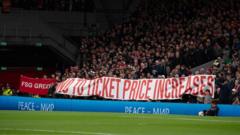
Money and football fans don't mix well when the owners start talking about "inflationary adjustments." Fenway Sports Group (FSG) just found that out the hard way. Again. After weeks of tension and yellow card protests at Anfield, Liverpool FC officially scrapped its plan to hike ticket prices for three consecutive years.
If you're a match-going fan, this is a massive win for the power of the terrace. The club originally wanted a multi-year deal that would've seen prices climb every season based on inflation. Fans hated it. They saw it as a "loyalty tax" wrapped in corporate jargon. Now, the club has blinked. Don't forget to check out our previous post on this related article.
The Climbdown Explained
Liverpool won't be locking in a three-year price hike anymore. Instead, they've settled for a one-off 3% increase for the 2026-27 season. Crucially, they've promised a total price freeze for the 2027-28 campaign. Basically, the club traded their long-term revenue "certainty" for a bit of peace and quiet with the Supporters Board.
It's a huge shift from the stance they held just a month ago. Back then, the message was that rising operational costs—utility bills up 107% and business rates climbing nearly 300%—made a freeze impossible. Suddenly, when the Kop starts looking like a sea of yellow protest cards, "impossible" becomes "negotiable." To read more about the background here, The Athletic offers an in-depth breakdown.
The revised plan looks like this:
- 2026-27 Season: General admission prices go up by 3%.
- 2027-28 Season: A total freeze on all ticket prices.
- Junior & Local Tickets: These stay at £9, continuing a freeze that's lasted over a decade.
- Young Adults: The 50% discount now applies to anyone up to age 24, up from 21.
Why the Fans Won This Round
This wasn't just about a couple of pounds. It was about the precedent. Spirit of Shankly and Spion Kop 1906—the groups that drive the atmosphere at Anfield—were furious that FSG tried to "lock in" increases. It removed the ability for fans to negotiate every year.
By forcing the club to ditch the three-year model, the fans have protected their seat at the table. They reminded the owners that Anfield isn't just a stadium; it's a community. When you treat fans like customers in a supermarket, they stop singing and start protesting.
The yellow card protest during the Crystal Palace game was the tipping point. Seeing 75,000 cards held up in the 13th minute wasn't just a "bad look" for the cameras. It was a warning shot. FSG has a history of misreading the room—remember the 2016 walkout or the Super League disaster? They've learned that a quiet Anfield is a dangerous thing for the brand.
The Reality of Running Anfield
Let's be fair for a second. The club's costs are actually spiraling. It costs a fortune to run a 61,000-seat stadium in 2026. Since 2016, matchday operating costs have jumped 85%. While TV money is huge, it doesn't cover every hole in the bucket.
FSG's logic was that pegging rises to the Consumer Price Index (CPI) was the "fairest" way to keep the lights on without price-gouging. In their eyes, a £1.50 increase per game is less than the price of a coffee. But for a local family or a season ticket holder who's been there for forty years, it’s about the cumulative weight of everything getting more expensive.
What Happens Now
The club and the Supporters Board aren't just stopping at a price freeze for 2027. They've pledged to look at "alternative commercial ideas" to bridge the gap. This is the part where things get interesting.
If the club can find other ways to make that extra £1 million—better sponsorship, more efficient matchday sales, or digital ventures—they won't need to squeeze the people in the stands. It puts the pressure back on the commercial department to be creative rather than just reaching for the "increase price" button.
This result proves that fan ownership models, even the "consultative" ones like Liverpool's Supporters Board, actually work when people show up and speak up. It’s not a perfect system, but it’s a hell of a lot better than the alternative.
If you’re a season ticket holder, watch your inbox. Renewal details for the 2026-27 season are coming out next week. You’ll see that 3% bump, but at least you know you won't be hit again the year after. For now, the flags will stay up, and the yellow cards can go back in the drawer.
Check your eligibility for the local £9 tickets if you have an "L" postcode. The club is keeping those slots protected, which is one of the few things they’ve actually gotten right throughout this mess. Use the "Young Adult" extension if you're under 24 to save that 50% before the window closes.