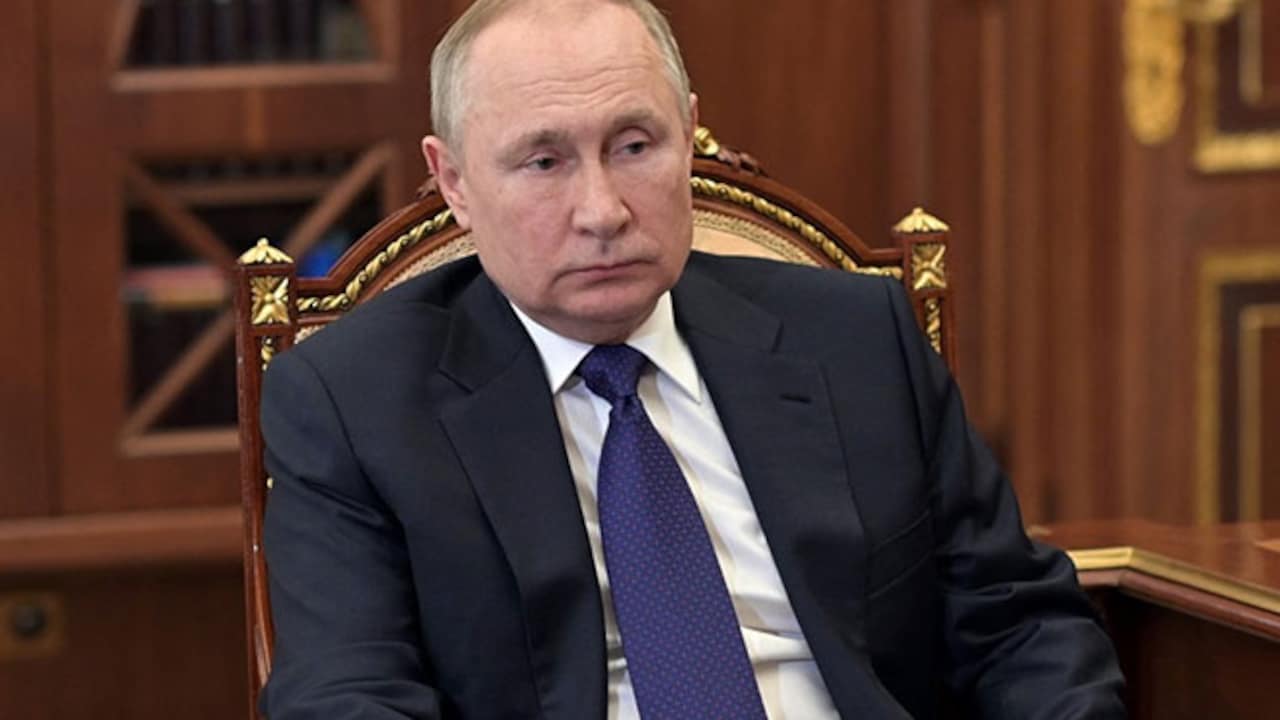
The tea in the Kremlin briefing rooms is always served scalding hot, but the air inside remains freezing. Outside, the Moscow winter yields to a fragile spring, yet the geopolitical landscape feels permanently trapped in permafrost. For years, the dialogue between Russia and Europe has resembled a flatlining heart monitor. Silence. Then, a sudden, sharp blip of noise.
When the Russian foreign ministry recently announced a willingness to sit down with European leaders, the collective intake of breath across continental capitals was audible. But diplomacy is rarely about the words spoken; it is about the posture of the person speaking them. Russia is opening the door, but it is leaning heavily against the frame. The condition is simple, unyielding, and written in invisible ink across every diplomatic cable: no ultimatums.
To understand what this means on the ground, step away from the grand mahogany tables. Think instead of an aging border guard stationed near Narva, where Estonia meets Russia. He watches the river flow between two worlds that used to trade, talk, and occasionally argue. Now, they just stare. For the millions of ordinary citizens living along the jagged fractures of modern Europe, grand strategy is not an abstract concept. It is the cost of heating a home. It is the anxiety of a son reaching military age. It is the quiet, exhausting background hum of historical tension.
The current political gridlock is often framed as a high-stakes chess match. That is a mistake. Chess has rules. This is closer to a standoff in a dark room where both players are convinced the other is holding a weapon.
The Kremlin’s latest posture is a masterclass in defensive psychology. By signaling a willingness to talk, Moscow shifts the burden of communication onto Brussels, Paris, and Berlin. It is a psychological pivot. The message to Europe is clear: We are ready to listen, but only if you change your tone. It demands that European leaders abandon the language of sanctions, pullbacks, and red lines before the first microphone is even plugged in.
For Europe, this creates an agonizing dilemma. To accept a conversation on these terms feels dangerously close to capitulation. To reject it outright makes them look like the architects of perpetual conflict.
Consider the mechanics of a modern ultimatum. In international relations, an ultimatum is not just a demand; it is a dead end. It leaves no room for face-saving maneuvers. For a country like Russia, where historical narrative and national pride are deeply intertwined with state survival, capitulating to a Western mandate is politically impossible. The leadership would rather watch the economy burn than be seen bending the knee to a foreign power.
Conversely, Europe operates under its own rigid constraints. European leaders answer to voters who are deeply unsettled by continental instability. They cannot simply erase the events of the past several years for the sake of a polite conversation. They are bound by alliances, treaties, and the moral weight of their own public rhetoric.
So, how do two massive, nuclear-armed entities break a deadlock when both refuse to blink first?
The answer usually lies in the shadows of backchannel diplomacy. Long before ministers stand before flashing cameras, lower-level attachés meet in neutral cities like Vienna or Geneva. They talk about mundane things. Grain corridors. Railway gauges. Weather data. They build a fragile scaffolding of trust out of the most boring materials available.
This is where the real work happens. It is slow. It is tedious. It is entirely unglamorous. But it is the only way to ensure that when the high-level meetings finally happen, they do not devolve into shouting matches.
The tragedy of the current impasse is that while the diplomats argue over the semantics of invitations, the world moves on. Supply chains reroute. New economic blocs harden. The division of Europe, once thought to be a relic of the twentieth century, cements itself into the daily lives of a new generation.
A teenager in St. Petersburg grows up watching Chinese tech replace Western brands. A student in Berlin views the East not as a cultural neighbor, but as an existential question mark. The human cost of political silence is the slow, systematic narrowing of our collective horizon.
We treat these diplomatic shifts like weather patterns—uncontrollable, unpredictable, and devastating. But they are entirely man-made. The locks on the doors of negotiation were turned by human hands, and only human hands can unlock them.
The offer from Moscow is on the table, cold and sharp as a Russian winter. The world waits to see if Europe will pick it up, or if both sides will continue to stand in the dark, waiting for the other to make the first move.