A heavy steel door slides shut with a metallic thud that vibrates through the floorboards. It is a sound that separates two entirely different realities. On one side of that sound is the hum of everyday life, traffic, families planning dinner, people rushing to work. On the other side is a suspension of time itself.
When we talk about the law, we often talk about it in the abstract. We talk about statues, dockets, briefs, and legal precedents. We analyze the strategic chess moves of the highest court in the land. But constitutional law is not just a collection of dusty leather-bound books. It is a living, breathing force that dictates exactly how long a human being can be kept in a concrete room without a judge ever looking them in the eye.
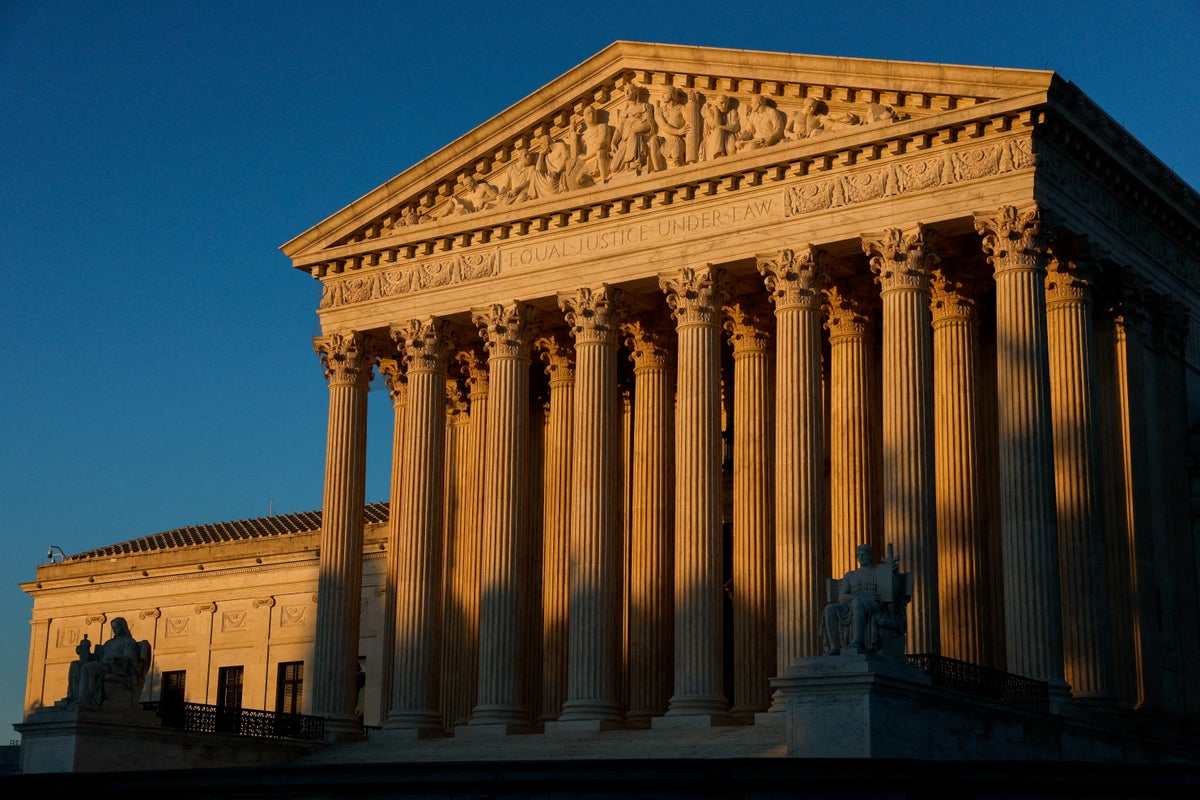
The Supreme Court of the United States recently agreed to step into this quiet, high-stakes arena. The Justices will hear an appeal involving the federal government’s power to detain certain immigrants for prolonged periods, months, sometimes years, without giving them a bond hearing. To the legal clerks writing the summaries, this is a case about statutory interpretation and federal jurisdiction.
To the people sitting inside those rooms, it is a question of whether the calendar has any meaning left at all.
The Clock That Forgot How to Tick
Hypothetically, let us call him Alejandro. He is not a statistic, though the system tracks him as an eight-digit number. He represents thousands of individuals caught in the gears of the American immigration system. Alejandro arrived at the border seeking safety, surrendered to authorities, and cleared his initial screening. The government acknowledged he had a credible fear of persecution if sent back to his home country.
Under the law, his case must be fully adjudicated. That process takes time.
But there is a vast difference between waiting for your day in court from your living room and waiting for it behind a chain-link fence. Weeks bled into months. The seasons changed outside a window he could barely see through. Alejandro assumed that at some point, a neutral arbitrator, a judge, would look at his record, evaluate whether he posed any danger or flight risk, and decide if he could wait with his relatives instead of in a cell.
He assumed wrong.
Under the current interpretation of certain federal immigration statutes used by the government, individual bond hearings are not guaranteed for everyone. Instead, the system treats detention not as a temporary pause, but as a mandatory baseline.
Imagine being pulled over for a broken taillight and told you have to wait in jail until your court date. Now imagine that the court date is not next week, but next year. You ask for a bail hearing, a standard right given to almost every criminal defendant in the country, and the jailer simply shakes his head. They tell you the law does not require them to check if you actually belong inside.
That is the reality at the heart of this Supreme Court battle. The government argues that the law grants them the explicit authority to hold specific categories of immigrants indefinitely while their deportation proceedings crawl through a backlogged system. The opposing side argues that the U.S. Constitution does not tolerate blank checks when it comes to human liberty.
The Friction of Two Parallel Systems
The confusion deepens when you realize how fractured American law truly is. If a person is arrested on American soil under suspicion of a serious felony, the Fifth Amendment kicks in almost immediately. They are brought before a judge. A prosecutor must argue why they should be held without bail. The burden of proof is on the state. Liberty is the norm; detention is the exception.
In the immigration framework, that logic gets inverted.
Because immigration violations are technically civil infractions rather than criminal ones, the robust protections of the criminal justice system do not automatically apply. It is a strange legal paradox. By being classified under civil law, individuals often end up with fewer procedural protections than someone facing criminal charges.
The government views this as a matter of national security and administrative necessity. With hundreds of thousands of cases clogging the immigration courts, federal agencies argue that mandatory detention ensures individuals show up for their final hearings and allows for orderly processing. They contend that creating a universal right to a bond hearing would collapse an already strained infrastructure.
But the human cost of that administrative efficiency is staggering.
The psychological toll of indefinite confinement is unique. If you receive a five-year prison sentence, you can count the days down. You can cross them off a calendar. There is a light at the end of the tunnel, no matter how distant. Indefinite detention offers no such luxury. It is a tunnel without an exit in sight. You wake up every morning wondering if today is the day your case gets called, or if you will spend another twenty-four hours staring at the same white cinderblock wall.
The Highest Court Steps In
The Supreme Court has wrestled with this exact tension before, dropping anchors in different places over the decades. Sometimes they favor the broad, sweeping power of the executive branch to control the nation's borders. Other times, they recoil at the idea of executive overreach operating entirely outside judicial review.
By agreeing to hear this latest appeal, the Justices are forced to confront the blurry boundary line where sovereign border control meets fundamental human rights.
The legal arguments will be clinical. Lawyers will dissect the precise meaning of words like "shall" and "may" within the Immigration and Nationality Act. They will cite obscure footnotes from cases decided in the 1950s. They will debate whether the statute’s phrasing implies an invisible time limit, perhaps six months, after which a hearing must be granted.
But beneath the sterile vocabulary of the courtroom lies a profound moral question about who we are as a society.
Does the Constitution protect the physical liberty of every human being within our borders, or does that protection stop depending on a person's paperwork? If the government can detain a non-citizen for two years without a hearing, what stops them from extending that logic to others? The erosion of due process rarely happens all at once. It happens quietly, in specialized courts, applied to unpopular or marginalized groups, until the precedent is firmly set.
The system is confusing, even to those who study it for a living. It is a labyrinth of shifting policies, conflicting appellate court rulings, and executive orders. For the person trapped inside the maze, the legal arguments matter far less than the daily reality of confinement. They do not need to understand the nuances of statutory construction to know what it feels like to be forgotten.
Consider what happens next: The briefs will be filed. The oral arguments will be scheduled. The public will move on to other, flashier headlines.
Meanwhile, thousands of individuals will continue to wait in facilities scattered across the country. They will eat the same institutional food, wear the same jumpsuits, and listen to the same heavy doors lock every evening. They are waiting for nine justices in Washington to decide if their freedom is worth an afternoon conversation.
The Supreme Court’s eventual ruling will reshape the landscape of American immigration enforcement for a generation. It will dictate policy, guide federal spending, and alter the workflows of thousands of government employees.
But more than that, the decision will determine whether a person whose only crime was fleeing toward a promise of safety is allowed to ask a simple, fundamental question.
Why am I still in this room?