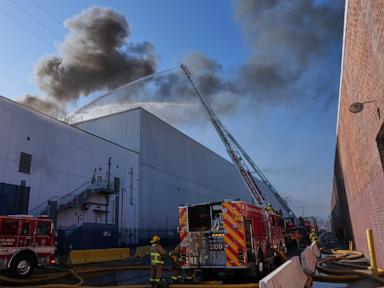
A massive plume of thick, black smoke blankets a neighborhood. Sirens wail. Minutes later, your phone buzzes with a terrifying notification telling you to seal your windows, shut off your AC, and stay inside. A major Los Angeles warehouse fire prompts shelter-in-place orders due to hazardous air, and suddenly thousands of residents are trapped in a waiting game, breathing in whatever seeps through the cracks.
It happens fast. It's happening more frequently. Don't forget to check out our earlier article on this related article.
But here is the truth most official alerts leave out: a standard shelter-in-place order is a short-term band-aid, not a long-term shield. When industrial facilities burn, the smoke carries a cocktail of synthetic chemicals, heavy metals, and particulate matter that standard home filters cannot catch. If you rely solely on municipal alerts during an urban chemical fire, you are already behind the curve.
Understanding the reality of industrial smoke plumes is vital for survival in modern urban environments. To read more about the context here, TIME offers an excellent breakdown.
The Chemistry of Industrial Smoke Is Not Just Wood and Ash
When a residential home burns, the smoke is dangerous. When a massive logistics warehouse goes up in flames, the smoke becomes an unpredictable chemical hazard.
Modern warehouses are tightly packed with plastics, electronics, lithium-ion batteries, and chemical adhesives. The South Coast Air Quality Management District (SCAQMD) and local hazardous materials teams frequently monitor these incidents, and the data paints a grim picture. This isn't just carbon; it is a toxic soup.
- Particulate Matter (PM2.5): These microscopic particles bypass your lung's natural filtration systems. They enter your bloodstream directly. During major industrial fires, PM2.5 levels in immediate downwind zones can spike to hazardous levels within minutes.
- Volatile Organic Compounds (VOCs): Benzene, formaldehyde, and styrene are routinely released when commercial plastics and synthetic materials combust.
- Acid Gases: Burning PVC and plastics release hydrogen chloride, which damages the respiratory tract upon inhalation.
The immediate symptoms of exposure go beyond a simple cough. Residents in the direct path of these plumes report severe headaches, stinging eyes, dizziness, and acute asthma attacks. For those with pre-existing respiratory or cardiovascular conditions, the risk of a severe medical emergency escalates dramatically during the first six hours of exposure.
Why Your House Isn't the Safe Haven You Think It Is
The immediate directive from local authorities during a toxic air event is always the same: go indoors, close all windows, and turn off your heating or air conditioning units. It makes sense on paper. You want to stop the outdoor air from mixing with your indoor air.
But houses breathe.
Unless you live in a recently constructed, completely airtight smart home, your house naturally exchanges air with the outside world. This is called air infiltration. Standard older homes in Los Angeles can exchange their entire volume of indoor air with outdoor air every few hours, even with the windows shut tight.
If a warehouse fire burns for twelve hours, that toxic outdoor air is slowly but surely making its way inside your living room.
Worse yet, turning off your HVAC system protects you from pulling in direct outdoor air, but it also stops your indoor air from circulating through whatever filtration you do have. You end up trapped in a stagnant box with creeping pollutants.
How to Actually Protect Your Lungs When the Sirens Go Off
If you find yourself downwind of a major commercial fire, you need to execute a precise checklist immediately. Do not wait for the air to start smelling like burning plastic.
First, seal the weakest points of your home. The gaps under exterior doors and around older window frames are the primary culprits for air leaks. Grab damp towels and stuff them firmly under your front and back doors. Use painter's tape or masking tape to seal the seams of drafty windows.
Second, create a clean room. Pick a central room in your house with as few windows and doors as possible—a large bedroom or interior living space works best. Isolate this room from the rest of the house by keeping its doors closed.
Third, run an air purifier with a true HEPA filter and a substantial activated carbon stage. This is where most people fail. A standard dust filter will not capture chemical gases or VOCs. You need activated carbon to absorb the chemical toxins, while the HEPA filter traps the microscopic PM2.5 particles. Run the purifier on its highest setting in your designated clean room.
If you do not have an air purifier, you can build a temporary makeshift filtration unit. Tape a high-efficiency furnace filter (MERV 13 or higher) directly to the intake side of a standard box fan. It is loud and looks ugly, but it rapidly lowers particulate levels in a single room during an emergency.
The Hard Reality of Urban Logistics Zones
This problem isn't going away. Los Angeles, the Inland Empire, and major shipping hubs across the country are seeing an explosion of massive fulfillment centers and industrial warehouses built right next to residential neighborhoods.
Environmental justice organizations have pointed out for years that the zoning laws governing these facilities place heavy pollution risks directly in the backyards of working-class communities. When an incident occurs, the immediate health fallout lands on the people who can least afford emergency medical care or sudden evacuation costs.
Local fire departments do an incredible job containing these massive blazes, but putting out a warehouse fire can take days. The deep-seated embers inside collapsed steel structures burn hot and long, smoldering for 48 to 72 hours after the main flames are suppressed. That means the hazardous air situation doesn't end when the breaking news broadcast stops.
Keep your protective measures in place until local air quality monitoring agencies officially declare the ambient air levels safe. Watch the real-time data on localized air monitoring maps rather than relying solely on evening news updates. If your throat feels scratchy, your eyes are watering, or you feel abnormally dizzy, your indoor air is compromised, and you need to seek cleaner air upwind immediately.


