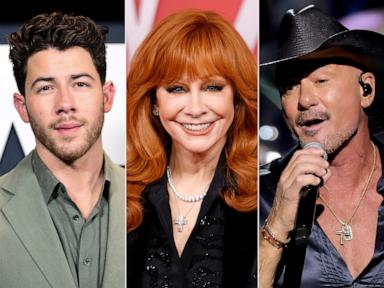
The press releases read like a civic triumph. Nick Jonas, Reba McEntire, and Tim McGraw are headlining Nashville’s Star-Spangled Bash. The tourism bureaus are high-fiving. The local news is running breathless segments on the economic windfall.
They are celebrating a disaster.
For decades, the standard playbook for major city events has been simple: book the biggest, most generic names possible, slap a corporate sponsor on the stage, and watch the foot traffic swell. It is a lazy consensus driven by hospitality executives who look at spreadsheets instead of cultural health. I have watched city after city blow millions of dollars on these massive, bloated spectacles, convinced they are building a brand.
They are doing the exact opposite. They are turning vibrant, self-sustaining cultural capitals into sterile amusement parks.
The Headliner Trap
Let’s dismantle the premise of the mega-concert. The theory goes that bringing massive pop and country stars to a free public stage elevates the city's status and pumps money into local businesses.
It is a flawed equation.
When you book acts like Nick Jonas or Tim McGraw for a massive holiday event, you are not celebrating Nashville. You are hosting a traveling circus that happens to be parked in Tennessee for forty-eight hours. These artists do not represent the current, breathing creative pulse of the city; they represent global entertainment conglomerates.
The people packing Lower Broadway for these shows are not there to discover music. They are there for the spectacle. They consume the commodity, leave their trash on the asphalt, and go home. Meanwhile, the actual engine of the city's music scene—the independent venues, the working musicians, the small clubs—gets completely choked out.
The Crowding-Out Effect
Ask any independent club owner on Printers Alley or East Nashville what happens when a massive, free, city-funded concert rolls into town.
They lose money.
- Foot Traffic Cannibalization: The sheer volume of people flooding the downtown core creates a logistical nightmare. Regular music fans avoid the area entirely.
- Infrastructure Gridlock: Roads close, parking prices quadruple, and security barriers turn the city into a maze.
- Zero Local Spinoff: A tourist standing in a crowd of 250,000 people for four hours is not wandering into a small venue to pay a $10 cover for an emerging local writer. They are buying a $14 domestic beer from a temporary corporate tent.
The city effectively subsidizes a massive entertainment monopoly that competes directly with its own tax-paying creative class. It is public money used to suppress local culture.
Redefining the Value of Music Tourism
The standard metrics for these events are inherently dishonest. Tourism boards love to tout "total attendance" and "estimated economic impact." These numbers are frequently inflated by counting every warm body that crosses a five-block radius, whether they spent a dollar or not.
What they never track is the displacement cost. How many high-spending visitors avoided the city that weekend because they did not want to deal with a generic stadium-level crowd in the middle of the street? How much potential long-term loyalty is lost when a city hides its unique identity behind a wall of radio-friendly hitmakers?
If Nashville, or any music-centric city, wants to protect its status, it needs to stop acting like a temporary venue for national tours.
The Unconventional Blueprint
Am I saying cities should stop throwing parties? No. But the current model is broken. Here is how you actually leverage a holiday event to build a lasting cultural economy:
- Ban the Global Headliner: If an artist can sell out an arena on their own, they have no business on a city-funded free stage. They do not need the exposure, and the city does not need the specific type of chaotic, low-yield crowd they attract.
- Mandate Local Curated Stages: Force the event to reflect the actual ecosystem. The main stage should be a showcase of the best talent currently grinding in the local clubs, paid at premium festival rates.
- Decentralize the Spectacle: Instead of shoving a quarter-million people into a single suffocating concrete grid, split the budget across five distinct neighborhoods. Force visitors to explore the actual geography of the city.
This approach has downsides. Your attendance numbers will drop. The local news won't get a flashy interview with a pop star. The corporate sponsors might pull back because they can't plaster their logo behind a globally recognized face.
But you will build something money cannot buy: authenticity. You create an environment where visitors actually discover something they cannot find in their suburban hometowns. You support the ecosystem that makes the city attractive in the first place.
Stop treating music cities like empty vessels to be filled with generic star power. The talent isn't something you need to import for a holiday. It's already there, playing to half-empty rooms down the street while everyone stares at a giant screen on Main Street. Turn off the stadium lights.