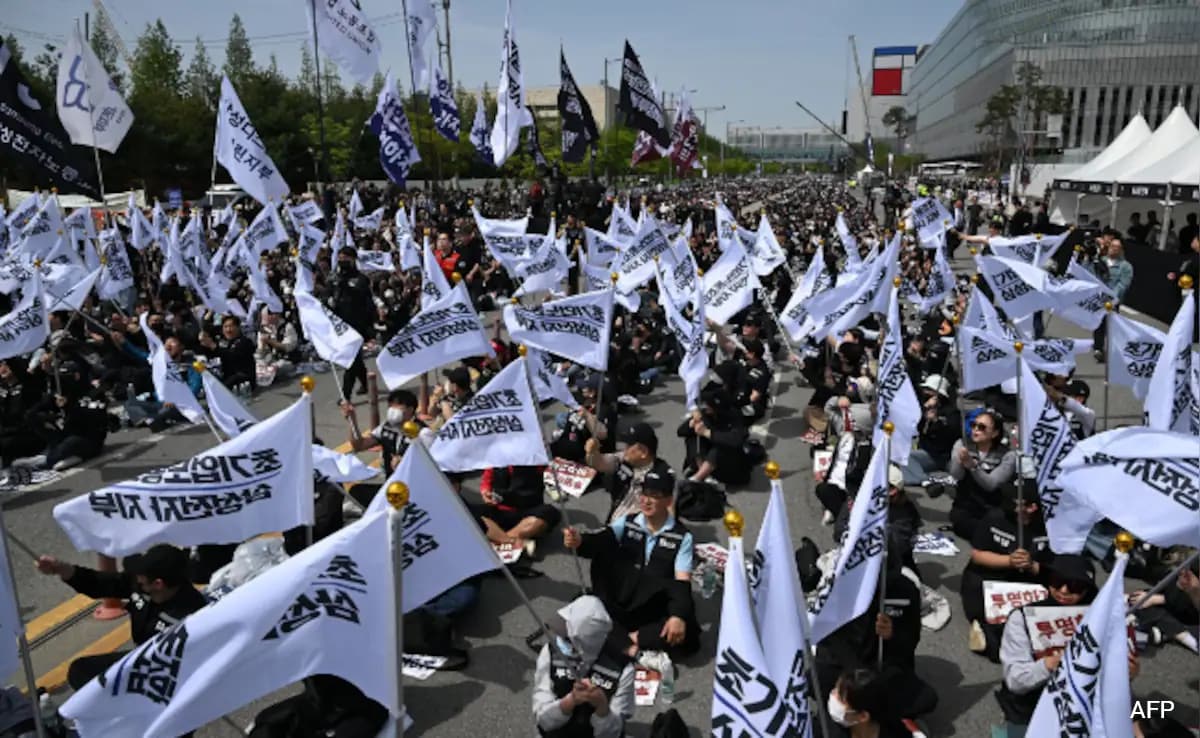
Imagine checking your corporate payroll account and finding a windfall worth nearly Rs 3 crore. For roughly 78,000 employees at Samsung Electronics, this isn't a fantasy. It's the reality of a newly minted labor agreement. On Wednesday, union members voted overwhelmingly to approve a profit-sharing framework that essentially turns factory floor engineers into multi-millionaires.
The global boom in artificial intelligence infrastructure has created staggering wealth. Now, the people who build the physical components of that infrastructure are demanding, and winning, their cut. Don't miss our recent article on this related article.
This historic agreement didn't happen overnight. It took months of escalating labor tension, the threat of an economically crippling 18-day strike, and direct mediation from top government officials to force the South Korean tech giant's hand. The resulting 10-year deal sets a massive precedent. It permanently ties employee compensation to the astronomical profits generated by high-bandwidth memory chips and AI hardware.
Inside the Numbers of the Rs 3 Crore Windfall
The headline figures sound absurd, but the math is anchored in real corporate projections. Market analysts project Samsung Electronics will pull in a staggering 331 trillion won in operating profit this year alone. That massive surge is driven almost entirely by the insatiable demand for memory chips used in AI data centers. To read more about the background here, Reuters Business offers an in-depth breakdown.
Under the terms ratified by more than 73% of union voters, Samsung will route 12% of its semiconductor division's operating profits directly to its workers.
- Total Bonus Pool: 10.5% will be distributed as company stock, with a 1.5% cash bonus added on top.
- Average Payout: Roughly 509 million won per qualified worker. That translates to approximately $370,000, or just over Rs 3 crore based on current exchange rates.
- Eligibility: The deal applies specifically to the estimated 78,000 workers within Samsung’s semiconductor division, out of a total domestic workforce of 125,000.
Don't expect these workers to cash out instantly and buy yachts. The agreement structures the payout to keep talent locked down. Only about a third of the stock bonus is available immediately. The remaining balance vests over the next two years.
Furthermore, this isn't a one-off performance reward. The incentive system is locked in for a full decade, provided the semiconductor division meets specific milestones. To keep the payouts active, the segment must hit an annual operating profit of at least 200 trillion won through 2028, and maintain a floor of 100 trillion won annually until 2035.
Why the Chip Crisis Forced Samsung’s Hand
Samsung management didn't offer these fortunes out of corporate benevolence. They were backed into a corner.
A prolonged strike would have devastated the South Korean economy. Samsung Electronics alone contributes roughly 12.5% of the country’s gross domestic product. Memory chips make up about 35% of all national exports. When the union threatened to shut down production lines for nearly three weeks, the government panicked. Ministers stepped in to broker a deal because a halt in fab operations could have cost the local economy upwards of 1 trillion won per day.
There's also a brutal war for technical talent. For years, Samsung engineers watched their peers at rival chipmaker SK hynix pull down significantly larger bonuses. According to union data, SK hynix workers took home bonuses more than three times larger than Samsung employees last year.
With US companies like Tesla, Nvidia, and Micron aggressively ramping up their own AI chip investments, Samsung was facing a severe brain drain. Elite engineers were ready to jump ship. Offering a Rs 3 crore golden ticket was the only viable way to anchor the engineering talent required to keep pace with global competition.
The Dark Side of Corporate Windfalls
While 78,000 chip workers are celebrating, the deal has ignited fierce internal and external friction. It turns out that handing life-altering wealth to one specific department creates massive cultural problems.
Internal Class Warfare
Samsung Electronics makes more than just semiconductors; it builds smartphones, displays, and home appliances. Employees in those divisions are facing stagnant or declining profits. Because the new bonus framework is tied strictly to the semiconductor division's balance sheet, workers in the mobile and consumer tech units are left out in the cold. They receive entirely different, much smaller rewards. A smaller union representing non-semiconductor staff has already filed an injunction to block the agreement, claiming it unfairly discriminates against the rest of the company.
Affiliate Resentment
Discontent is boiling over at independently listed Samsung affiliates like Samsung Display, Samsung SDI, and Samsung Electro-Mechanics. These workers do vital heavy lifting for the supply chain but operate under separate corporate entities, meaning their bonuses will be a fraction of the parent company's payout.
Shareholder Backlash
Retail investors and corporate watchdogs are furious. The Korea Shareholder Action Headquarters staged an active protest near the residence of Samsung Chairman Lee Jae-yong. Their legal argument is straightforward: profit-linked bonus schemes of this magnitude alter corporate capital allocation and require explicit shareholder approval under commercial law. They have vowed to use every legal injunction available to freeze the funds before the first payouts hit accounts in early 2027.
How AI is Rewriting the Rules of Capital and Labor
What’s happening in Seoul isn't an isolated corporate dispute. It is the first major battle over how the immense wealth generated by artificial intelligence gets distributed.
The economic ripple effects are already tearing through South Korea. Labor unions in biotechnology, automotive manufacturing, and shipbuilding are referencing the Samsung deal to demand their own profit-linked bonuses.
The social fabric is shifting too. Local matchmaking agencies note that positions at Samsung and SK hynix have skyrocketed in "desirability indices," matching or outpacing traditional power professions like doctors and lawyers. It completely alters the domestic marriage market value of tech workers.
The windfall is so massive that South Korean presidential officials have even floated the idea of a national AI dividend, suggesting that excess tax revenue harvested from the chip boom should fund broader social welfare programs.
Navigating the New Tech Compensation Era
If you operate in the broader technology ecosystem, the days of relying on a steady base salary and standard 10% annual bonuses are officially dead. Hyper-growth sectors like AI hardware demand a complete rethink of how you negotiate your value.
Track Segment Profitability, Not Just Group Revenue
If your company is massive, don't get distracted by the umbrella corporate performance. Look at your specific business unit. If you are directly attached to a high-margin infrastructure product, your leverage is immense. You need to push for bonus structures tied directly to your segment's operating profit, rather than the diluted total corporate net income.
Demand Equity over Cash
The Samsung deal proves that cash is no longer king for elite tech roles. By taking 10.5% of the bonus pool in stock, workers hitch their personal net worth directly to the valuation of the AI ecosystem. If you are negotiating a compensation package in a booming sector, trade short-term cash for performance-vesting equity.
Prepare for the Cyclical Crash
Hardware booms are notoriously cyclical. Right now, memory chip supplies are critically tight, driving prices and profits to record highs. But capacity eventually catches up with demand. If you tie your entire livelihood to a profit-sharing mechanism, you must aggressively save during the surplus years. When the chip cycle inevitably dips, those multi-crore bonuses can vanish just as fast as they appeared. Focus on building a liquid financial runway using the stock allocations while the market is hot.