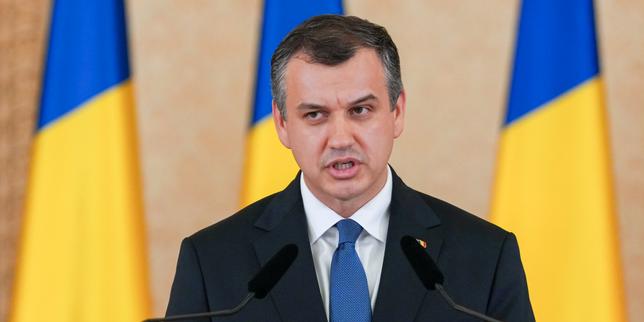
The nomination of European Parliament Member and presidential advisor Eugen Tomac as Romania’s Prime Minister-designate is not a standard political realignment. It is a desperate systemic patch applied to a fractured legislature. Following the collapse of Ilie Bolojan’s coalition via a joint no-confidence motion by the Social Democratic Party (PSD) and the nationalist Alliance for the Unity of Romanians (AUR), President Nicușor Dan has bypassed traditional party structures entirely. By appointing a technocratic figure whose personal party, the People’s Movement Party (PMP), commands zero seats in the national parliament, the presidency has set up a high-stakes constitutional experiment.
The objective of this strategy is clear: stabilize a volatile macroeconomic trajectory, insulate Romania's pro-Western foreign policy from an ascending eurosceptic bloc, and unlock billions in frozen European Union recovery funds. However, the structural math of the Romanian parliament suggests that this technocratic mechanism faces severe functional constraints that could trigger an early general election instead of delivering legislative stability. For a different look, check out: this related article.
The Structural Drivers of the Political Crisis
The collapse of the previous government was accelerated by structural flaws within the governing coalition rather than simple political friction. Two primary systemic pressures broke the executive branch apart.
The Fiscal Consolidation Dilemma
Romania operates under one of the widest budget deficits in the European Union. Access to the EU’s Recovery and Resilience Facility (PNRR) depends strictly on executing deep, unpopular structural changes, including public spending cuts, tax code overhauls, and state-sector digitalization. For a standard political coalition, executing these measures creates an immediate electoral penalty. The PSD leveraged this dynamic, opting to exit and topple the government via a no-confidence motion rather than absorb the political cost of fiscal tightening ahead of future electoral cycles. Further coverage regarding this has been shared by NPR.
The Fragmentation of the Legislative Branch
The current parliament lacks a single dominant ideological center. Instead, it is split into three distinct, incompatible factions:
- The Pro-Western Reformists: A highly fragmented group committed to EU integration and fiscal orthodoxy, yet plagued by severe internal rivalries.
- The Social Democrats (PSD): A disciplined machine focused on maximizing regional patronage networks, which resists rigid fiscal spending limits.
- The Nationalist/Pro-Russian Bloc: Led by AUR, this faction controls approximately 25% of parliamentary seats, systematically blocking Western integration initiatives and fiscal stabilization plans.
The Strategic Logic of the Technocratic Buffer
President Nicușor Dan’s nomination of Tomac relies on a specific political calculation: by shifting the executive branch into a non-partisan, expert-led "technical government," the presidency hopes to alter the cost-benefit analysis for the major parties in parliament.
[Legislative Gridlock] ---> [President Appoints Technocratic PM] ---> [Parties Vote for Reforms Without Taking Ownership]
This structural buffer relies on three core operational pillars.
De-escalation of Party Rivalries
Because Tomac does not represent a competing parliamentary faction, established party leaders do not view his appointment as an immediate threat to their share of the electorate. This structural distance is intended to allow individual lawmakers to vote for necessary fiscal reforms without officially endorsing a rival party's platform.
Preserving External Commitments
With a career anchored in Brussels as a Renew Europe MEP, Tomac serves as a direct signal to international financial markets and European institutions. His appointment aims to stabilize the Romanian leu, which has dropped to record lows, and reassure EU authorities that Bucharest remains committed to its pro-Western geopolitical alignment and the PNRR roadmap.
Shifting the Blame for Fiscal Austerity
The primary value of a technocratic cabinet to a fractured parliament is its built-in obsolescence. Lawmakers can pass essential, painful legislative measures—such as cutting state budgets or raising taxes—while blaming the independent "specialists" for the economic pain. This allows parties to protect their core voter bases from the direct fallout of structural adjustments.
The Legislative Math and Voting Bottlenecks
While a technical government offers clear tactical advantages on paper, its actual survival depends on brutal legislative math. A prime minister-designate requires an absolute majority of sitting lawmakers to confirm a cabinet. Tomac faces a steep climb to build this majority, which is complicated by two structural challenges.
The Electoral Penalty of Abstention
For parties like the PSD, voting to confirm Tomac’s cabinet carries a clear risk. If they support the government, they become co-responsible for the ensuing fiscal austerity. If they reject it, they risk driving the country deeper into an economic crisis, which could trigger a downgrade of Romania's sovereign credit rating.
The Threat of Early Elections
Under the Romanian Constitution, if parliament rejects two consecutive prime ministerial nominations within 60 days, the president can dissolve the legislature and call early elections. This reality sets up a complex game-theoretic calculation for the major parties, as mapped out below:
| Party/Bloc | Core Strategic Objective | Short-Term Tactical Position on Tomac |
|---|---|---|
| Pro-Western Blocs | Avoid early elections; unlock PNRR funds. | Conditional support based on cabinet positions. |
| Social Democrats (PSD) | Maximize leverage without taking fiscal blame. | Strategic abstention or targeted opposition to force concessions. |
| Nationalist Bloc (AUR) | Exploit economic discontent; trigger early elections. | Total opposition to block confirmation. |
Strategic Play: The Execution Roadmap
The viability of Tomac’s prime ministership depends entirely on his execution strategy during the 10-day constitutional window for cabinet formation. To pass the parliamentary vote and stabilize the macroeconomy, the executive design must follow a strict sequence.
The prime minister-designate must completely avoid political appointments. The cabinet should consist exclusively of career technocrats, academic experts, and institutional specialists drawn from the civil service and international bodies. Every ministerial nominee must be chosen specifically to neutralize opposition arguments regarding partisan bias.
The legislative program must focus on a narrow, three-point operational mandate:
- Re-establishing the PNRR compliance milestones to resume the flow of frozen EU funds.
- Drafting a strictly structured 2027 budget framework that lowers the national deficit without relying on ad-hoc tax increases.
- Accelerating the digitalization of the national tax administration agency to curb widespread tax evasion.
Tomac must reject any attempts to form a formal coalition government. Instead, the executive branch should negotiate issue-by-issue legislative majorities. By forcing separate votes for each fiscal reform bill, the administration can compel shifting majorities to pass critical laws. This approach prevents opposition parties from organizing a unified front to block the government's work.
If this legislative strategy fails to secure a majority within the initial confirmation votes, the executive branch must prepare for immediate credit-containment measures. A prolonged political deadlock will force the central bank to intervene heavily to defend the currency, drawing down foreign reserves to offset the rising costs of national debt.
Ultimately, Tomac’s nomination is not a permanent solution to Romania's deep political divides. Instead, it is a calculated attempt to buy time, designed to keep the state functioning until the underlying numbers in parliament shift.


