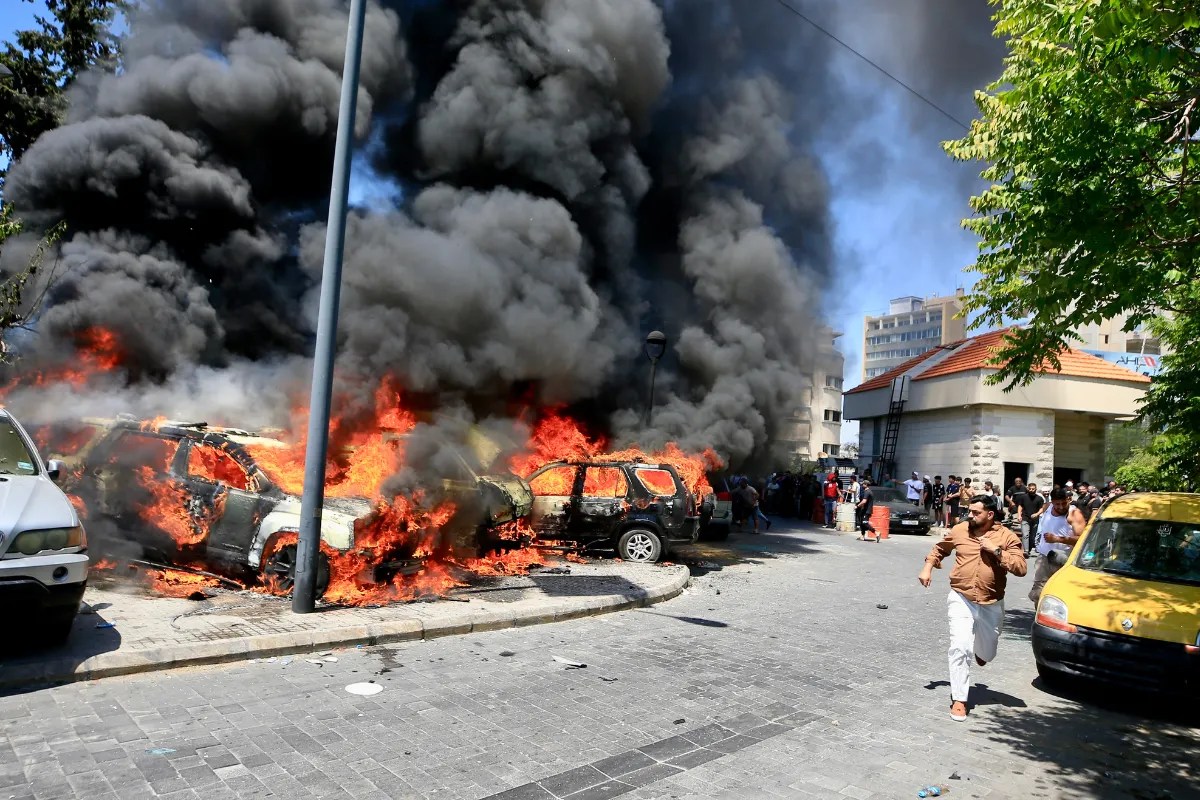
The failure of truce agreements in asymmetric warfare is rarely a product of random escalation; it is the predictable outcome of misaligned strategic incentives and unmonitored security corridors. When state armies and non-state actors enter into a ceasefire while maintaining active deployment postures, the agreement itself becomes a tactical instrument rather than a permanent settlement. The recurrence of missile exchanges between Israel and Hezbollah, despite public commitments to a cessation of hostilities, exposes a fundamental structural flaw: the absence of an enforceable verification mechanism that accounts for asymmetric operational realities.
To understand why these agreements collapse, analysts must move past political rhetoric and examine the operational friction points that dictate the behavior of both parties.
The Asymmetric Equilibrium Matrix
A ceasefire between a conventional state military and an integrated paramilitary organization operates under two conflicting operational frameworks. This divergence creates an environment where actions viewed as defensive optimization by one party are interpreted as an existential breach by the other.
+---------------------------------------------------------------------------------------+
|                       OPERATIONAL CONFLICT IN CEASEFIRE DESIGN                        |
+---------------------------------------------------------------------------------------+
|  ISRAELI OPERATIONAL FRAMEWORK                        HEZBOLLAH OPERATIONAL FRAMEWORK |
|  - Goal: Absolute denial of re-armament               - Goal: Preservation of infrastructure |
|  - Method: Kinetic enforcement of redlines            - Method: Low-signature asset relocation|
|  - Threshold: Active intelligence signatures          - Threshold: Physical territorial incursion|
+---------------------------------------------------------------------------------------+
The Israeli Enforcement Function
For the Israel Defense Forces (IDF), a ceasefire is not a static pause but a dynamic enforcement zone. The primary strategic objective is the prevention of a status quo ante where Hezbollah can replenish its precision-guided munitions and re-establish forward staging positions south of the Litani River.
Israel defines compliance through active deterrence. If national intelligence identifies asset relocation or defensive fortification construction by its adversary, the state apparatus views kinetic intervention not as a violation of the truce, but as a defensive necessity to maintain the core parameters of the agreement. This creates a feedback loop where enforcement actions trigger retaliatory cycles.
The Hezbollah Preservation Function
Conversely, Hezbollah operates on a doctrine of asymmetric preservation. Because the group relies on concealment, subterranean infrastructure, and highly decentralized command structures, any demand for complete visibility or disarmament undercuts its survival strategy.
From their perspective, maintaining a defensive posture requires continuous logistical adjustments and localized movements. When Israel executes strikes to disrupt these logistics, Hezbollah reacts to protect its strategic depth, launching rocket and missile salvos to signal that enforcement actions carry an unacceptable financial and material cost.
Three Structural Fault Lines in Current Border Agreements
The collapse of diplomatic frameworks in the region can be traced to three specific structural failures built into the architecture of modern border agreements.
1. The Verification Deficit
The most critical point of failure is the reliance on third-party monitoring bodies that lack enforcement authority. When an international peacekeeping force is tasked with monitoring a buffer zone, it lacks the mandate and the kinetic capability to intercept illicit logistics or dismantle fortified positions.
- Information Asymmetry: Third-party monitors rely on visible indicators, whereas asymmetric actors utilize low-signature, dual-use infrastructure (such as civilian transport systems and subterranean networks) to move materiel.
- Enforcement Paralysis: When violations are documented, the mechanism for resolution is bureaucratic rather than immediate, allowing tactical facts on the ground to shift permanently before diplomatic pressure can be applied.
2. Ill-Defined Geographical Redlines
While diplomatic texts frequently reference specific geographic markers, such as rivers or internationally recognized borders, they rarely define the vertical or operational limits of these zones.
The exclusion of airspace and the electromagnetic spectrum from physical buffer zone definitions creates immediate friction. Israel considers continuous airborne surveillance vital for verification; Hezbollah treats these overflights as direct violations of sovereignty and kinetic threats, justifying a anti-aircraft or retaliatory missile response.
3. The Re-Armament Loophole
A ceasefire that halts active combat without securing the external supply lines of the non-state actor is structurally terminal. If the border separating the conflict zone from regional suppliers remains porous, the non-state actor can use the reduction in kinetic pressure to rebuild its inventory. This reality forces the state military to choose between watching its adversary achieve strategic parity or launching preemptive strikes, effectively ending the truce.
The Strategic Path Forward: Enforcing Attrition Management
Resolving the cycle of broken agreements requires a shift from idealistic diplomatic pacts to a framework of hard attrition management. Future stability depends on establishing a high-cost verification matrix where infractions yield immediate, predictable, and non-escalatory penalties.
- Implement Automated Kinetic Redlines: Replace subjective human monitoring with automated, sensor-driven verification zones where specific signatures—such as the movement of heavy rocketry or the construction of military-grade berms—automatically trigger proportional economic or structural costs through pre-agreed international mechanisms.
- Decouple Border Security from Regional Geopolitics: Establish localized, bilateral communication channels dedicated exclusively to de-escalation, preventing tactical misfires along the border from being used as leverage in broader regional negotiations.
- Mandate Absolute Supply-Line Interdiction: Shift the focus of international diplomacy from the immediate line of friction to the external logistical nodes. Stability at the border is mathematically impossible without the permanent disruption of the supply lines feeding the conflict zone.