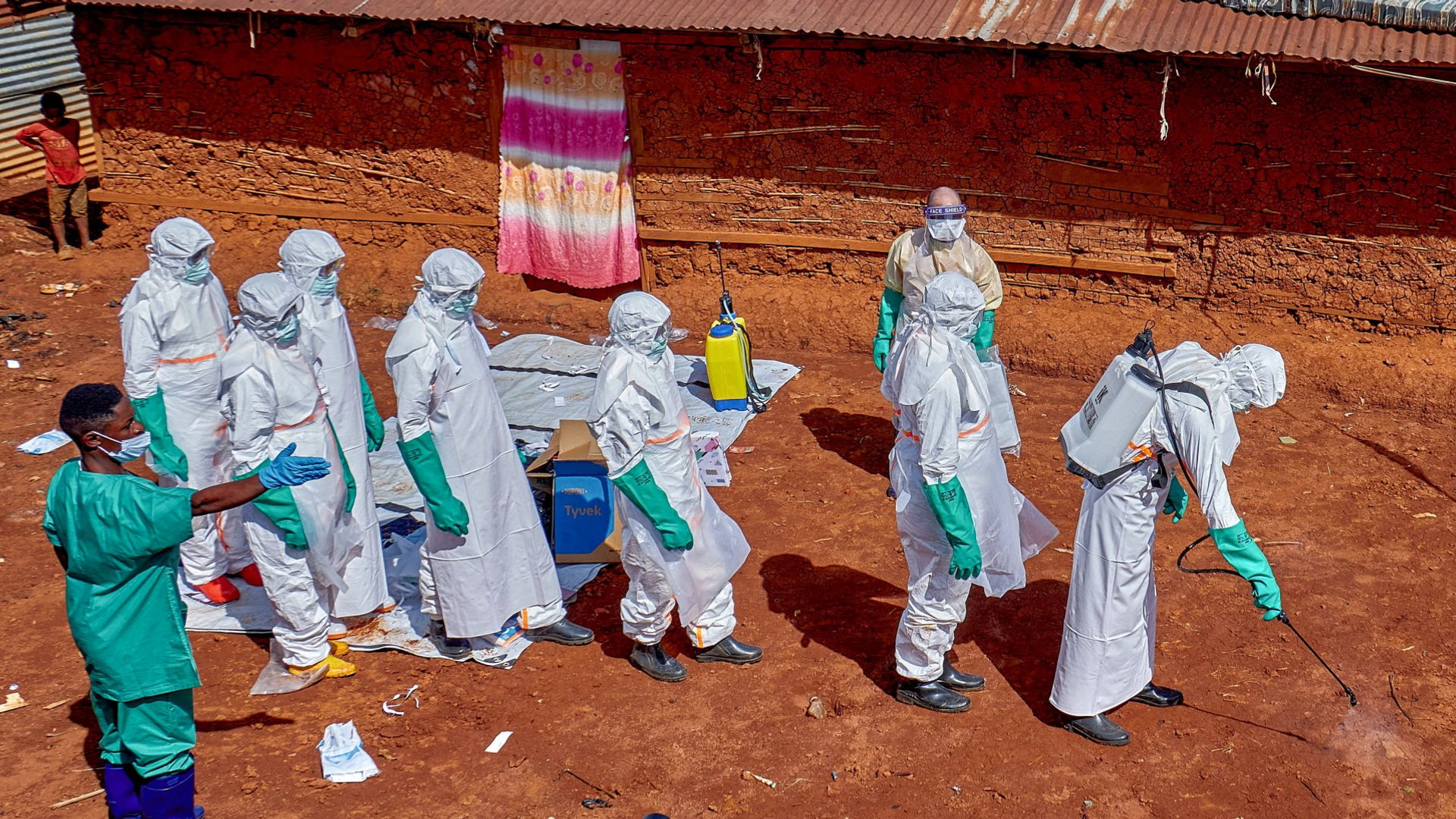
Epidemiological stability during an Ebola virus disease (EVD) outbreak relies on a single metric: the effective reproduction number ($R_t$) falling below 1.0. While public health dispatches frequently highlight nominal metrics like patient discharges or new facility openings, these figures are lagging indicators of transmission dynamics. True containment requires a synchronized operational pipeline that spans rapid molecular diagnostics, localized isolation capacity, and community-integrated contact tracing.
The announcement by the World Health Organization (WHO) regarding five patient recoveries alongside the commissioning of a new treatment centre in the Democratic Republic of Congo (DRC) provides a baseline to evaluate this pipeline. To understand the structural shift from a reactive outbreak response to an active suppression strategy, we must analyze the logistical, clinical, and epidemiological frameworks that govern EVD containment. Expanding on this theme, you can also read: Why Brick and Mortar Ebola Centers Are Failing the DRC.
The Dual-Engine Model of Ebola Suppression
Evaluating containment efficacy requires moving past binary outcomes (survival versus mortality) and looking at the system through two core operational components: clinical clearance velocity and localized surge capacity.
[Symptom Onset] ➔ [Rapid Diagnostic Testing] ➔ [Immediate Isolation] ➔ [Therapeutic Intervention] ➔ [Viral Clearance / Discharge]
1. Clinical Clearance Velocity
The recovery of five patients is not merely a positive clinical outcome; it represents a critical reduction in the community viral load and a systemic acceleration of the containment cycle. In high-consequence viral pathogens, the duration an individual remains infectious directly influences the probability of secondary transmission chains. Experts at Everyday Health have also weighed in on this matter.
When therapeutic interventions—such as monoclonal antibodies (mAb114 or REGN-EB3)—are administered early in the disease lifecycle, they alter the patient’s viral kinetic trajectory. This intervention shortens the time required to achieve two consecutive negative quantitative polymerase chain reaction (qPCR) results.
The operational value of a recovered patient extends to community psychology. High mortality rates within treatment units historically drive symptomatic individuals into hiding, which extends the period of unmonitored community transmission. Documented recoveries function as a proof-of-concept for the local population, lowering the barrier to early self-reporting and accelerating the transition from symptom onset to isolation.
2. Strategic Surge Capacity
The deployment of a new Ebola Treatment Centre (ETC) addresses a frequent point of failure in epidemic responses: geographical decoupling. If infection clusters emerge forty kilometers from the nearest isolation unit, the transit window becomes a high-risk vector for transmission and clinical deterioration.
Constructing localized ETCs solves three operational variables:
- Transit Reductions: Minimizes the time infected individuals spend in public spaces or poorly equipped transport vehicles.
- Nosocomial Mitigation: Prevents the overcrowding of existing primary healthcare facilities, which are often the primary sites of amplification during the early stages of an outbreak.
- Resource Allocation: Distributes diagnostic tools and specialized clinical personnel directly to the geographic epicenter of new transmission chains.
The Containment Pipeline: Vulnerabilities and Cascading Failures
The expansion of bed capacity through new ETCs is a necessary but insufficient condition for outbreak elimination. The efficacy of an isolation bed depends entirely on the throughput of the upstream detection systems. If the operational pipeline breaks down at any stage, the capital invested in treatment infrastructure yields diminishing returns.
The Diagnostic Bottleneck
An empty ETC bed indicates a systemic failure if active transmission continues in the surrounding community. The velocity of the diagnostic pipeline determines the utilization rate of isolation facilities.
$$T_{total} = T_{onset} + T_{collection} + T_{transport} + T_{assay}$$
Where:
- $T_{onset}$: Time from symptom onset to healthcare contact.
- $T_{collection}$: Time required to mobilize a regular extraction team.
- $T_{transport}$: Transit time of the biosample to a GeneXpert-equipped laboratory.
- $T_{assay}$: Analytical run-time of the molecular test.
If the sum of these variables ($T_{total}$) exceeds 48 hours, the patient remains active within the community during their most infectious period, rendering the downstream ETC capacity reactive rather than preventative.
Contact Tracing Deterioration
The opening of a new treatment center must be paired with an exponential increase in contact tracing personnel. Each confirmed case generates a contact web that averages 20 to 50 individuals, depending on population density and social mobility patterns.
The system fails when the volume of contacts outpaces the monitoring capacity of surveillance teams. This creates an unmonitored cohort where secondary cases can transition from asymptomatic incubation to high-viral-shedding states without immediate isolation.
Bio-Secure Logistics and Supply Chains
An ETC is an intensive logistical consumer. Maintaining a biosecure environment requires a continuous influx of Personal Protective Equipment (PPE), chlorine formulations, clean water access, and cold-chain dependent therapeutics.
A disruption in the supply chain for monoclonal antibodies immediately reduces the recovery velocity within the facility. This changes the ETC from a therapeutic space back into a holding facility, which degrades public trust and halts self-reporting.
Structural Realities of North Kivu and Equateur Deployments
Deploying health infrastructure in the DRC requires navigating distinct regional variables that cannot be captured by standardized global health playbooks. The operational profile of an outbreak varies based on geography, infrastructure, and local security.
| Operational Variable | Urban/Conflict Zones (e.g., North Kivu) | Remote Forest Zones (e.g., Equateur) |
|---|---|---|
| Population Mobility | High cross-border and inter-city migration; difficult to establish geofenced contact tracing. | Low localized movement, but high risk of riverine transport spreading virus across long distances. |
| Security Environment | Armed conflict requires armed escorts for medical teams, introducing community friction. | Stable security, but severe geographic isolation slows the deployment of construction materials. |
| Infrastructure Base | Existing telecommunications permit real-time digital surveillance data transmission. | Minimal network coverage forces reliance on physical, delayed logging of epidemiological data. |
| Community Trust | Highly politicized health interventions can spark resistance to vaccination and isolation protocols. | Traditional governance structures require deep engagement with local leaders to authorize medical presence. |
In conflict-dense regions like North Kivu, security incidents frequently interrupt contact monitoring. When a surveillance team cannot access a zone for 72 hours, the continuity of the data chain breaks. This requires a resource-intensive restart of the 21-day incubation monitoring cycle for that entire cohort.
Conversely, in remote equatorial regions, the primary constraint is physical access. Moving specialized laboratory equipment across unpaved terrain or river networks introduces mechanical risks and extends the diagnostic window ($T_{transport}$), giving the virus time to outpace containment efforts.
Tactical Reconfiguration for Outbreak Suppression
To convert the opening of a new treatment center and initial patient recoveries into an elimination strategy, operational leaders must shift from static capacity expansion to dynamic resource deployment.
                       [Epidemiological Data Input]
                                    │
                                    ▼
                      [Dynamic Resource Allocation]
                                    │
            ┌───────────────────────┴───────────────────────┐
            ▼                                               ▼
[Ring Vaccination Target]                     [Mobile Diagnostic Deployment]
            │                                               │
            └───────────────────────┬───────────────────────┘
                                    │
                                    ▼
                       [R_t Suppression Below 1.0]
Decentralize Diagnostic Nodes
Instead of transporting biosamples to centralized laboratories, deploy mobile, solar-powered GeneXpert units directly to newly identified infection clusters. Reducing $T_{transport}$ to near zero optimizes the clinical utility of the new ETC by ensuring patients are admitted during the early, highly treatable phase of the disease.
Synchronize Ring Vaccination with Infrastructure Openings
The declaration of a new ETC should serve as the anchor point for targeted ring vaccination using the rVSV-ZEBOV vaccine. By vaccinating the contact web and front-line health workers concurrently within the catchment area of the new facility, response teams create a geographic buffer zone. This dual approach suppresses the growth rate of new cases while providing clinical space to manage existing ones.
Transition to Community-Led Surveillance Architecture
The standard model of external epidemiologists entering volatile or isolated environments to trace contacts creates friction. A more resilient approach recruits, trains, and compensates local community members to conduct daily symptom logging. This internalizes the surveillance mechanism, ensuring data collection continues even when security threats or logistical barriers block external access.
The containment of Ebola does not depend on a single variable like bed capacity or recovery counts. It relies on the throughput capacity of the entire diagnostic, isolation, and therapeutic pipeline. Response strategies must focus on reducing the time from symptom onset to definitive isolation. Infrastructure expansion only delivers on its promise when backed by rapid diagnostics and community-integrated tracking networks. Achieving this operational synchronization is the only way to drive the reproduction number to zero and terminate an outbreak.