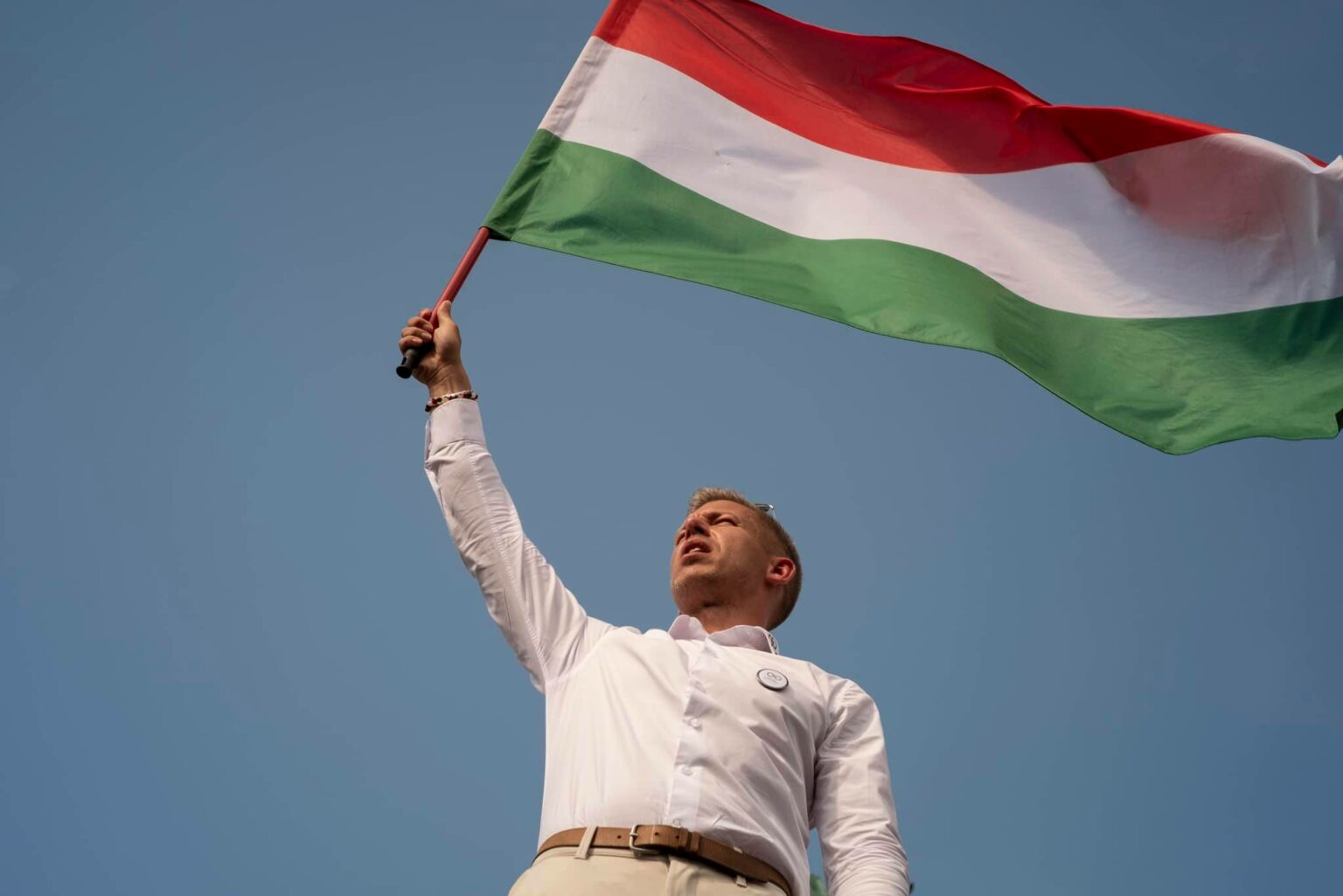
Viktor Orban’s acknowledgement of a "painful" electoral defeat represents more than a personal setback for the Hungarian Prime Minister; it signals the operational failure of the "illiberal democracy" framework under conditions of economic stress and fragmented opposition. This result serves as a case study in how centralized political control systems encounter diminishing returns when faced with high-inflation environments and the emergence of a viable alternative from within the system’s own elite. To understand this shift, one must analyze the decay of three specific pillars: the media-industrial complex, the patronage-based economic model, and the erosion of the "Brussels-as-Enemy" narrative.
The Peter Magyar Variable and the Defection of the Nomenklatura
The primary catalyst for this shift was the emergence of Peter Magyar, a former insider whose Tisza party fractured the Fidesz monopoly on political narrative. Traditional opposition parties in Hungary suffered from a "credibility deficit" rooted in their association with the pre-2010 socialist-liberal government. Orban’s strategy relied on a binary choice: the stability of the current regime versus a return to past chaos.
Magyar neutralized this binary. By emerging from the Fidesz inner circle, he bypasses the "traitor to the nation" label often applied to the left. His rise demonstrates a critical law of autocracy: regimes are rarely toppled from the outside; they are dismantled by defectors who understand the internal levers of power. The Tisza party’s performance indicates that a significant segment of the Hungarian electorate was not looking for a shift to the progressive left, but rather a more transparent, less corrupt version of conservative governance.
Structural Decay in the Information Monopoly
Fidesz maintained power through the Central European Press and Media Foundation (KESMA), an entity that consolidated hundreds of media outlets to ensure a uniform ideological output. This system operates on a feedback loop of state advertising revenue and centralized messaging.
The electoral result exposes a "saturation threshold" in state-controlled media. When the delta between the state narrative (portraying a flourishing, protected nation) and the material reality (record-level inflation and crumbling public services) becomes too wide, the messaging loses its cognitive grip. The 2024-2026 cycle in Hungary has been defined by the highest inflation rates in the European Union, specifically in food prices. No amount of media consolidation can override the immediate economic signaling of a grocery bill.
- The Infrastructure of Messaging: Fidesz relies on billboard campaigns and public service broadcasting.
- The Digital Bypass: Magyar utilized social media platforms—specifically Facebook and YouTube—to circumvent the KESMA gatekeepers.
- The Authenticity Premium: In a highly polished, state-run media environment, unscripted, high-frequency digital engagement carries a higher trust weight with younger and urban demographics.
The Economic Cost Function of Patronage
The Orban model is built on a "nationalist bourgeoisie"—a class of business elites whose wealth is tied to state contracts and EU funds. This creates a feedback loop: political loyalty is rewarded with capital, which is then used to fund political campaigns and media acquisitions.
The suspension of EU Recovery and Resilience Facility (RRF) funds created a liquidity crisis for this patronage network. Without the steady inflow of Euro-denominated transfers, the government was forced to resort to "extraordinary" taxes on banking, retail, and telecommunications sectors. These taxes, while populist in rhetoric, were passed down to consumers, further fueling inflation.
The fiscal bottleneck reveals a structural vulnerability: the regime’s stability is contingent on external subsidies from the very institution (the EU) that it rhetorically attacks. When those subsidies are withheld due to "Rule of Law" mechanisms, the patronage system begins to cannibalize itself. Middle-tier elites, seeing the shrinking pool of resources, begin to hedge their bets, leading to the kind of internal fracturing seen with the Magyar defection.
The Transatlantic Miscalculation: The Trump Alignment
Orban’s strategy has been heavily predicated on a geopolitical "long game" involving a return of Donald Trump to the White House and a shift toward right-wing populism across Europe. By positioning himself as the intellectual bridge between the American MAGA movement and European national-conservatism, Orban sought to gain leverage that exceeded Hungary’s actual economic or military weight.
This alignment created a "reputation trap." By leaning so heavily into the Trump alliance, Orban alienated traditional allies in the Visegrad Four (V4), particularly Poland and the Czech Republic. The divergence over the Russia-Ukraine war further isolated Budapest. While the Orban administration gambled on a "peace" narrative that favored a quick cessation of hostilities (effectively accepting Russian territorial gains), the rest of the region viewed this as a direct security threat.
The electoral defeat suggests that voters prioritized domestic stability and EU reintegration over the Prime Minister’s aspirations as a global ideological leader. The "Trump Ally" title, while providing status in Washington’s think-tank circles, provided zero utility to a voter in Debrecen facing a 20% increase in utility costs.
Demographic Shifts and the Urban-Rural Divide
The election results highlight a hardening of the urban-rural divide, but with a significant shift: the "suburbanization of dissent." Historically, Orban’s strength lay in the rural heartlands, while Budapest remained an island of opposition. The latest data indicates that the Fidesz "firewall" is moving further into the periphery.
Major provincial cities, once Fidesz strongholds, are showing signs of volatility. This is driven by two factors:
- The Brain Drain: Continued emigration of skilled workers to Western Europe reduces the tax base and shifts the remaining electorate toward an older, more dependent demographic.
- Education and Healthcare Crises: The systematic underfunding of these sectors has reached a breaking point. Strikes by teachers and the visible decay of hospital infrastructure have become visceral symbols of the regime’s failure to manage the core functions of a state.
The Mechanism of the "Painful" Concession
The use of the word "painful" in the concession is a calculated rhetorical move. It signals to the Fidesz base that the leader is not defeated by the opposition, but "betrayed" by external forces or internal "judases." This frames the loss not as a rejection of the ideology, but as a temporary setback in a larger crusade.
However, the technical reality of the defeat is found in the voting margins. Fidesz failed to achieve the "supermajority" psychology that has defined Hungarian politics since 2010. When a leader who markets himself as "unbeatable" and "inevitable" loses a significant contest, the aura of invincibility dissolves. This has a direct impact on the bureaucracy and the judiciary; civil servants and judges who previously feared reprisal for non-compliance now see a viable path to a post-Orban future.
Tactical Realignment and the Path Forward
The administration is likely to respond with a "fortress" strategy. This involves:
- Legal Retrenchment: Utilizing the current parliamentary majority to further insulate the patronage network from future investigations.
- Aggressive Sovereignty Rhetoric: Doubling down on the "Sovereignty Protection Office" to target NGOs and independent media as foreign agents.
- Economic Reorientation: Seeking alternative capital flows from non-EU sources, specifically China and the Gulf States, to bypass the EU funding freeze.
The "painful" result is not an endpoint but a transition into a more volatile phase of Hungarian politics. The opposition's challenge is to convert a protest vote into a sustainable governing coalition—a task that requires moving beyond "anti-Orbanism" into a coherent economic program. For the regime, the challenge is to manage a managed decline without a total systemic collapse.
The strategic play for the opposition is to maintain the pressure on the "corruption-inflation" nexus. For international observers, the lesson is clear: centralized control systems are most vulnerable not at their peak of oppression, but at their moment of economic inefficiency. The Hungarian model is currently failing the efficiency test.