The expansion of Israeli kinetic operations into Lebanese residential zones far removed from the Blue Line represents a shift from tactical border attrition to a strategy of systemic degradation. This evolution in the conflict's geography is not a byproduct of random escalation but follows a specific operational logic: the identification and neutralization of Hezbollah’s dispersed "deep-tier" infrastructure. By analyzing the intersection of urban density, dual-use infrastructure, and the physics of modern munitions, we can quantify the escalating risk to non-combatants, particularly children, in areas previously considered peripheral to the active theater of war.
The Infrastructure of Dispersion
Hezbollah’s military architecture relies on the principle of nested presence. Unlike conventional militaries that concentrate assets in hardened silos or remote bases, Hezbollah utilizes a "Human Shielding" and "Dual-Use" doctrine that integrates command nodes, munitions storage, and launch platforms within civilian population centers. For another look, see: this related article.
This dispersion creates three distinct risk vectors:
- Proximal Risk: The physical proximity of high-value targets to residential dwellings.
- Functional Risk: The use of civilian homes as storage units for medium-range rockets, which effectively turns a private residence into a military objective under International Humanitarian Law (IHL).
- Secondary Volatility: The risk of secondary explosions—uncontrolled detonations of stored ordnance following an initial strike—which often results in a blast radius significantly larger than the initial munition’s intended effect.
The Calculation of Proportionality and Collateral Damage
The targeting of homes in the Bekaa Valley and Mount Lebanon, often hundreds of kilometers from the front lines, is governed by a complex cost-benefit calculus known as the Proportionality Test. This mathematical and legal framework weighs the expected "concrete and direct military advantage" against the anticipated "incidental loss of civilian life." Related coverage on this matter has been shared by BBC News.
The failure of this framework in the current context stems from information asymmetry. If an intelligence assessment suggests a high-ranking commander or a significant cruise missile battery is located in a multi-story apartment building, the military advantage is ranked high. However, the density of Lebanese households—often housing multi-generational families in single units—means the denominator of civilian risk is frequently underestimated.
The Kinetic Variables
When a strike occurs in a non-frontier residential area, the resulting casualties are a function of three variables:
- Munition Yield: The use of 2,000lb JDAMs (Joint Direct Attack Munitions) provides the necessary penetration to reach underground bunkers but guarantees the total collapse of adjacent structures.
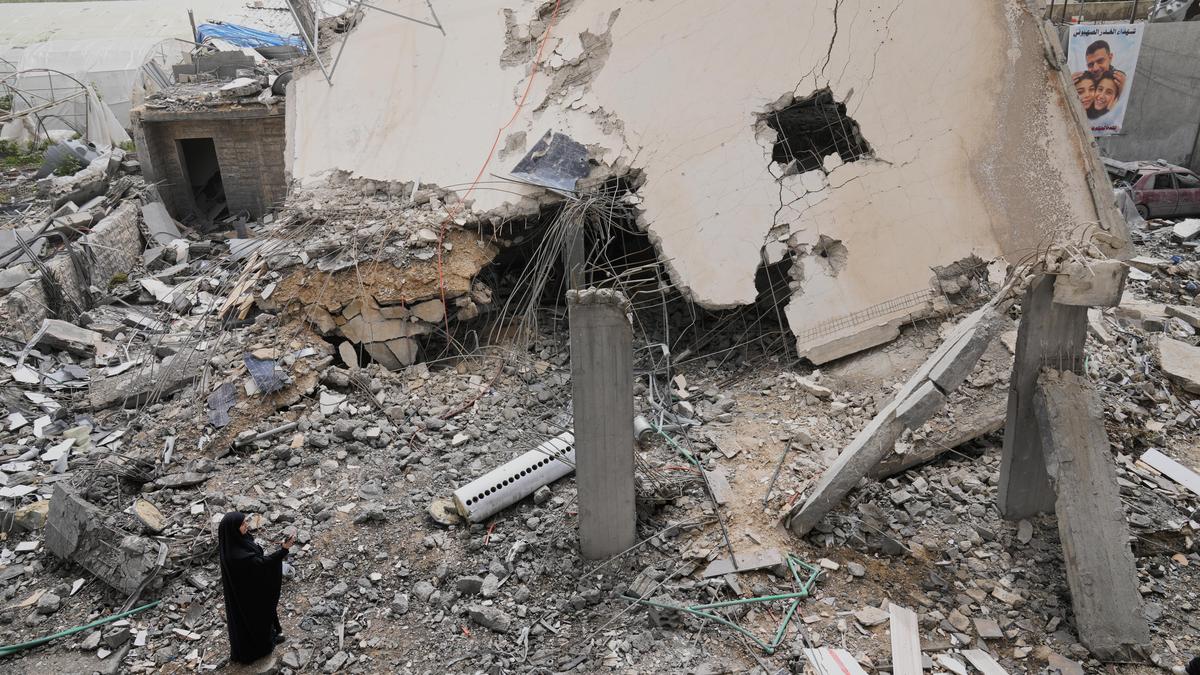
- Structural Integrity: Many Lebanese residential buildings are constructed with reinforced concrete but lack seismic or blast-resistant framing, leading to "pancake" collapses where floors stack on top of each other, leaving zero survivable voids.
- Time of Engagement: Strikes conducted during evening hours or early morning maximize the probability of entire families being present, significantly increasing the casualty count among children who are home from school.
Psychological Attrition and the Strategy of Geographic Pressure
The expansion of strikes to areas like Byblos or the northern reaches of the Bekaa serves a dual strategic purpose beyond immediate asset destruction. It aims to disrupt the internal displacement cycle. By striking "safe" areas, the Israeli military creates a state of perpetual insecurity, signaling that no geographic location offers immunity if it hosts Hezbollah assets.
This creates a "Pressure Valve" effect on the Lebanese state and Hezbollah’s social base. The logic dictates that as the cost of hosting or living near Hezbollah infrastructure becomes lethal, the civilian population will exert pressure on the organization to de-escalate. However, history suggests this often results in the opposite: a "Rally 'Round the Flag" effect or a total breakdown of social trust, neither of which facilitates a clear path to ceasefire.
The Data Gap in Casualty Reporting
A critical limitation in analyzing these strikes is the lack of real-time, independent verification of the military status of the targets. When children are killed, the immediate narrative focus is on the human tragedy—a legitimate and necessary focus—but from a strategic analysis perspective, the "Why" is often obscured.
There are two competing hypotheses for why non-frontier residential strikes are increasing:
- Intelligence Maturation: Israel is acting on a backlog of "banked" targets that were identified over years but remained untouched until the threshold for full-scale war was crossed.
- Target Dilution: As primary military targets are destroyed, the criteria for "acceptable collateral damage" are lowered to include lower-value targets, increasing the risk to civilians for diminishing military returns.
The Economic Burden of Deep-Tier Strikes
The destruction of homes far from the front line does not just kill; it creates long-term systemic fragility. Unlike the border villages, which have been intermittently destroyed and rebuilt over decades, the interior of Lebanon represents the country's remaining economic engine.
The destruction of a single apartment block in an interior town triggers:
- Permanent Displacement: Families who flee the border to the interior and are struck there lose their last vestige of stability, often becoming permanent refugees.
- Capital Flight: Investment in Lebanese real estate and infrastructure ceases entirely when the geography of war is redefined as "total."
- Medical System Saturation: Rural and interior hospitals are not equipped for the trauma loads associated with heavy aerial bombardment, leading to higher mortality rates from treatable injuries.
Strategic Divergence
The current trajectory indicates a transition from a war of positions to a war of systems. Israel is betting that the systemic degradation of Lebanon’s interior—and the subsequent civilian toll—will force a strategic retreat by Hezbollah. Hezbollah, conversely, is betting that the international pressure generated by the optics of civilian and child casualties will force a premature end to Israeli operations.
This creates a "Deadlock of Pain." The military play here is not the seizure of territory, but the exhaustion of the opponent's social and structural endurance. To stabilize this environment, the operational requirement is a shift toward "Target-Specific Restraint," where the yield of the munition is strictly calibrated to the intelligence confidence level of the target's military value. Without this calibration, the strategic objective of long-term security will be undermined by the generational radicalization born from the ruins of these non-frontier homes.