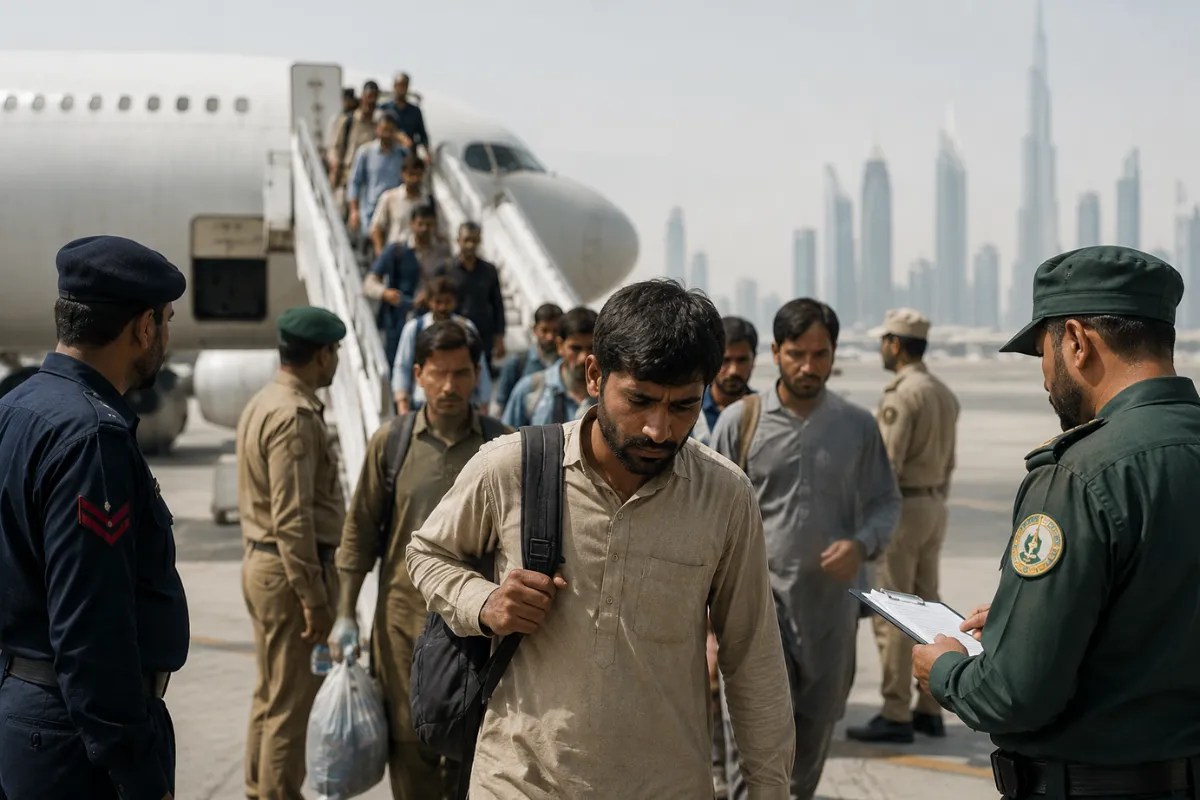
The structural decline of Pakistan’s low- and semi-skilled labor market within the Cooperation Council for the Arab States of the Gulf (GCC) is not a temporary fluctuation. It represents a systemic misalignment between Pakistan’s workforce development architecture and the evolving macroeconomic priorities of host nations like Saudi Arabia and the United Arab Emirates. Over the past five years, the repatriation of hundreds of thousands of Pakistani workers highlights a fundamental shift: Gulf economies are transitioning from labor-intensive infrastructure expansion to digitized, highly regulated, and localized knowledge economies. Nations relying on exporting raw muscle power without institutional upskilling face structural exclusion.
To understand why Pakistani labor is being systematically displaced, one must analyze the intersection of host-country regulatory shifts, domestic institutional failures in Pakistan, and the changing competitive dynamics of the South Asian labor supply chain.
The Tripartite Framework of Gulf Labor Substitution
The mass repatriation of Pakistani nationals from the Gulf operates under three distinct institutional levers: native labor substitution, digital behavioral surveillance, and the enforcement of credentialing standards.
1. Structural Nationalization and Nitaqat Evolution
The primary driver of labor displacement is the aggressive enforcement of workforce localization policies, most notably Saudi Arabia’s Nitaqat program and similar emiratization initiatives in the UAE. Historically, these programs targeted white-collar roles. Over the last half-decade, the mandates expanded vertically into mid-level technical, administrative, and retail sectors—zones heavily populated by expatriate Pakistani workers.
This creates a rigid mathematical ceiling for foreign employment. As host governments increase the minimum quota of native workers required per enterprise, businesses systematically terminate or decline to renew the visas of third-country nationals to maintain compliance and avoid corporate penalties.
2. The Professionalization Gap and Credential Inflation
Gulf economies are executing a deliberate pivot toward infrastructure modernization. This transition has shifted the labor demand curve away from general laborers toward specialized, certified technicians. The bureaucratic apparatuses of Saudi Arabia and the UAE have introduced mandatory professional classification exams and skills verification programs.
Pakistan’s domestic technical training framework fails at this junction. The mismatch manifest in two ways:
- Lack of Standardized Certification: A significant percentage of the outbound workforce possesses informal, non-certified skills acquired through apprenticeship models (ustad-shagird) that do not translate into verified international qualifications.
- Technological Obsolescence: Training curricula within domestic institutions frequently lag behind the modern construction, logistics, and digital systems currently deployed in GCC smart cities.
When workers cannot clear host-country verification exams, their work permits are legally revoked, triggering mandatory deportation or non-renewal of residency status (Iqama).
3. Behavioral Compliance and Legal Attrition
Host country ministries have significantly tightened the enforcement of public conduct, digital behavior, and civic compliance laws. Strict regulatory frameworks regarding online communication, public assemblies, and financial integrity have transformed minor infractions into grounds for immediate visa cancellation and deportation.
The increase in deportations is directly tied to an uptick in violations concerning undocumented commercial activity, visa overstays, and participation in unauthorized social or political discourse. Gulf security architectures utilize advanced biometric data systems, ensuring that a single legal infraction results in permanent exclusion from the entire GCC bloc.
The South Asian Competitive Equilibrium
The displacement of Pakistani labor is simultaneously an issue of market share loss to regional competitors, specifically India, Bangladesh, and Nepal. The Gulf labor market operates as a strict procurement ecosystem where source countries compete on cost, reliability, digital literacy, and institutional backing.
[Pakistan: High Remittance Costs / Low Tech Certification]
                       vs.
[Competitors: Institutional Upskilling / Regulated Agency Networks]
                       ↓
[Result: Structural Substitution of Pakistani Labor Force]
The second limitation facing Pakistan is the institutional infrastructure managing the migration pipeline. Competitor nations have modernized their overseas employment bureaus, offering pre-departure orientation programs that drill workers on host-country legal frameworks, digital banking applications, and cultural norms.
Conversely, Pakistan’s reliance on fragmented, predatory sub-agent networks introduces high upfront recruitment debts for workers. This financial strain increases the likelihood of workers engaging in unauthorized secondary employment, violating visa conditions, and ultimately entering the undocumented labor pool, which faces targeted crackdowns by Gulf immigration authorities.
Macroeconomic Failure Cascade
The repatriation of this labor force triggers a severe feedback loop within Pakistan's domestic economy, primarily visible through the erosion of foreign exchange reserves and heightened domestic labor market pressure.
The Remittance Remission Funnel
Remittances from the Gulf have historically served as the primary counterweight to Pakistan’s chronic current account deficit. The extraction of hundreds of thousands of income-generating units from the GCC creates a dual-action economic penalty:
$$R_{\Delta} = \sum (W_{i} \cdot C_{i}) - \sum (D_{j})$$
Where total remittance variance ($R_{\Delta}$) is a function of lost wages ($W$) adjusted for consumption changes ($C$), minus the immediate domestic reintegration cost ($D$) of deported individuals.
When workers return, their formal banking inflows cease immediately. The secondary effect occurs as families left behind exhaust their savings, reducing domestic consumption and depressing localized retail and real estate economies that were previously sustained by Gulf capital.
Labor Market Suffocation
The domestic Pakistani economy lacks the industrial capacity to absorb returning semi-skilled and unskilled labor. This creates a supply shock in the domestic informal sector, driving down localized wages and escalating underemployment metrics. The structural rigidity of Pakistan’s agricultural and manufacturing sectors means these returning workers cannot easily re-skill, transforming an external economic asset into an internal socioeconomic burden.
Strategic Realignment Mandate
To arrest the terminal decline of its market share in the global labor economy, Pakistan must decommission its legacy export model and implement a highly regulated, demand-driven human capital strategy.
Institutional Standardization and Verification Hubs
The Ministry of Overseas Pakistanis and Human Resource Development must establish mandatory, internationally accredited testing and certification centers within Pakistan. These hubs must operate in direct partnership with Gulf regulatory bodies, ensuring that before a worker boards a flight, their technical competencies are pre-validated against host-country frameworks.
- Prioritize automation, renewable energy installation, advanced logistics, and mechanized agriculture in training portfolios.
- Decommission training modules focused on low-tier construction or manual maintenance, as these sectors face permanent localization.
Digital Governance of the Recruitment Pipeline
The state must eliminate the multi-tiered sub-agent network by digitizing the entire recruitment ecosystem. By routing all labor requisitions through a centralized, blockchain-verified portal, the financial exploitation of prospective migrants can be mitigated. This reduction in migration cost removes the immediate pressure on workers to seek illegal parallel income streams abroad, thereby lowering the rate of legal infractions and subsequent deportations.
Bilateral Diplomatic Restructuring
Foreign policy frameworks must pivot from general diplomatic engagement to targeted economic diplomacy. Pakistan must negotiate specific, quota-based bilateral labor agreements that tie labor supply to specific development projects in the Gulf, such as Saudi Arabia's Giga-projects, while guaranteeing embedded upskilling pipelines funded jointly by the state and the employer.
Failure to execute this structural shift will result in the permanent marginalization of Pakistani labor, reducing the nation’s primary source of sovereign capital and locking its domestic workforce out of the modern global economy.