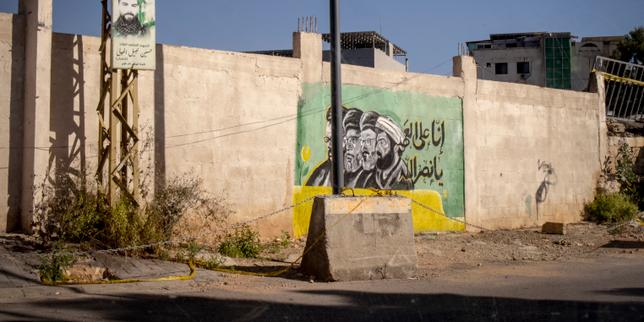
Non-state armed groups facing domestic legitimacy crises regularly utilize external military conflicts to recalibrate their domestic political positioning. When a localized political stalemate threatens an organization's hegemony, the initiation or participation in a broader regional conflict serves as a strategic realignment mechanism. This process does not rely on conventional military victory; instead, it functions through a calculated cost-shifting framework where geopolitical friction is converted into domestic political capital. By analyzing the structural dynamics of non-state actors in volatile governance ecosystems, specifically focusing on organizations operating parallel to weak state apparatuses like Hezbollah in Lebanon, we can isolate the specific variables that turn wartime destruction into political survival.
The Dual-Track Legitimacy Framework
A non-state actor with a hybrid wing—simultaneously operating as a regional militia and a domestic political party—relies on two distinct forms of legitimacy. These tracks operate in a permanent state of tension, requiring constant rebalancing.
       [External Shock / Regional Conflict]
                       │
         ┌─────────────┴─────────────┐
         ▼                           ▼
[Ideological Legitimacy]    [Governance Legitimacy]
(Resistance Narrative)       (Public Service Delivery)
         │                           │
         │ (Surplus)                 │ (Deficit)
         └─────────────┬─────────────┘
                       ▼
         [Domestic Political Realignment]
Ideological Legitimacy (The Resistance Narrative)
This track is built on existential deterrence, external threat projection, and ideological alignment with foreign sponsors. It requires an active or highly plausible external adversary to justify the retention of weapons outside the state framework. When peace or prolonged stalemate occurs, this legitimacy degrades as the domestic population shifts its focus toward standard civic requirements.
Governance Legitimacy (The Service Delivery Track)
This track is built on the provision of parallel public goods, including healthcare, banking alternatives, physical infrastructure, and security. In times of economic collapse or systemic state failure, the cost of maintaining this parallel state becomes unsustainably high. The actor faces a compounding deficit when it cannot shield its core constituency from broader macroeconomic degradation.
When the governance track fails due to systemic economic collapse, the actor experiences a critical legitimacy deficit. To prevent domestic rivals from exploiting this vulnerability, the actor shifts its entire operational weight to the ideological track. Engaging in or escalating a conflict with an external adversary resets the domestic baseline. The primary metric of evaluation changes from economic performance to existential survival, effectively neutralizing domestic political critique.
The Cost Function of Asymmetric Escalation
The strategic utility of war for a hybrid non-state actor is governed by a precise asymmetry in cost distribution. While a state actor evaluates conflict through a traditional cost-benefit lens—measuring GDP loss, infrastructure destruction, and casualty rates against strategic objectives—the hybrid non-state actor utilizes a partitioned cost function.
The non-state actor divides costs into two categories:
- Sovereign Costs: Destabilization of national infrastructure, collapse of the macro-economy, tourism losses, and civilian displacement. These costs are structurally diverted away from the organization and onto the weak formal state apparatus.
- Organizational Costs: Depletion of missile inventories, loss of mid-level commanders, and degradation of localized military infrastructure. These costs are highly subsidized by external state sponsors.
Because the formal state bears the sovereign costs while the non-state actor receives foreign subsidies to offset organizational costs, the net cost of conflict to the organization is artificially suppressed.
This distortion allows the actor to execute a strategy of calculated friction. By forcing the state to absorb the structural damage, the actor positions itself as the sole entity capable of negotiating the post-war reconstruction phase. The physical destruction of the country creates a clean slate for the distribution of foreign aid, which the non-state actor channels through its own parallel institutions, thereby rebuilding its governance legitimacy from a subsidised baseline.
The Three Pillars of Political Rebound
To convert military friction into political leverage during a domestic crisis, the organization activates three structural pillars. These pillars operate sequentially to paralyze domestic opposition and force a consolidation of power.
1. The Monopolization of the Existential Veto
During a conflict, the non-state actor establishes an absolute monopoly over national decision-making, bypassing formal cabinet or parliamentary approval. This action establishes a structural precedent: the state cannot make war or peace without the explicit consent of the militia.
By demonstrating that formal state institutions are powerless to prevent or halt the conflict, the actor permanently diminishes the perceived authority of civilian leaders. Domestic rivals are forced into a secondary role, limited to issuing rhetorical statements while the non-state actor dictates the physical reality on the ground.
2. Sectarian Polarization via Target Conflation
The organization deliberately conflates its organizational survival with the survival of its broader sectarian community. When an external adversary retaliates against the non-state actor's infrastructure, the organization frames these military strikes as an assault on the entire demographic group or nation.
This dynamic triggers a powerful intra-sectarian consolidation mechanism. Even members of the constituency who are highly critical of the actor's domestic political performance feel compelled to rally around the organization due to the perceived existential threat from the external adversary. This effectively silences internal dissent and neutralizes reformist movements within the community.
3. Reconstruction Arbitrage
Post-conflict phases offer a high-yield opportunity for political capital accumulation. When a ceasefire is established, international aid and state resources flow into reconstruction.
The non-state actor utilizes its disciplined, highly organized parallel engineering and social welfare wings to distribute aid faster than the bureaucratic and corrupt state mechanisms. By delivering immediate financial compensation and rebuilding homes under its own branding, the organization transforms the tangible consequences of its strategic miscalculations into a highly visible demonstration of efficacy and patronage.
[Conflict Termination] ──► [International Aid Influx] ──► [Militia Bureaucracy Deployment] ──► [Direct Patronage Solidified]
Structural Bottlenecks and Strategic Risks
This model of political survival is not without significant points of failure. The transition from conflict back to domestic political dominance depends on variables that the non-state actor cannot entirely control. Three distinct bottlenecks limit the efficacy of this strategy.
The Saturation Point of Sovereign Cost
While the organization can divert sovereign costs to the state for an extended period, there is a threshold beyond which the total collapse of civil society erodes the actor’s own foundational base. If the displacement of civilian populations extends across sectarian boundaries into areas controlled by political rivals, it creates intense demographic friction. This friction can trigger localized civil conflict, forcing the non-state actor to fight a multi-front political or military battle domestically, neutralizing the benefits of the external confrontation.
The Sponsor Supply-Chain Vulnerability
The entire cost-shifting strategy relies on the financial and logistical continuity of an external state sponsor. If the sponsor faces domestic economic distress, international sanctions, or internal political instability, the subsidy flow slows or stops. Without the capacity to fund post-war reconstruction independently of the state, the non-state actor loses its reconstruction arbitrage capability, leaving its core constituency exposed to unmitigated sovereign costs.
The Deterrence Paradox
To maintain ideological legitimacy, the actor must project an image of formidable military capability. However, if the external adversary responds with disproportionate force that structurally cripples the non-state actor's command architecture, the narrative of deterrence collapses. The organization is then revealed to have brought catastrophic sovereign costs upon the population without delivering the promised security, permanently damaging its political standing.
Systemic Realignment Priorities
To counter this cycle and prevent hybrid non-state actors from continuously weaponizing external conflicts for domestic political preservation, state actors and international bodies must shift away from standard diplomatic frameworks. Treating the non-state actor purely as a political interlocutor or an isolated military target fails to disrupt the underlying mechanics of their survival strategy.
The stabilization of the domestic political ecosystem requires a highly targeted approach that directly addresses the economic and administrative vulnerabilities exploited by the organization.
- Isolate Reconstruction Capital: International funding for post-war reconstruction must completely bypass parallel NGO structures and sectarian distribution networks run by non-state actors. Capital must be funneled exclusively through audited, transparent state institutions or independent international oversight bodies with strict biometric verification for beneficiaries. This eliminates the opportunity for reconstruction arbitrage.
- Enforce State Demarcation of Sovereignty: Diplomatic negotiations for ceasefires or border demarcations must be conducted strictly between sovereign state entities, explicitly excluding non-state representatives from the formal table. This deprives the militia of the opportunity to validate its existential veto on the international stage.
- De-risk Alternative Public Infrastructure: To erode the governance track of the hybrid actor, international financial institutions must directly capitalize alternative, non-sectarian public goods within the country. This includes establishing municipal solar grids, transparent health centers, and independent micro-finance institutions that operate completely outside the patronage network of the non-state actor.
When the capacity to shift costs is removed, the non-state actor is forced to account for its strategic decisions directly to its domestic constituency, breaking the cycle of conflict-driven political rebounds.



:max_bytes(150000):strip_icc():focal(665x0:667x2)/gettyimages-50733149-2000-8b129a2475974982a915418ce92a73d8.jpg)