The mainstream financial press has found its new darling, and it is called the Trans-Caspian International Transport Route. You probably know it as the Middle Corridor.
For months, the talking heads have beaten the same drum: with Russia heavily sanctioned and the Red Sea a shooting gallery for Houthi rebels, Beijing is shifting its multi-billion-dollar weight behind this third trade artery. The narrative is neat, tidy, and completely divorced from geopolitical and logistical reality. The consensus says China is building a brilliant, bulletproof alternative that bypasses the northern bear and the volatile Gulf.
The consensus is dead wrong.
What the cheerleaders call a strategic masterstroke is actually a logistical nightmare wrapped in a diplomatic mirage. I have spent years analyzing supply chain dependencies and watching state-backed infrastructure projects swallow capital only to yield bottlenecks. The Middle Corridor is not China’s new silk highway to the West. It is an expensive, multi-modal headache that will never carry the volume needed to replace traditional maritime or northern rail routes.
We need to stop treating a series of disconnected ferries and mountain passes as a serious global trade axis.
The Multimodal Math That Does Not Add Up
The core flaw of the Middle Corridor lies in basic arithmetic and physical geography. The traditional Northern Corridor—running through Russia and Belarus—is a seamless, ribbon-straight rail line. You load a container in Chengdu, and it stays on that train until it hits Poland.
The Middle Corridor requires cargo to play a frantic game of musical chairs.
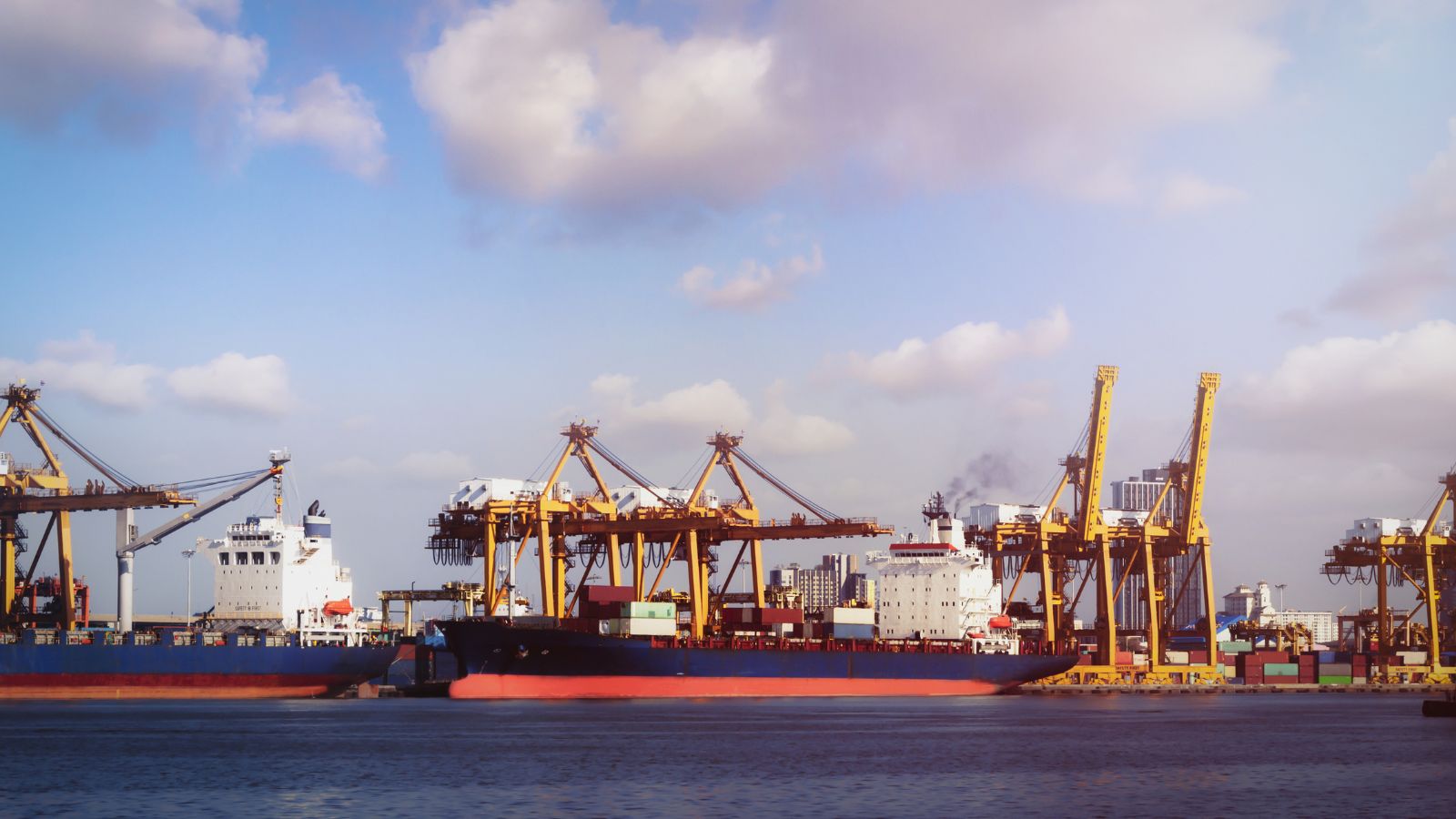
Look at the actual mechanics. A container leaves western China, crosses Kazakhstan by rail, gets unloaded at the port of Aktau, and is crammed onto a Caspian Sea ferry. It floats to Baku, Azerbaijan, where it is unloaded again onto another train, hauled across the Caucasus to Georgia, and either put on another black sea ferry or squeezed through Turkey's bottlenecked rail network.
Every single transfer point—every swap from rail to ship and back to rail—is a point of friction.
- The Loading Penalty: Every time a crane touches a container, costs spike and schedules slip. Multi-modal shipping introduces exponential variance. If a storm hits the Caspian Sea, your entire supply chain stalls in the Kazakh desert.
- The Gauge Problem: The rail networks of Central Asia use the broad Russian gauge ($1520\text{ mm}$), while China and Europe use standard gauge ($1435\text{ mm}$). The Middle Corridor requires multiple bogie exchanges or container transfers just to navigate the tracks.
- The Volume Reality Check: In its absolute peak years, the Northern Corridor handled roughly 1 million Twenty-Foot Equivalent Units (TEUs). The Middle Corridor, even with desperate optimization, struggles to clear 100,000 TEUs.
To suggest that this patchwork of inland seas and national borders can absorb the shock of a closed northern route is pure fantasy. It is the logistical equivalent of trying to empty a swimming pool with a straw.
The Sovereign Extortion Ring
The second fatal assumption is that the nations sitting along the Middle Corridor are stable, frictionless partners eager to cooperate for the greater good of global trade.
They are not. They are a collection of highly protective sovereign entities, each possessing an absolute veto over the transit efficiency of the entire route.
When you ship via the ocean, you deal with international waters. When you ship via the Northern Route, you deal primarily with Russia. It is politically unpalatable right now, yes, but it is a single bureaucratic machine.
To move a widget through the Middle Corridor, you must satisfy the customs officials, port authorities, state rail monopolies, and border guards of Kazakhstan, Azerbaijan, Georgia, and Turkey.
I have watched supply chains choke to death in this region because two neighboring nations couldn't agree on container transit tariffs or digital customs declarations. Azerbaijan and Turkmenistan have historically locked horns over Caspian maritime borders. Georgia’s port infrastructure at Anaklia has been a political football for nearly a decade, stalled by shifting domestic alliances and foreign pressure.
Every country along this path wants to maximize its own transit fees while doing the bare minimum to maintain the tracks. It is a classic tragedy of the commons. China can throw billions of yuan at modernizing the ports of Baku or Aktau, but Beijing cannot buy its way out of centuries of regional friction and bureaucratic inertia.
The False Premise of Western Diversification
The media loves to frame the Middle Corridor as a win-win: China secures a route to its largest market, and Europe gets a supply line that doesn't fund the Kremlin. This answers the wrong question entirely.
The real question isn't "How do we find a third land route?" The question is "Why are we pretending land routes can compete with the ocean in the first place?"
Rail shipping between China and Europe was always a niche luxury product. It was designed for high-value, time-sensitive goods—automotive parts, high-end electronics, fast fashion—that couldn't wait 40 days on a boat but didn't warrant the astronomical expense of air freight. It never was, and never will be, the bedrock of Eurasian trade.
More than 90% of global trade moves by water. A single modern container ship can carry over 24,000 TEUs. To move that same volume via rail would require roughly 240 trains, each a mile long, running perfectly in sequence without a single breakdown or border delay.
By obsessing over the Middle Corridor, Western buyers are investing heavily in a system that offers terrible economies of scale. Even if China optimizes every inch of the Trans-Caspian route, the cost per container will remain prohibitively high compared to maritime freight, even when accounting for the current detours around the Cape of Good Hope.
The High Cost of the Contrarian Truth
Let us be brutally honest about the downside of rejecting the Middle Corridor hype.
If you accept that this third route is a logistical dead-end, you have to face a deeply uncomfortable reality: global supply chains are far more fragile than we want to admit, and we are completely dependent on maritime chokepoints that we no longer control.
If the Red Sea remains compromised and the Northern Corridor remains politically toxic, you cannot simply pivot to Central Asia and expect business as usual. The options are ugly:
- Pay the massive time and fuel premium to sail around Africa.
- Nearshore your manufacturing to North Africa or Eastern Europe and accept higher labor costs.
- Keep using the Russian northern rail lines via Swiss or Asian intermediaries and pray the compliance departments don't catch up with you.
Most multinational corporations are quietly choosing option three while publicly praising the Middle Corridor to satisfy their ESG boards and public relations teams. It is a corporate charade of the highest order.
Stop Asking the Wrong Questions
The "People Also Ask" columns on search engines are filled with variations of: When will the Middle Corridor be fully operational? or Can the Trans-Caspian route replace Russian rail?
These questions are fundamentally flawed because they assume the problem is merely technical. They assume that if you build enough cranes and lay enough track, the route will work.
The bottleneck is not engineering; it is geography and sovereignty. You cannot pave over the Caspian Sea. You cannot build a rail bridge over geopolitical rivalry.
Stop waiting for the Middle Corridor to save your supply chain. Stop tracking the infrastructure loans Beijing is handing out to Astana and Tbilisi as if they are indicators of imminent efficiency. They are diplomatic maneuvers, tools for China to expand its sphere of influence in Central Asia, not a blueprint for a functioning commercial highway.
If your logistics strategy for the next five years relies on containers smoothly gliding across three seas and four borders on a single manifest, you are setting your capital on fire. The third route is a mirage. Accept the friction of the ocean or face the reality of nearshoring. The middle way is nothing but a trap.