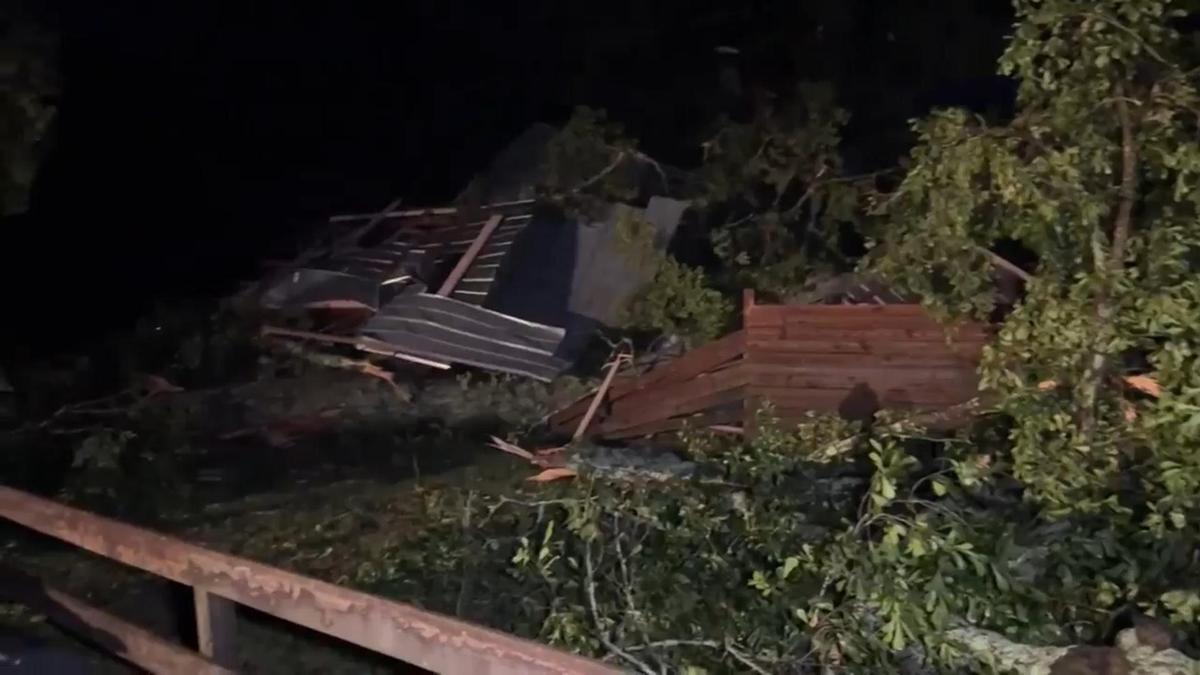
The sky turned a bruised purple before the sirens started. For residents across Mississippi, that sound isn't just a warning; it’s a terrifyingly familiar soundtrack to spring. Over the last 48 hours, a violent weather system tore through the state, leaving a trail of splintered lumber and blown-out windows in its wake. Early assessments from the Mississippi Emergency Management Agency (MEMA) confirm that hundreds of homes are now damaged or destroyed. It's a mess.
When a storm like this hits, the national news cycle usually moves on after forty-eight hours. They show the drone footage of a roofless high school and then vanish. But for the people in Hinds, Rankin, and Scott counties, the real work is just beginning. You don't just "bounce back" from a tornado. You scrape the insulation out of your hair and try to figure out if your insurance agent is actually going to pick up the phone.
What the Initial Damage Reports Really Tell Us
The sheer scale of the destruction is staggering. Reports indicate that multiple tornadoes touched down, with the most significant impact felt in central Mississippi. We aren't just talking about missing shingles. We’re talking about homes shifted off their foundations.
MEMA has been working around the clock to get a firm grip on the numbers. While "hundreds of homes" is the official baseline, that number almost always climbs as search and rescue teams reach more rural, isolated pockets of the state. In some neighborhoods, the damage is surgical—one house is gone while the neighbor only lost a mailbox. In others, the destruction is absolute.
Public infrastructure didn't escape either. Power lines were snapped like toothpicks, leaving thousands in the dark. Downed trees blocked primary emergency routes, making it nearly impossible for first responders to reach certain areas during the first few hours. It’s a chaotic logistical nightmare that requires more than just a few chainsaws to fix.
The Problem With Modern Storm Forecasting
We have better technology than ever. Radar can see the rotation before a funnel even drops. Yet, people are still getting caught off guard. Why? Because "warning fatigue" is a real thing. When you live in the Deep South, you hear tornado sirens three times a month during peak season. You start to ignore them.
That’s a fatal mistake.
Meteorologists at the National Weather Service in Jackson were screaming about this system days in advance. They saw the atmospheric instability. They saw the shear. But translating a "Level 4 out of 5" risk into actual human action is the hardest part of the job. This wasn't just a rainy afternoon. It was a high-octane weather event fueled by Gulf moisture and a powerful jet stream.
If you're looking at the radar and it looks like a "hook," you're already in trouble. By the time you hear the "freight train" sound everyone talks about, your window for movement is down to seconds.
Dealing With the Insurance Nightmare
Once the rain stops, the paperwork starts. This is where most people lose their minds. If your home was one of the hundreds hit, you need to be aggressive.
First, don't wait for the adjuster to tell you what's broken. Take photos of everything. Every cracked tile. Every water stain on the ceiling. If you touch anything before documenting it, you're basically handing money back to the insurance company. They aren't your friends; they’re a business trying to minimize payouts.
I've seen people lose thousands because they didn't have a "home inventory" ready. Honestly, who actually keeps a list of every toaster and pair of shoes they own? Very few people. But in the aftermath of a Mississippi tornado, that list is the difference between a full recovery and a partial one.
The Long Road to Rebuilding
Rebuilding a community isn't just about hammers and nails. It’s about the psychological toll. Mississippi has been hit hard in recent years—Rolling Fork is still a scar on the map from 2023. These repeated hits drain local resources and exhaust the volunteer base.
State officials are already eyeing federal disaster declarations. Without a Major Disaster Declaration from the White House, the burden of the cost falls on the state and the individuals. That’s a heavy lift for a state that already struggles with poverty.
You’ll see the Red Cross and the National Guard on the ground for a week or two. After that, it’s just neighbors helping neighbors. That’s the Mississippi way, but it shouldn't have to be the only way.
Immediate Steps for Affected Residents
If you’re standing in your front yard looking at a pile of debris, here is what you do right now.
- Document the damage immediately. Use your phone to take video of every room, even if it looks okay. Structural issues often hide behind drywall.
- File your claim today. Do not wait for the "official" count to be finished. The first people to file are the first people to get seen by adjusters.
- Beware of "storm chasers." Fraudulent contractors flood disaster zones. If someone knocks on your door offering a "free roof" if you sign over your insurance check, tell them to get lost. Only hire licensed, local contractors with a physical office you can visit.
- Apply for MEMA and FEMA assistance. Even if you have insurance, these agencies can sometimes bridge the gap for temporary housing or immediate needs like food and medicine.
- Get a structural inspection. Just because your house is standing doesn't mean it’s safe. Tornadoes create immense pressure that can rack a frame without showing obvious outward signs.
The recovery from this week's storms will take months, maybe years. The news cameras will leave by the weekend, but the blue tarps will stay on the roofs for a long time. Keep your paperwork organized and don't let the insurance companies lowball your future.