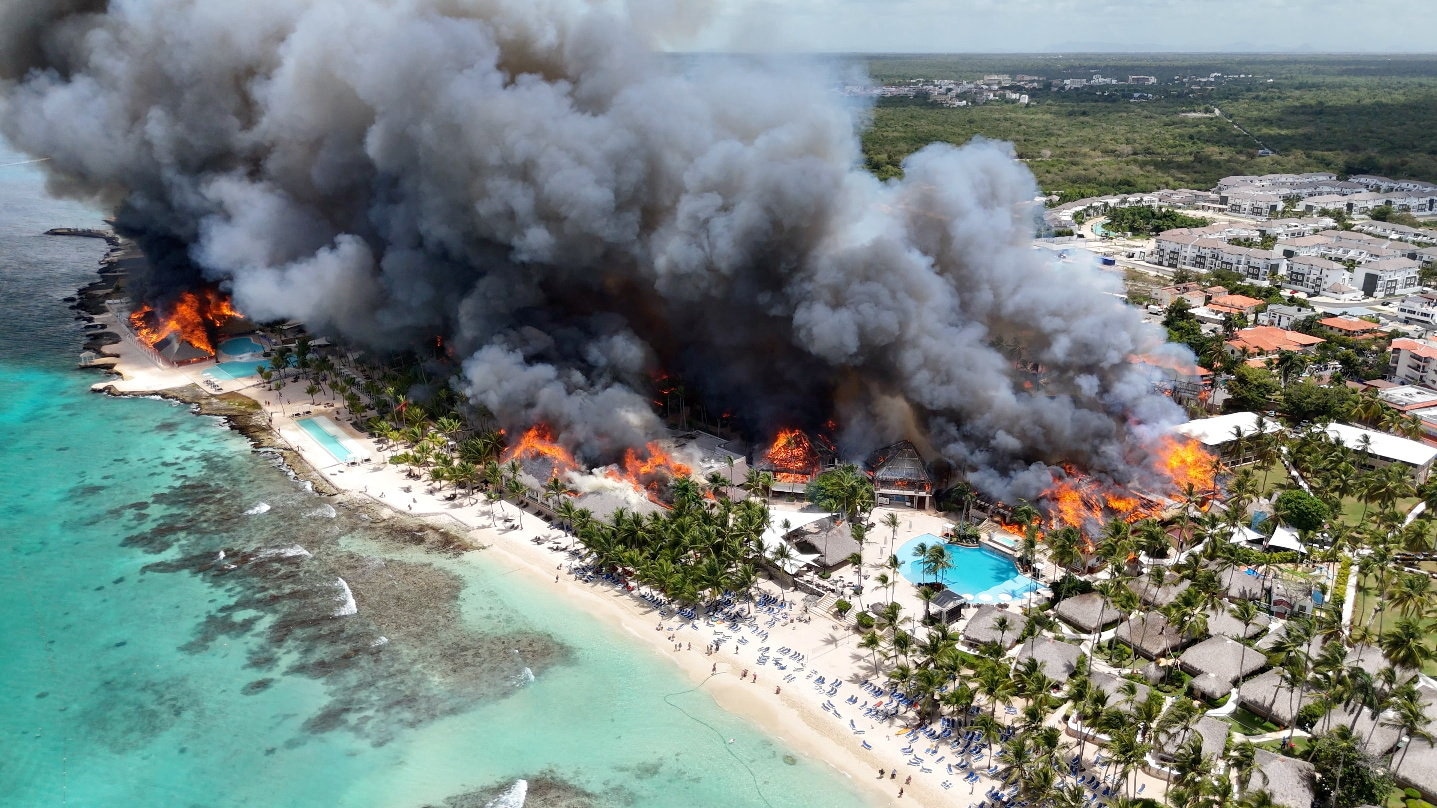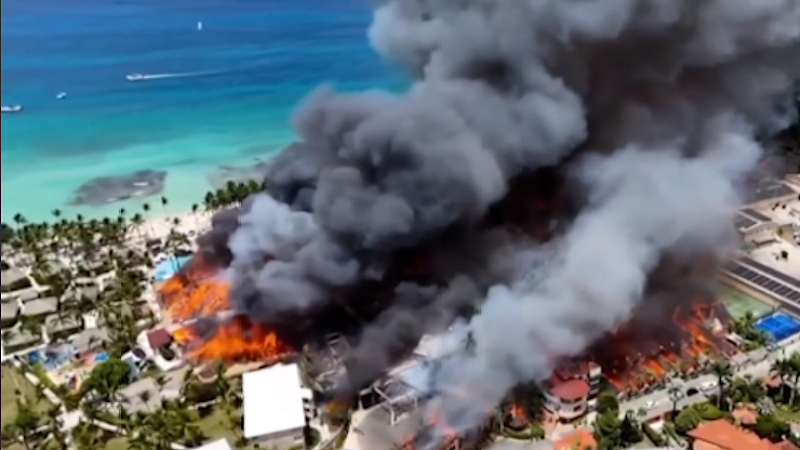
The headlines write themselves. A tragic fire breaks out at an all-inclusive resort in the Dominican Republic. Helicopters swirl. Sirens wail. Panicked tourists flee onto the sand in their swimwear.
Immediately, the international media machine kicks into overdrive. The standard narrative is deployed with mechanical predictability: a searing indictment of Caribbean infrastructure, demands for tighter local regulations, and a collective shudder from consumers who wonder if any destination is truly safe. Meanwhile, you can find similar developments here: The Hidden Cost of Paradise.
But the mainstream analysis misses the real crisis entirely.
The tragedy isn't that a localized fire occurred. Fire is a physical reality that has plagued human structures since antiquity. The real tragedy is the terrifying, systemic complacency of the modern traveler. To understand the complete picture, we recommend the detailed report by Lonely Planet.
For decades, the global hospitality industry has sold a dangerous lie. They have convinced you that by purchasing an all-inclusive package, you are buying a temporary exemption from the laws of physics, probability, and personal responsibility. You aren't just buying a room; you are outsourcing your survival instincts to a corporate entity operating under foreign jurisdictions.
When you step foot inside a mega-resort, you willingly surrender your situational awareness in exchange for unlimited top-shelf liquor and a wristband. That bargain is broken. And until travelers stop treating foreign countries as consequence-free theme parks, these tragedies will continue to claim lives.
The Architecture of Infantilization
Walk into any massive resort complex from Punta Cana to Cancún. The design is intentional. It is engineered to insulate you from the reality of the geography you are visiting.
High walls separate the manicured grounds from the local municipality. Manmade lagoons replace the unpredictable currents of the open ocean. Security guards gatekeep the perimeter. The message is clear: Inside these walls, nothing bad can happen to you.
Psychologists call this environmental conditioning. When humans are placed in an environment where every basic need is anticipated and every potential friction point is smoothed over, executive functioning downshifts. You stop looking for exits. You stop checking floor plans. You assume that the smoke detector on the ceiling is connected to a state-of-the-art dispatch center, rather than a buzzing battery pack installed by a contractor three administrations ago.
I spent twelve years managing risk assessment for corporate hospitality groups across Latin America. I have walked through the back-of-house corridors that guests never see.
Here is what the glossy brochures hide:
- Regulatory Theater: Local fire codes exist on paper everywhere, but enforcement is highly variable. A resort might pass an annual inspection through administrative inertia or local political influence, while its actual emergency suppression systems are corroded by salt air.
- The Turnstile Staffing Model: The staff members operating these properties are often underpaid, minimally trained, and subjected to massive turnover rates. The person responsible for your evacuation route might have started their job three days prior.
- Delayed Alarm Panic: Resort management teams are terrified of false alarms. A full evacuation ruins the guest experience, triggers bad reviews, and costs money. Consequently, there is almost always a catastrophic delay between the first scent of smoke and the actual activation of a public alarm system while management "verifies" the threat.
When a crisis hits, you are not being protected by an elite, synchronized team of safety professionals. You are trapped in an unfamiliar concrete labyrinth with hundreds of panicked, intoxicated strangers and a skeleton crew of staff who are just as terrified as you are.
Dismantling the Flawed Travel Safety Inquiries
The internet is flooded with anxious travelers asking variations of the same fundamentally flawed questions. The forums light up with panic after every incident. Let us dismantle the premise of these inquiries with some brutal reality.
Is the Dominican Republic safe to visit right now?
This is the wrong question. It implies that safety is a binary switch flicked on or off by a nation's tourism board. The Dominican Republic, like any nation of over eleven million people, contains zones of extreme luxury and pockets of intense structural neglect.
When a hotel fire happens, the threat isn't the passport country you are standing in. The threat is the specific building envelope you are sleeping inside. A poorly maintained property in Miami Beach can kill you just as quickly as one in Puerto Plata. Framing safety as a geographic lottery allows you to ignore the concrete, micro-level choices that actually dictate whether you live or die in an emergency.
Why didn't the resort's automated systems stop the disaster?
Because technology is only as functional as the human chain maintaining it. Travelers possess an almost religious faith in automated infrastructure. They see a sprinkler head and assume they are encased in an impenetrable shield of engineering.
They do not consider that the water pressure valve in the basement might be shut off for maintenance, or that the backup generator lacks fuel because a local supervisor skimmed the budget line item. Automation creates an illusion of security that breeds total paralysis when the systems inevitably fail.
The Data of Displacement
Let us look at the cold numbers that the travel lobby prefers to bury in appendix reports.
According to historical data compiled from international tourism safety reviews, the vast majority of accidental deaths involving Western tourists abroad do not occur because of high-profile acts of terror or systemic infrastructure collapse. They happen due to routine, mundane failures: drowning in unmonitored pools, vehicular collisions on poorly lit roads, and asphyxiation or trauma during localized building fires.
| Hazard Type | Public Perception Risk | Actual Statistical Frequency | Primary Contributor |
|---|---|---|---|
| Terrorism/Cartel Violence | Extremely High | Infinitesimal (in resort zones) | Media amplification |
| Infrastructure/Fire/Structure | Moderate | Low but Catastrophic | Structural neglect & delayed response |
| Drowning/Water Hazards | Low | High | Alcohol consumption & lack of lifeguards |
| Transport/Road Accidents | Negligible | Extremely High | Poor transit options & lack of seatbelts |
The data proves that the variance in your personal safety abroad is entirely dependent on your own behavior and immediate environment, not the macroeconomic status of the host nation. Yet, the average traveler spends hours researching local crime statistics on Reddit while failing to spend thirty seconds locating the fire escape staircase next to their hotel room door.
The Liability Disconnect
If you believe that your domestic legal system protects you when an international vacation goes sideways, you are dangerously mistaken.
Most major resort brands operate through complex webs of franchising, licensing agreements, and shell corporations. The corporate entity you booked through in Chicago or London rarely owns the physical brick-and-mortar asset in the Caribbean.
If a fire breaks out due to gross negligence, your ability to seek damages or hold executives accountable is severely throttled by jurisdictional barriers. The terms and conditions you checked without reading when booking your trip explicitly state that the parent brand is not liable for the operational failures of local third-party owners.
You are, quite literally, on your own.
This reality should not induce terror. It should induce clarity. Once you accept that no corporate entity or foreign government truly cares about your survival, you can begin taking the practical, unglamorous steps necessary to protect yourself.
Tactical Autonomy for the Modern Traveler
Stop acting like a passive consumer of hospitality. Start acting like an active participant in your own survival. If you are going to travel to all-inclusive properties, you must adopt a framework of tactical autonomy.
1. The Rule of Four Floors
Never accept a hotel room assignment above the fourth floor. Most fire department ladder trucks in developing nations cannot effectively reach or rescue occupants above this height. Furthermore, if you must descend a smoky stairwell on foot, doing so from the fifteenth floor requires physical stamina and prolonged exposure to toxic gasses that the average vacationer cannot sustain.
2. The Physical Reconnaissance
When you drop your bags in your room, your vacation does not begin. It begins after you perform a physical reconnaissance of your escape route.
- Open your door.
- Turn left or right.
- Walk to the emergency exit staircase.
- Physical count the number of doors between your room and that exit.
- Open the staircase door to ensure it is not locked from the inside—a shockingly common occurrence in resorts attempting to prevent theft or unauthorized guest movement.
If the corridor fills with pitch-black, blinding smoke at 3:00 AM, you will not be able to read directional signs. You must be able to crawl along the floor and count the door frames with your hand to find the exit by touch alone.
3. Pack Your Own Redundancies
Do not rely on the resort to provide safety tools. A minimalist survival kit takes up less space than a pair of sandals:
- A high-lumen tactical flashlight: Kept on your nightstand, not packed in a suitcase. Hotel emergency lighting systems frequently fail during fires.
- A mechanical door stop: Hotel electronic locks can malfunction when exposed to extreme heat or electrical shorts, trapping you inside a burning room. Wedging your door slightly during a known emergency can save your life.
- A smoke hood: A compact, heat-resistant filtration hood can give you an extra fifteen minutes of breathable air while navigating a toxic corridor.
The Cost of the Illusion
The contrarian truth is uncomfortable: the very amenities that draw people to massive, self-contained resorts are the exact elements that amplify danger when things go wrong. The concentration of hundreds of people in unfamiliar, sprawling layouts, fueled by cheap alcohol and a false sense of security, creates an ideal environment for tragedy.
The solution is not to stop traveling, nor is it to wait for the international community to mandate universal safety standards that will never arrive.
The solution is to discard the childish expectation that safety can be packaged, purchased, and guaranteed by a third party. The world is indifferent to your vacation plans. Gravity does not care about your resort rating. Fire does not respect your premium membership status.
Stop outsourcing your awareness. The next time you check into a paradise enclave, look past the welcome cocktail, locate the nearest exit, and rely entirely on yourself.