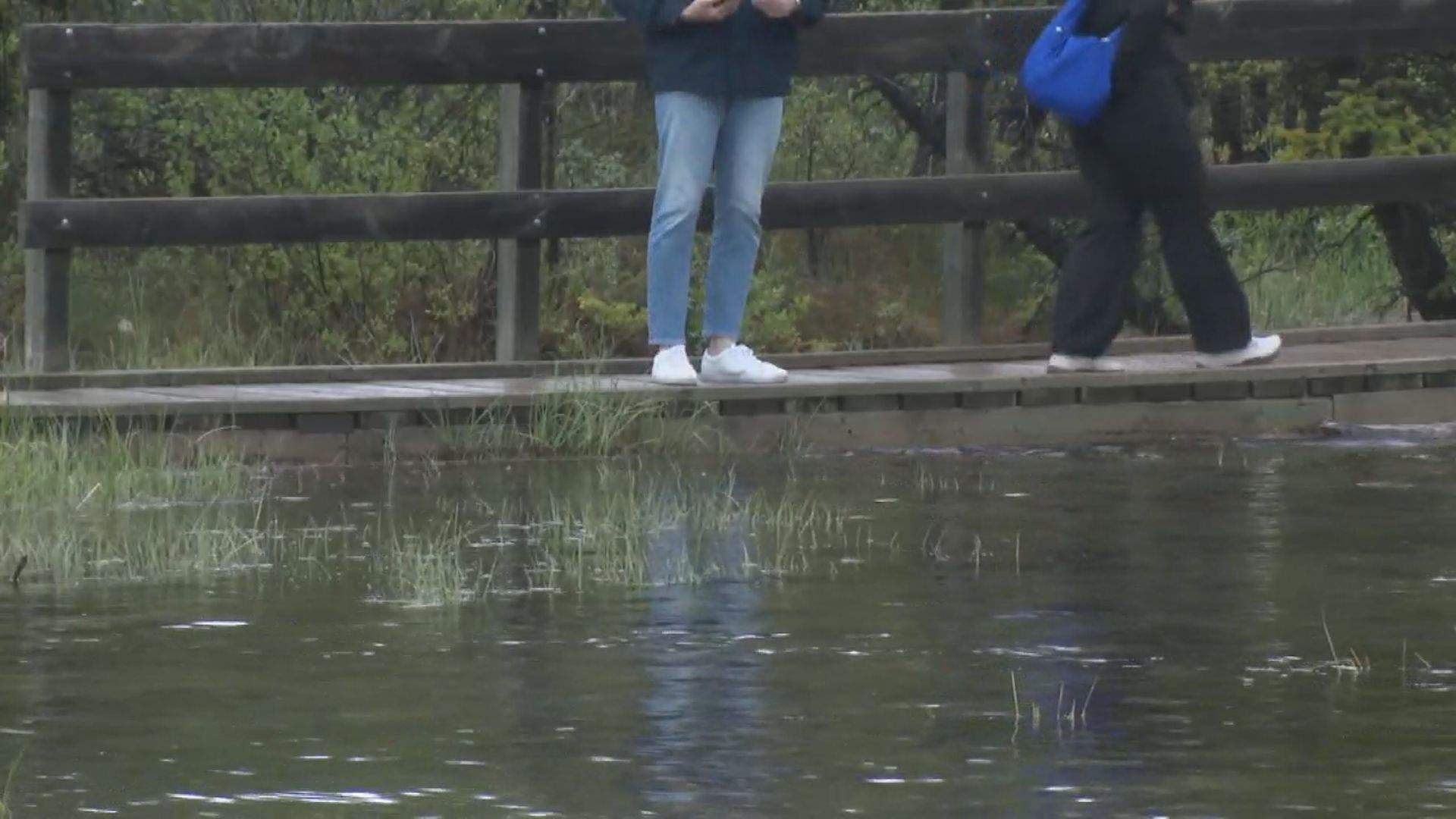
The sound does not come from the sky. That is the first mistake everyone makes.
When you live in the shadow of the Canadian Rockies, you learn to watch the peaks for danger. You look for the sudden, blinding flash of a summer storm or the heavy, bruised clouds hanging over Mount Rundle. But in the late spring, the real threat does not fall on your head. It rises from beneath your boots.
It starts with a vibration, a low, guttural hum that you feel in your molars before you hear it with your ears. Then comes the smell. It is not the crisp, pine-scented air that postcards promise. It is the scent of old earth, ancient decay, and hyper-saturated gravel. By the time the water breaks through the basement floorboards of a million-dollar home in Canmore, it is already too late. The mountains are melting, and they have chosen the town as their drainage ditch.
To understand why a picturesque mountain community suddenly finds itself battling localized flooding, you have to understand the terrifying mathematics of a subterranean mountain landscape.
Every winter, the peaks above Bow Valley accumulate a massive, dense layer of snowpack. Under normal circumstances, this frozen reservoir thaws at a leisurely pace, feeding the creeks and the Bow River over several months. It is a delicate choreography of temperature and time. But when an unseasonably warm spell collides with a relentless barrage of heavy rainfall, the choreography turns into a stampede.
Think of the mountain as a giant, tilted sponge made of limestone and gravel. In May and June, that sponge is already dripping, completely saturated by the initial spring melt. When a torrential downpour hits the peaks, the water cannot sink into the mountain. It runs off the surface in sheets, looking for any path of least resistance.
In Canmore, that path leads directly through the alluvial fans—the wide, cone-shaped deposits of gravel and debris left behind by ancient glaciers. The town is built right on top of them.
Consider a hypothetical resident named Sarah. She moved to the Rockies for the quiet, the postcard views, and the clean mountain living. On a Tuesday evening, her street looks perfectly dry. There are no overflowing creeks nearby. The storm drains on her road are clear. Yet, twenty minutes later, two inches of icy, muddy water are bubbling up from the sump pump in her basement, ruining decades of photo albums and family keepsakes.
Sarah is not dealing with a river breaking its banks. She is dealing with a rising water table. The very ground beneath her neighborhood has become a pressurized highway for millions of gallons of displaced mountain runoff.
This is the invisible crisis of localized flooding. It lacks the cinematic drama of a massive tidal wave or a collapsing dam, but its destruction is agonizingly methodical. It ruins foundations, warps floorboards, and breeds toxic mold, all while the sun is shining overhead.
The local emergency crews understand this calculus all too well. They are not just fighting the water they can see; they are playing a high-stakes game of chess against a shifting underground matrix. Sandbags are stacked high along the banks of Cougar Creek, a notorious channel that tore through the town during the catastrophic floods of 2013. Since that historic disaster, millions of dollars have been poured into state-of-the-art mitigation barriers, designed to catch massive boulders and debris before they can crush residential areas.
But mitigation is an evolving science, and nature possesses an infinite budget. While the massive debris nets and concrete channels do their job to protect against a catastrophic mountain torrent, they cannot stop the slow, insidious rise of groundwater in low-lying subdivisions.
When the rain pours down in sheets, municipal workers work through the night in the blinding dark. They deploy high-volume pumps, clear debris from culverts, and monitor critical infrastructure with flashlights cutting through the gloom. The tension in the town is palpable. Every resident who lived through 2013 watches the water marks on the bridge piers with a knot in their stomach. They know how quickly a basement puddle can transform into a community-wide evacuation order.
The vulnerability of living in a mountain paradise is a hard truth to swallow. We like to believe that our engineering, our retaining walls, and our sophisticated drainage systems can tame the wild topography of western Canada. They cannot. They can only buy us time.
Living here requires a shift in perspective. It demands an acknowledgment that the landscape is alive, constantly shifting, and utterly indifferent to human zoning laws. The gravel beneath the town belongs to the mountains. When the peaks decide to shed their winter coats all at once under a warm June rain, that gravel will fulfill its ancient geological purpose.
The rain eventually stops, as it always does. The clouds break apart to reveal the jagged, snow-streaked peaks of the Three Sisters, looking pristine and peaceful against a blue sky. But down in the valley, the pumps are still humming, a relentless, mechanical rhythm against the retreating water.
On the kitchen counter of a ruined basement, a single, muddy boot sits next to a bucket of bleach. The water is receding back into the dark spaces between the stones, leaving behind the quiet, exhausting work of rebuilding, and the lingering knowledge that the ground beneath our feet is never truly still.


