The financial press is currently obsessed with a single, lazy narrative.
They look at the 80% export growth from Chinese automakers like BYD and Chery and declare it an overnight victory for the electric vehicle revolution. They tell you that cheap, high-tech Chinese EVs are sweeping across the globe, catching Western legacy automakers flat-footed. They warn of an imminent, total eclipse of Detroit, Stuttgart, and Tokyo.
It is a neat, clean story. It is also completely wrong.
The assumption that China’s skyrocketing automotive exports are driven by a sudden global hunger for electric vehicles misses the actual mechanics of the market. If you look past the breathless headlines and analyze the customs data, shipping manifests, and regional registration numbers, a wildly different reality emerges.
China is not winning the global race because the world suddenly wants EVs. China is winning because it quietly cornered the market on internal combustion and hybrid vehicles in regions the West chose to ignore, while simultaneously masking its domestic overcapacity as an export triumph.
The ICE Deception: What the Headlines Hide
The most egregious flaw in the current media consensus is the conflation of "Chinese automotive exports" with "Electric Vehicles."
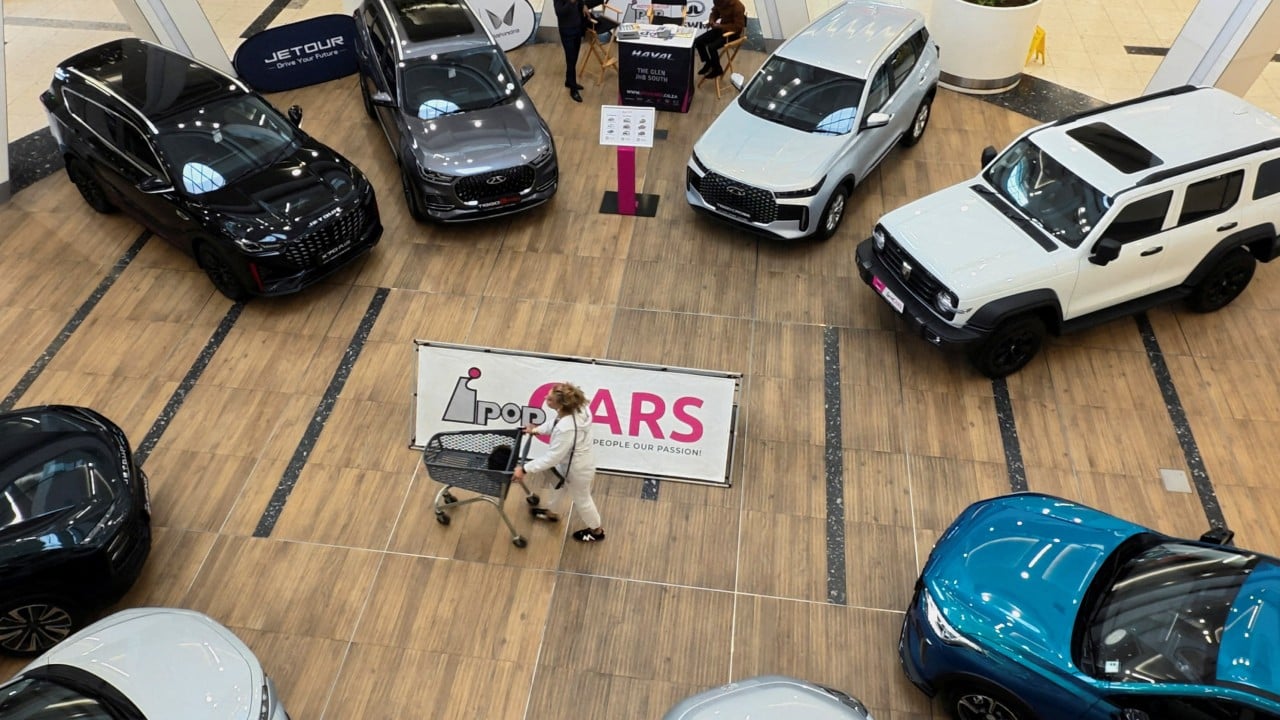
When commentators point to Chery’s massive overseas expansion, they conveniently forget a fundamental detail: Chery’s export engine is overwhelmingly fueled by gasoline. The company’s Tiggo series of internal combustion engine (ICE) SUVs is what drives its volume in markets like Russia, Latin America, and the Middle East.
After Western automakers panicked and exited the Russian market due to geopolitical sanctions, Chinese brands did not swoop in with fleets of battery electric vehicles (BEVs). They filled the vacuum with traditional petrol-powered cars. They sold mechanical familiarity to a market that needed functional transportation, not high-tech battery packs that struggle in sub-zero Siberian winters.
Even BYD, the poster child for the electric transition, owes a massive portion of its international momentum to plug-in hybrid electric vehicles (PHEVs) rather than pure BEVs. BYD’s DM-i hybrid platform is a masterclass in engineering, but it is fundamentally a bridge technology that relies on a gasoline engine.
To call this an "EV demand spike" is a deliberate mischaracterization. It is a demand spike for affordable, reliable transportation. The fact that it comes with a plug is often secondary to the consumer.
The Overcapacity Mirage
I have spent years analyzing manufacturing supply chains and corporate balance sheets. One rule holds true across every industry: when supply vastly outstrips domestic demand, you do not stop production; you dump the excess inventory onto foreign shores and call it "growth."
China’s domestic automotive market is a hyper-competitive bloodbath. The central government’s massive subsidies over the last decade created a gold rush, resulting in over a hundred domestic EV brands fighting for survival. Now, the music has stopped. Domestic growth is slowing, a vicious price war is eating margins alive, and Chinese factories are capable of producing millions more vehicles than the Chinese public can buy.
What do you do with millions of unallocated vehicles? You put them on Roll-On/Roll-Off (RoRo) ships.
+-------------------------------------------------------------+
|               THE OVERCAPACITY EXPORT PIPELINE              |
+-------------------------------------------------------------+
|  Domestic Subsidies  -->  Factory Overproduction             |
|                                 |                           |
|                                 v                           |
|  Foreign Port Glut   <--  Aggressive Overseas Shipping       |
+-------------------------------------------------------------+
This explains why thousands of Chinese EVs are currently sitting in European ports, effectively being used as parking lots. European distributors are struggling to find the logistics infrastructure, inland transport, and—most importantly—the actual retail buyers to move these cars off the docks.
Reporting an 80% increase in shipments is easy. Reporting an 80% increase in actual consumer registrations in target markets is a different story entirely. Shipping a car across an ocean is a supply-side metric. It does not equal a sale. It equals a moving of the problem from a factory lot in Shenzhen to a dock in Antwerp.
Dismantling the Populist Questions
Look at any industry forum, and you will see variations of the same anxious questions. Let’s address them with brutal honesty.
"Can Western automakers survive if Chinese EVs are 40% cheaper?"
This question assumes price is the only variable in an automotive purchase. It ignores the crushing reality of total cost of ownership (TCO), insurance, and residual value.
In markets like the UK and Germany, early adopters of Chinese EVs are hitting a wall. Insurance companies, terrified by the lack of structural repair data and the exorbitant cost of replacing proprietary Chinese battery packs after minor accidents, are either refusing coverage or charging astronomical premiums.
Furthermore, the used car market for these vehicles is non-existent. A vehicle that depreciates by 60% in two years because no one trusts its long-term software support or battery health is not "cheap." It is an expensive liability. Legacy automakers survive because they have a century-old infrastructure of parts, service centers, and predictable residual values that fleet buyers rely on.
"Will tariffs in the US and Europe stop the Chinese automotive expansion?"
No, but not for the reason you think. The common belief is that Chinese brands will simply absorb the tariff hit because their manufacturing costs are so low.
The real reason tariffs won't stop them is that Chinese automakers are already bypassing the borders entirely. They are building factories in Hungary, Spain, Brazil, and Mexico. They are becoming local manufacturers.
However, this strategy introduces a massive downside that nobody talks about. The moment BYD manufactures a car in Szeged, Hungary, or Camaçari, Brazil, it loses the hyper-optimized supply chain efficiency of its home base. It has to deal with European labor laws, localized component sourcing mandates, and higher energy costs. The 40% cost advantage evaporates when you have to pay European wages and comply with local environmental regulations.
The True Chinese Advantage is Not What You Think
If you want to understand why BYD is a formidable threat, stop looking at their touchscreens and digital assistant software. That is superficial glitz.
The real threat is vertical integration.
BYD started as a battery company. They did not outsource their cell chemistry to a third party; they built the foundation of their vehicles around their proprietary Blade Battery. They own the mines, the processing facilities, the semiconductor fabrication plants, and even the shipping vessels.
When a legacy automaker wants to build an electric vehicle, they negotiate with a sprawling web of Tier 1 suppliers. Every step of that chain tacks on a margin, inflating the final cost of the vehicle. BYD eliminates those margins. They are their own Tier 1 supplier.
This vertical integration allows them to manipulate their pricing with terrifying agility. If they need to drop the price of a vehicle by $3,000 to kill off a domestic rival, they can absorb that hit across their internal component divisions. A company like Ford or Volkswagen cannot simply demand their independent battery supplier cut prices by 30% overnight without triggering a contractual crisis.
The Dangerous Downside of the Contrarian Play
To be absolutely clear, adopting a skeptical view of this "EV dominance" narrative does not mean Chinese automakers are going away. They are a permanent, disruptive force. But their path forward is fraught with systemic risks that the market is blind to.
The biggest vulnerability is geopolitical exposure. By expanding aggressively into global markets, Chinese firms are tethering their corporate survival to the whims of international trade relations. A sudden shift in foreign policy can freeze billions of dollars in localized factory investments overnight.
Furthermore, their reliance on software-heavy, connected vehicle architecture makes them prime targets for data privacy crackdowns. It is entirely possible that a Western government could ban the operation of these vehicles on national security grounds, turning a fleet of highly advanced cars into bricks via a single legislative vote.
Stop Looking at the Plug
The media will continue to show you images of sleek electric sedans rolling off ships, framing it as the death of the traditional car.
Do not fall for it.
The next time you see a headline celebrating an 80% spike in Chinese auto exports, ignore the rhetoric about the green transition. Look at the tailpipes. Look at the port inventories. Look at the hybrid drivetrains selling in developing nations.
China is expanding its automotive footprint not because the world is ready to abandon fossil fuels, but because Western manufacturers walked away from affordable, utilitarian engineering to chase high-margin luxury vehicles. China simply walked into the empty room, picked up the discarded tools, and started building what the average global citizen actually wanted to buy.
The disruption isn't an EV revolution. It is a masterclass in basic market filling that the West chose to ignore.