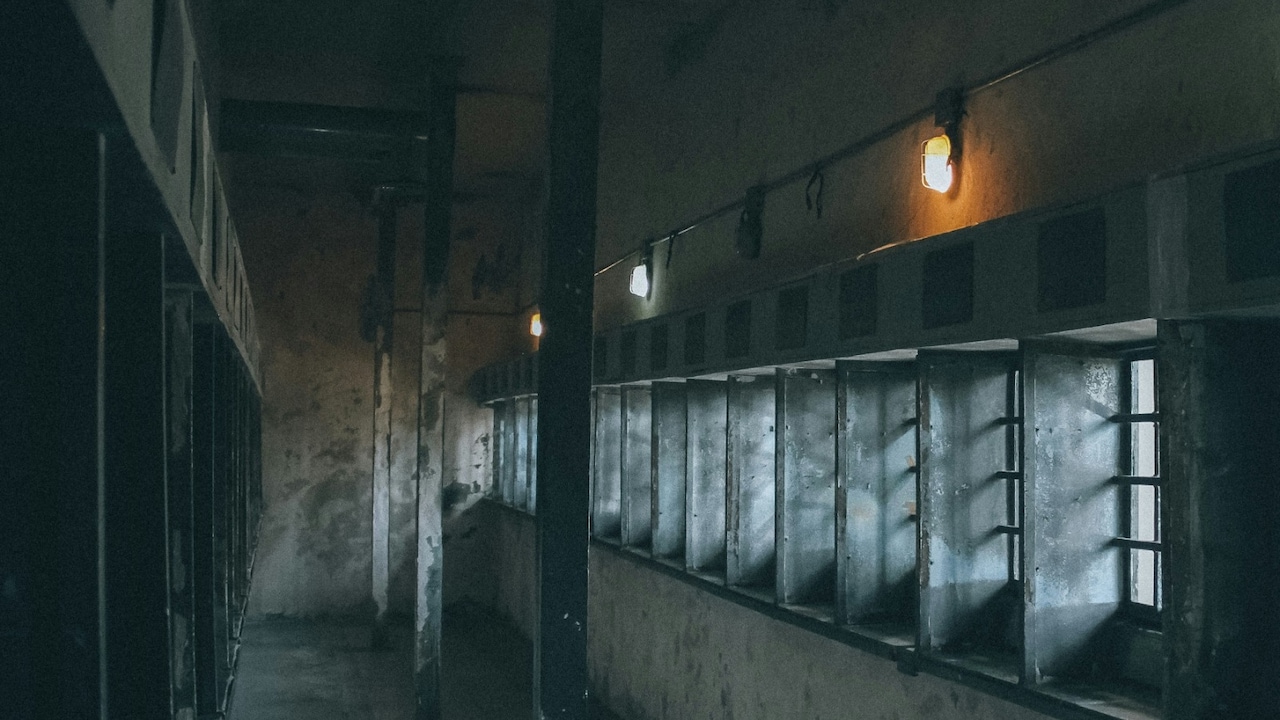
The fluorescent lights of an immigration detention holding cell do not buzz. They hum. It is a low, vibrating frequency that settles somewhere behind your eyes after the first seventy-two hours, a constant reminder that inside these concrete walls, time does not move the way it does on the outside.
To the bureaucrats who manage the paperwork, a detention center is a logistical equation. Square footage divided by bed space equals capacity. But to anyone who has ever stood inside one, breathing in the scent of industrial floor cleaner and stale fear, the math dissolves. It becomes a place of waiting. Waiting for a court date. Waiting for a phone call. Sometimes, waiting for medical care that arrives too late, or not at all. If you enjoyed this piece, you might want to read: this related article.
Recently, the highest human rights body on the planet looked into these humming rooms and decided that the silence surrounding them had become too loud to ignore. The United Nations issued a direct, unvarnished demand to the United States: allow an independent, international probe into the deaths of individuals held in the custody of Immigration and Customs Customs Enforcement (ICE).
This is not a standard request for a routine audit. It is a profound institutional rupture, a declaration that the internal mechanisms meant to protect human life within the American immigration system are facing a crisis of credibility. For another angle on this development, see the latest update from Al Jazeera.
The Weight of a Cold Statistic
When a state agency releases a report about a custody death, the language is deliberately sanitized. The press release will state that a detainee "passed away following a medical emergency." It will list an age, a nationality, and a facility.
But consider a hypothetical man—let us call him Mateo, a composite of the very real stories that slip through the cracks of public memory. Mateo did not die of a "medical emergency" in the abstract. He died because a chronic heart condition, manageable with a standard five-dollar prescription, met a wall of administrative indifference. He died because his requests for a doctor were treated as behavioral infractions, or worse, as attempts to game the system.
When the UN steps in, it is because stories like Mateo’s are no longer isolated incidents. They are a pattern.
Statistically, the numbers fluctuate from year to year, but the trajectory remains alarming. Independent investigative bodies and civil rights organizations have documented dozens of deaths within ICE facilities over the past decade, frequently pointing to inadequate medical care, delayed emergency responses, and a lack of specialized staff as contributing factors.
The UN’s demand focuses precisely on this gap between policy and reality. The United States has some of the most rigorous detention standards on paper. Yet, the gap between what is written in a federal handbook and what happens at 3:00 AM in a rural county jail contracted by ICE is vast. It is in that gap where people die.
The Architecture of Accountability
To understand why an international probe is necessary, one must understand how accountability currently works—or fails to work—within the detention complex.
When a death occurs in custody, ICE is required to conduct an internal review. The Office of Professional Responsibility investigates. Reports are compiled. Redacted versions are eventually posted online, buried deep within federal subdomains.
This process is the equivalent of a corporation grading its own exam. The investigators share the same badge, the same institutional culture, and the same structural incentives as the people they are investigating. Protect the agency. Minimize liability. Move the paperwork along.
An independent probe by the UN operates on an entirely different set of principles. International inspectors do not answer to the Department of Homeland Security. They do not have careers tied to the advancement of federal law enforcement priorities. Their mandate is singular: to measure the treatment of human beings against the benchmark of universal human rights treaties that the United States itself helped draft and sign.
This is where the tension lies. For decades, the US has positioned itself as a global arbiter of human rights, pointing fingers at detention conditions in autocratic regimes. The UN’s demand turns the mirror around. It forces a nation that prides itself on the rule of law to confront a uncomfortable truth: when it comes to the vulnerable populations within its own borders, the rule of law often stops at the detention center gate.
The Hidden Costs of the Contract System
The problem is deeply structural, tied to the very way America built its modern detention apparatus. ICE does not own or operate the majority of its detention facilities. Instead, it relies on a sprawling network of private prison corporations and local county jails.
This is a system built on financial incentives. Private operators are paid a daily rate per bed. In the logic of the market, profit maximization requires cost minimization. Where do you cut costs in a secure facility? You cut staff. You hire fewer doctors. You replace registered nurses with less qualified medical assistants. You ration expensive medications.
But the real problem lies elsewhere, buried in the legal doctrine of qualified immunity and the layered shield of subcontracting. When something goes wrong—when a preventable infection turns septic, or a mental health crisis ends in suicide—the blame becomes a game of bureaucratic hot potato.
ICE points to the private contractor. The contractor points to the medical sub-contractor. The sub-contractor points to a specific nurse, who claims they were simply following a protocol dictated from above. In the end, the system protects itself, while the family of the deceased is left with a body and a stack of unreturned phone calls.
The UN’s proposed investigation aims to cut through this web of deniability. By looking at the system as a whole, international observers can trace how policy decisions made in Washington offices translate into life-or-death realities in facilities thousands of miles away.
The Global Echo of Domestic Policy
What happens inside these facilities does not stay inside them. It shapes how the world views American authority and moral leadership.
When international observers are barred from inspecting American prisons, or when the government drags its feet on cooperating with global human rights bodies, it sends a clear signal to the rest of the world. It suggests that sovereignty is a shield against scrutiny, a rationale that oppressive regimes around the globe are only too happy to adopt.
The demand for an independent probe is a test of American institutional maturity. It asks whether a superpower can withstand the same scrutiny it regularly demands of others.
The debate is often framed around national security and border enforcement, but that is a false dichotomy. A nation can secure its borders while still treating the people in its custody with basic human dignity. The two ideas are not mutually exclusive; in fact, they are deeply codependent. A justice system that loses its humanity ceases to be a system of justice at worst, and becomes merely a system of administrative violence.
The hum of the fluorescent lights continues. Tonight, thousands of individuals will sleep on thin plastic mattresses under those lights, waiting for an uncertain future. They are not citizens, they are not voters, and to many, they are entirely invisible. But their lives possess an inherent worth that no administrative designation can erase.
The UN has made its move, placing the ledger of names on the table for the world to see. The response from Washington will determine whether those names remain mere footnotes in federal reports, or whether they become the catalyst for a system that finally remembers how to value a human life.


