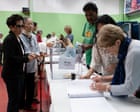
The international press is treating the opening of polling booths in New Caledonia as a democratic milestone. They call it a critical reset—the first local election since 2019, a vital mechanism to determine the balance of power before fresh status negotiations with Paris.
This is a dangerous delusion.
Holding an election in an archipelago crawling with 2,400 French security personnel is not an exercise in democracy. It is the administrative staging of a frozen conflict. The media narrative insists that updating voter rolls and counting ballots will magically yield a legitimate path forward. It will not. The fundamental mechanics of the territory are broken, the economy is in ruins, and the electoral framework itself is a mathematical trap designed to guarantee perpetual instability.
I have watched administrative states attempt to paper over structural ethnic and economic collapses with ballot boxes for decades. It never works. When a territory’s GDP drops by 13.5% in a single year, businesses are burned to the ground, and the primary industrial asset—nickel mining—is effectively dead, voting is not a solution. It is a distraction from the real disaster.
The Myth of the Legitimate Mandate
The mainstream consensus relies on a comfortable lie: that this vote will establish a clear, democratic mandate for either the pro-independence Kanak coalition or the loyalist factions. This ignores the structural engineering of the voter roll itself.
For decades, New Caledonia operated under a frozen electoral roll established by the 1998 Noumea Accord. Only residents who were registered in 1998 and their descendants could vote in local provincial elections. This setup explicitly favored the indigenous Kanak population over time, as thousands of newer, French-born residents were completely disenfranchised from local governance.
When Paris tried to open the roll to all ten-year residents in 2024, the territory exploded into deadly riots. The subsequent legislative compromise—passed in May—piecemealed an extra 10,575 "native-born" residents onto the roll.
Look at the math. This arbitrary addition satisfies absolutely no one:
- For the Independents: It is viewed as an existential threat, a forced alteration of the rules of the game without a comprehensive political agreement. They see it as colonial engineering designed to slowly dilute their political power.
- For the Loyalists: It is a pathetic half-measure. It leaves tens of thousands of tax-paying, long-term residents entirely without a vote in the institutions that run their daily lives.
When you run an election where both sides believe the voter list itself is rigged, the outcome cannot produce legitimacy. Whichever faction claims a majority on Monday will lack the moral authority to negotiate anything durable. The losing side will simply reject the results, point to the compromised electoral roll, and take their grievances back to the streets.
The Economic Body Bag
While political elites in Noumea and diplomats in Paris squabble over seat allocations in the 54-member Congress, the actual territory is experiencing a systemic economic heart attack.
The 2024 unrest did not just disrupt local commerce; it permanently wiped out the fiscal foundations of the island. More than two billion euros in physical damage occurred. Hundreds of businesses are gone forever. The local social security system is entirely bankrupt, surviving purely on emergency liquidity injections from the French treasury.
More critically, the global nickel market has moved on. New Caledonia sits on roughly a quarter of the world's known nickel reserves. Historically, this was the economic shield for the independence movement—the proof that a sovereign Kanaky could sustain itself financially.
But look at the global supply shift. Indonesia, backed by massive Chinese capital and aggressive high-pressure acid leach plants, has completely flooded the market with cheap, low-cost nickel. New Caledonia’s aging, energy-inefficient smelters cannot compete. They are structurally unprofitable at current global price points. The French government has spent years subsidizing these operations to maintain labor stability, but that financial lifeline is fraying.
An independent New Caledonia faces immediate financial insolvency. A French-administered New Caledonia faces a permanent, heavily subsidized welfare state model that breeds resentment on both sides. No election changes these commodity market realities. You cannot vote away a structural shifts in global mining supply chains. For the average resident outside the political bubble, securing food and basic employment has completely eclipsed the ideological purity of the ballot box.
Redefining the Real Question
The international press keeps asking: Will this vote lean pro-independence or pro-France?
That is entirely the wrong question. The real question is whether New Caledonia can survive as a coherent functional society under its current institutional design.
The three-province system—South, North, and the Loyalty Islands—was originally designed to create geographical balance. In reality, it has institutionalized deep segregation. The South Province is wealthy, European-dominated, and intensely loyalist. The North and the Loyalty Islands are sparsely populated, heavily indigenous Kanak, and fiercely pro-independence.
This provincial setup acts as an echo chamber. Politicians do not win by building broad, cross-ethnic coalitions. They win by radicalizing their respective bases. Sunday's election will not bridge this gap; it will formalize it. The resulting Congress will be just as deadlocked, angry, and divided as the one that collapsed into violence.
Imagine a scenario where the pro-independence parties maintain a razor-thin majority in the Congress. They will claim a mandate for full sovereignty. Paris will counter that the overall population rejected independence in three successive referendums between 2018 and 2021. If the loyalists win the majority, they will demand a total opening of the voting rolls, which the independence hardliners have already promised to fight with physical resistance.
It is a zero-sum calculation. The current electoral model offers no off-ramp—only a recurring cycle of political paralysis followed by civil explosion.
The Geopolitical Stalking Horse
We must also dismantle the naive view that this is a localized dispute between indigenous groups and a European metropole. New Caledonia is a prime piece of real estate in the intense maritime competition over the Indo-Pacific.
Paris clings to the territory not out of a altruistic duty to the residents, but because Noumea gives France an immense Exclusive Economic Zone and a critical military foothold in a region increasingly dominated by Beijing. Conversely, the independence movement has long been courted by external actors looking to chip away at Western maritime influence in the Pacific.
When you cast a ballot in Noumea, you are not just choosing a local councillor. You are voting on a frontline piece of global maritime strategy. This international pressure means neither France nor its global allies can afford to let New Caledonia actually walk away, regardless of what the local electoral data says. The status quo is too valuable to global defense architectures, and full sovereignty is too dangerous a vacuum.
Stop Treating Elections as Therapy
The obsession with democratic processes in deeply fractured, post-conflict societies is a persistent administrative failure. Paris continues to deploy the same tired playbook: schedule a vote, throw emergency money at the problem, deploy thousands of gendarmes to keep the peace during the count, and hope a moderate middle ground magically materializes.
It is an expensive piece of political theater. A real, functional solution requires abandoning the binary illusion of the ballot box entirely. It requires a hard, painful pivot toward economic reconstruction, a total overhaul of the uncompetitive mining sector, and an explicit, treaty-based sharing of sovereignty that bypasses the need for constant, destabilizing electoral tests.
Until that structural shift happens, do not look at Sunday’s voter turnout or seat projections as a sign of progress. The queues at the polling stations are not the beginning of a peaceful resolution. They are just the prologue to the next crisis.