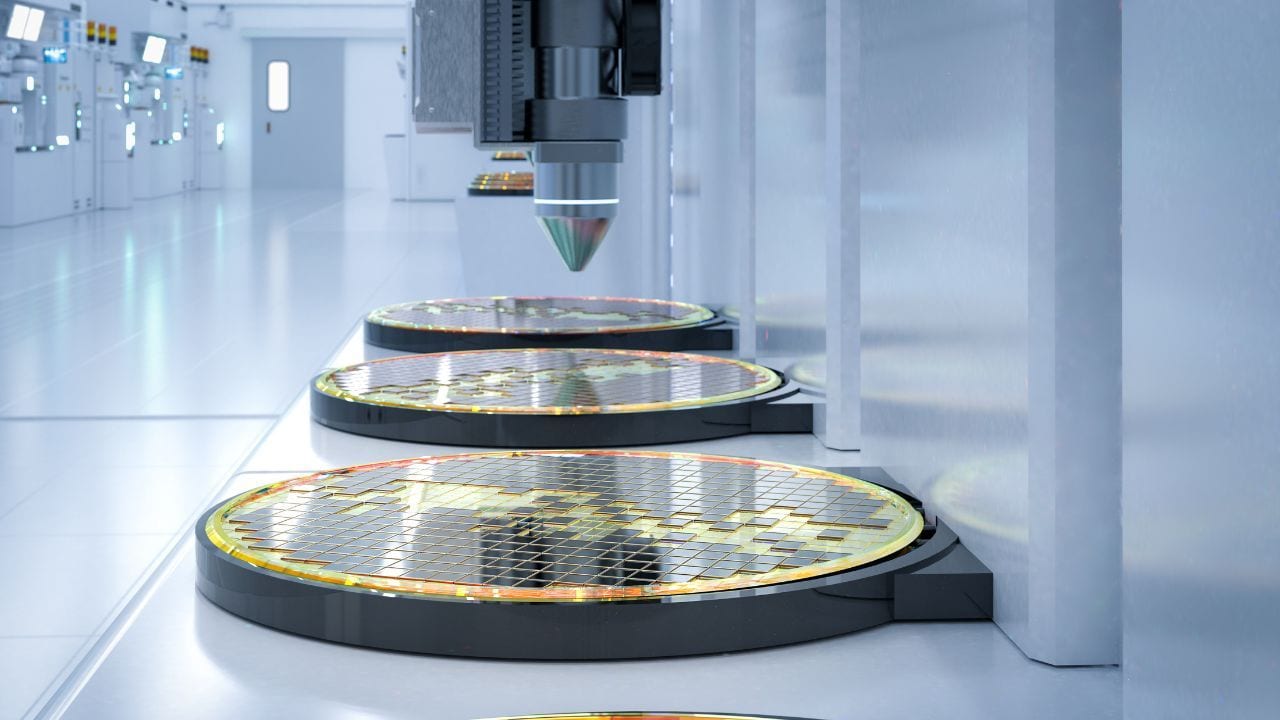
Walk through the high-ceilinged corridors of the Hong Kong Science Park at 3:00 AM, and you will hear a distinct, low-frequency hum. It is not the air conditioning. It is the sound of electricity turning into thought. For years, this sound belonged to someone else. Every time a local startup coded a smarter medical diagnostic tool, every time a logistics firm optimized its shipping routes across the South China Sea, they were renting brains from thousands of miles away. They were sending data across oceans, waiting for foreign servers to process it, and praying the digital pipeline wouldn't snap under the weight of geopolitics.
That dependence is ending.
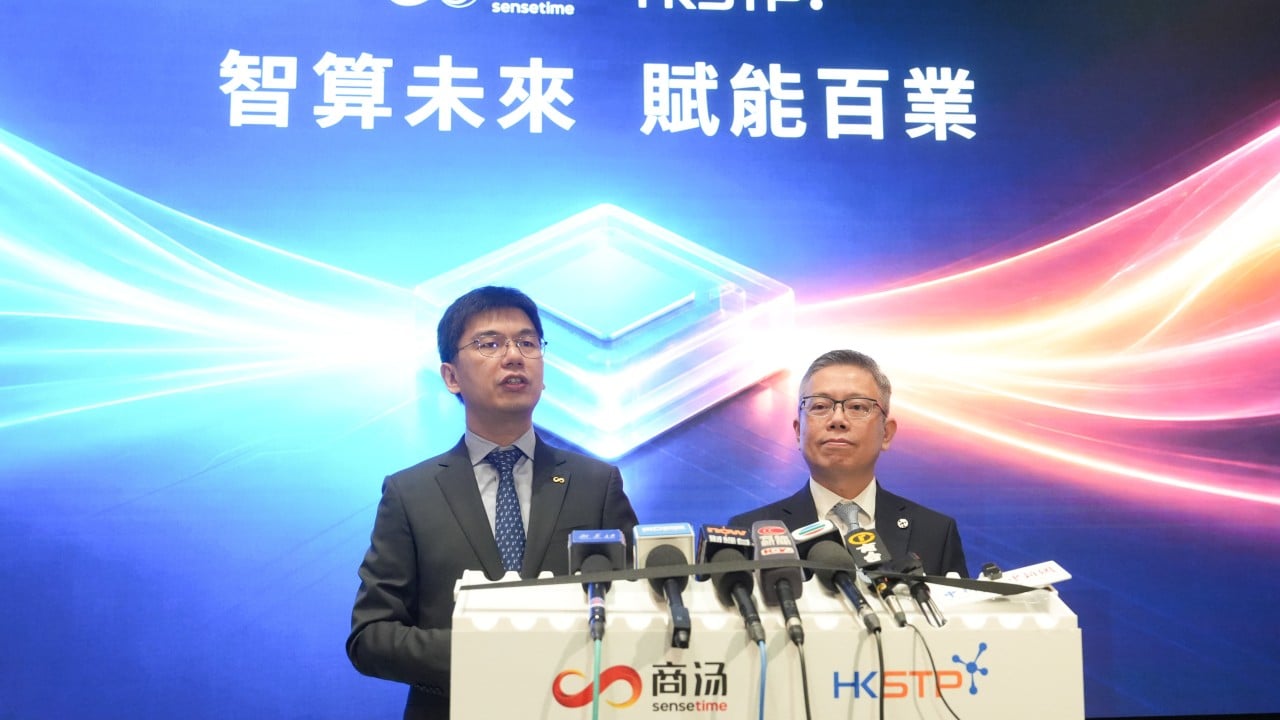
Hong Kong is quietly building its own sovereign nervous system. Through a massive partnership between the Hong Kong Science and Technology Parks Corporation (HKSTP) and SenseTime, the city is constructing a home-grown artificial intelligence data center. This is not a story about servers, cooling fans, or real estate. It is a story about digital survival.
The Weight of the Invisible
To understand why this matters, you have to look at the people who actually use this technology. Consider a developer we will call Ming. She is twenty-six, drinks too much milk tea, and works for a small biotech firm tucked away in Shatin. Ming spends her days training an algorithm to detect early-stage lung cancer from X-rays.
Every second counts. If her model takes three days to process a dataset, a patient waits three days longer for a diagnosis.
Until recently, Ming’s work relied on cloud computing infrastructure located outside Hong Kong. On a good day, it felt smooth. On a bad day, latency crawled. A split-second delay in data transmission might seem trivial when you are streaming a video, but when you are running billions of parameters through a deep learning model, latency is a wall.
Then there is the anxiety. Data privacy laws are tightening globally. If the server housing Ming's medical data sits under a foreign jurisdiction, a single policy shift can lock her out overnight. Her work would freeze.
"We were building houses on rented land," Ming says. "And the landlords were getting unpredictable."
This is the hidden friction choking local innovation. Without localized infrastructure, a city's tech ecosystem is just a collection of beautiful apps running on borrowed machinery. Hong Kong found itself at a crossroads: remain a consumer of global AI infrastructure, or build its own engine room.
Building the Engine Room
The collaboration between HKSTP and SenseTime changes the geometry of the city's tech sector. SenseTime brings the computational blueprint; HKSTP provides the physical anchor within the Science Park. Together, they are assembling an AI supercomputing center designed specifically to handle the massive workloads that modern large language models and computer vision systems demand.
Think of standard data centers like public libraries. They are great for storing books and looking up information sequentially. An AI data center, however, is a particle accelerator. It doesn't just store data; it smashes ideas together at incredible speeds, running parallel calculations that would melt a standard server rack.
By placing this power within city limits, the partnership eliminates the geographic tax local firms have paid for years.
Data does not need to travel across the Pacific. It moves down the hall.
For the hundreds of startups incubating within the Science Park, this is an immediate upgrade to their operational reality. They gain direct access to localized computational power, optimized for the unique regulatory and linguistic nuances of the region. A Cantonese-processing AI model, for instance, requires specific cultural context and data structures. Training that model on a generic Western cloud platform is like trying to teach someone colloquial Hong Kong slang using a standard English-to-Mandarin dictionary. It misses the beat.
The Micro-Seconds That Matter
Why does the physical location of a server rack matter so much in a world that feels entirely wireless? The answer lies in physics.
Even at the speed of light, data takes time to travel. When a local autonomous vehicle startup tests its navigation systems on the streets of New Territories, the car's onboard computer needs to make decisions in milliseconds. If the heavy lifting of that AI processing happens on a local server, the reaction time drops to near zero.
Consider the broader economic picture:
| Infrastructure Layer | Old Model (Offshore) | New Model (Home-grown) |
|---|---|---|
| Data Proximity | Cross-border data transfers, high latency | Intramural routing, near-zero latency |
| Regulatory Compliance | Vulnerable to shifting international laws | Aligned with local privacy frameworks |
| Cultural Optimization | Generic linguistic models | Native Cantonese and regional dialect tuning |
This shift transforms the economics of innovation. Startups no longer need to raise massive seed rounds just to pay for foreign cloud credits. The cost of experimentation drops. When failure becomes cheaper, bolder ideas get tested.
The Ripple Effect Across the Harbor
The impact stretches far beyond the glass facades of the Science Park. Walk down to the container terminals in Kwai Tsing. Crane operators are beginning to use predictive AI to stack millions of tons of cargo arriving from every corner of the globe. If the AI system guiding those cranes goes down for even five minutes because of a transoceanic cable glitch, the backup stretches down the highway for miles.
In Central, financial analysts are deploying algorithms to scan market anomalies in real-time. A localized AI data center means these financial models can ingest local market data instantly, providing a buffer against volatility.
This is not about tech companies helping tech companies. This is about infrastructure supporting the entire scaffolding of a modern city.
The partnership between HKSTP and SenseTime acts as a stabilizing force. By anchoring these computational resources locally, they ensure that Hong Kong’s core industries—logistics, finance, healthcare—remain insulated from external infrastructure shocks. It gives the city a digital sovereignty that cannot be revoked by a corporate board meeting halfway across the globe.
The Quiet Reality of Progress
There are no ribbons to cut when an AI data center goes live. There is no grand opening ceremony that can truly capture what happens inside those humming server racks. To the casual observer, it looks like a clean room filled with blinking blue lights and thick bundles of black fiber-optic cables.
But for people like Ming, the transformation is tangible.
The next time she runs her cancer-screening models, the progress bar will move differently. It will move with the speed of a system built for her city, by people who understand the stakes of her work. She won't have to look at the clock and calculate the time zone differences of an engineer in California or Virginia to figure out why her system is lagging.
The machinery is now down the street.
As the sun comes up over Tolo Harbour, hitting the metallic dome of the Science Park's Charles K. Kao Auditorium, the hum inside the server rooms remains constant. It is a steady, unblinking rhythm. The city is no longer waiting for the future to be delivered from abroad. It is busy manufacturing its own, one terabyte at a time.