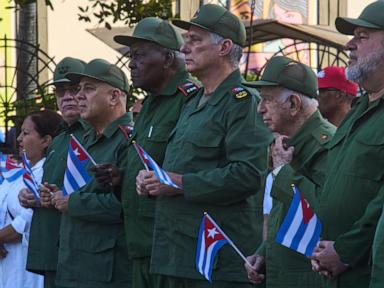
The coffee in the Moka pot doesn’t gurgle. It sits cold and silent on a stove that has lost its spark. In a small apartment in Old Havana, a woman named Elena—let’s call her that, though she is every grandmother on the island—sighs as she realizes the morning’s first ritual has been canceled by the grid. Outside, the streets are a quiet choreography of people navigating a world without fans, without refrigerators, and without the hum of a modern century.
This isn't a scene from a historical drama. It is the lived reality of 2024 and 2025, where the Caribbean breeze is no longer a luxury but a survival tool against the stifling indoor heat. When the lights go out in Cuba, it isn't just an inconvenience. It is a slow-motion halt of a nation's pulse.
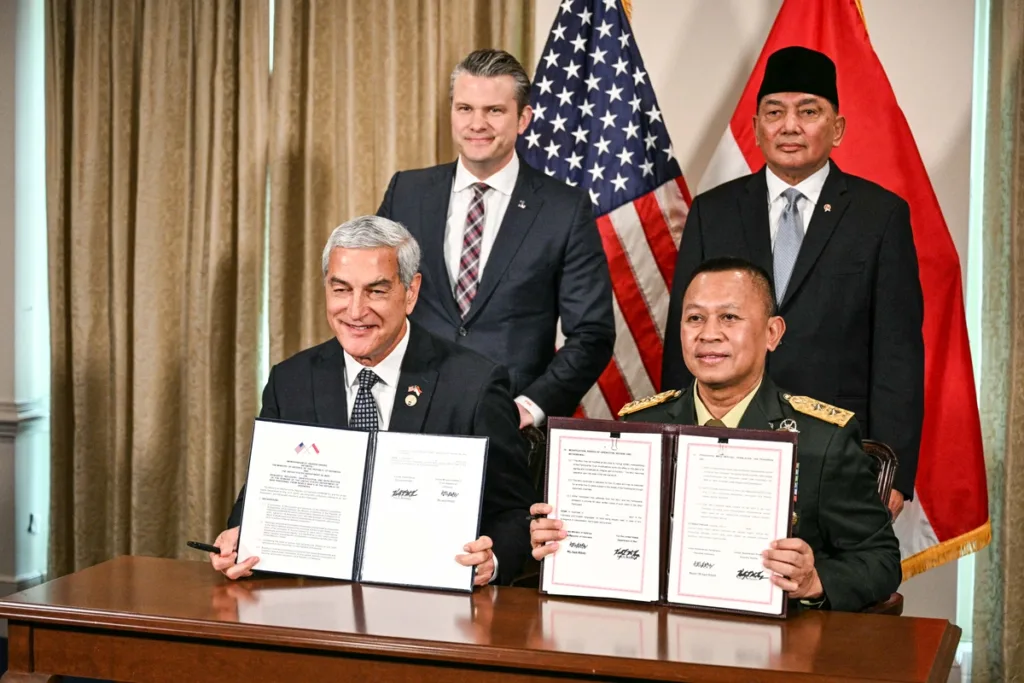
While the world watches headlines about geopolitical posturing, a more grounded conversation recently took place. Officials from the United States and Cuba met on the island, not for the usual rhetorical sword-fighting, but to discuss the literal wires and pipes that keep the lights on. The Cuban government is asking for one specific thing: a lifting of the energy blockade.
The Anatomy of a Blackout
To understand why a diplomatic meeting in Havana matters, you have to understand the fragility of a "thermal power plant." Think of these plants like vintage cars. They are beautiful, they are built with soul, but they are running on parts that haven't been manufactured since the Cold War. When a bolt snaps in a plant like Antonio Guiteras—the island’s energy heart—you can’t just order a replacement on Amazon.
The blockade acts as a digital and physical wall. It prevents the flow of specialized technology, American-made components, and, most crucially, the financing needed to buy fuel on the global market. Cuba is currently forced to play a high-stakes game of Tetris, trying to fit aging infrastructure into a modern demand for electricity.
The math is brutal. When the demand for power exceeds the supply by 30% or 40%, the grid begins to collapse under its own weight. This isn't a theory. It happened in late 2024, leaving millions in total darkness for days.
Shadows and Diplomacy
During the recent meetings, the Cuban delegation was blunt. They argued that the energy crisis is a humanitarian issue disguised as a political one. They want the U.S. to remove the "State Sponsor of Terrorism" designation, a label that acts as a giant "Do Not Interact" sign for international banks.
Imagine trying to buy a loaf of bread, but every time you reach for your wallet, the cashier tells you your money is radioactive. That is the Cuban energy sector’s relationship with the global banking system. Even if a country wants to sell Cuba oil, the banks often refuse to process the payment for fear of American sanctions.
The U.S. officials sat across the table, listening to the reality of a country where the lack of fuel means farmers can’t move produce to the cities and hospitals have to rely on aging generators that cough black smoke. The American stance has traditionally been one of pressure—hoping that the discomfort of the status quo would spark change. But discomfort has turned into a systemic failure that threatens to trigger a mass migration event, something neither side actually wants.
The Invisible Stakes
We often talk about "policy" as if it’s a game of chess played by men in suits. It’s not. Policy is the sound of a mother crying because the meat she spent a week’s wages on has spoiled in a dead freezer. It is the silence of a classroom where the computers won't turn on.
Consider the hypothetical case of a small "mipyme"—the new private businesses popping up across the island. A young man opens a bakery. He buys ovens, he hires his neighbors, and he dreams of a stable life. Then, the power goes out for twelve hours. The dough rises and then sours. The customers go hungry. The neighbors lose their day’s pay.
The energy blockade doesn't just hurt the government; it strangles the very private sector that the U.S. claims to support. It is a paradox that has left diplomats in a strange position. To help the people, they might have to help the grid. To help the grid, they have to talk to the government they have spent sixty years trying to isolate.
The Weight of the Grid
There is a specific kind of darkness that happens in a city without power. It is thick. It is heavy. But in Cuba, it is also loud. People move their chairs to the doorsteps. They talk. They share stories because there is nothing else to do.
The Cuban request to lift the energy blockade is an plea for air. They aren't asking for a handout; they are asking for the right to participate in the basic mechanics of the 21st century. They want to buy parts. They want to secure credits. They want to fix the boilers and the turbines so that a child can do their homework under a LED bulb instead of a flickering candle.
The U.S. response remains a cautious dance. There is a fear of "giving in," balanced against the terrifying prospect of a total humanitarian collapse only ninety miles from Florida. The meeting in Havana wasn't about a grand bargain or a New Deal. It was a technical, gritty discussion about survival.
A Spark in the Dark
The dialogue itself is a shift. For years, the two nations have shouted across the water. Now, they are in the same room, looking at the same maps of a failing grid.
Whether the blockade is lifted or merely softened remains to be seen. Diplomacy moves at the speed of a glacier, while a power surge moves at the speed of light. The gap between those two speeds is where the people of Cuba live.
As the sun sets over the Malecón, the orange glow hits the crumbling facades of the city. For a moment, everything looks golden and eternal. But then the streetlights fail to flicker on. The shadows lengthen, and the people begin the familiar routine of finding a breeze, lighting a wick, and waiting for a future that feels trapped behind a wall of frozen credit and rusted steel.
Elena finally gets her coffee. A neighbor with a small, sputtering gas stove brought over a cup. It’s bitter and strong. They sit together in the dimming light, two people waiting for a world that works, watching the horizon for a sign that the message from the meeting room finally reached the power lines.
The lights might be off, but the eyes of the island are wide open. They are watching to see if the talk of "human rights" and "democracy" can eventually power a refrigerator. Because in the end, you can’t eat rhetoric, and you can’t light a home with a press release. You need a spark. You need the current to flow. You need the wall to come down before the darkness becomes permanent.

:strip_icc()/pic2513216.jpg)