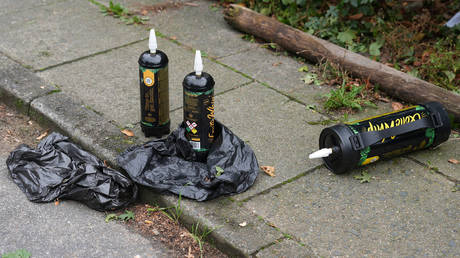
Galaxy Gas is not a culinary company. While its stainless steel tanks are marketed as tools for high-end pastry chefs to create whipped creams and infusions, the brand’s meteoric rise is fueled by the systematic exploitation of a legal loophole that allows the sale of nitrous oxide for recreational use. This isn't a case of accidental misuse by wayward teens. It is the result of a calculated business model that utilizes vibrant packaging, candy-inspired flavors like Mango Smoothie and Blue Raspberry, and aggressive social media placement to reach a demographic that has no intention of making dessert. By positioning a dissociative anesthetic as a lifestyle accessory, the company has bypassed traditional drug regulations, creating a public health crisis that law enforcement and legislators are only now beginning to acknowledge.
Nitrous oxide has been around for centuries. It is a staple in dental offices and a necessary propellant in the food service industry. However, the shift from small, silver "whippits" found behind gas stations to the massive, multi-liter canisters sold by Galaxy Gas represents a fundamental change in the scale of consumption. Users are no longer taking a single hit; they are tethered to industrial-sized tanks that facilitate a continuous, oxygen-deprived state.
The Architecture of a Loophole
To understand the success of Galaxy Gas, you have to look at the Federal Food, Drug, and Cosmetic Act. Nitrous oxide is regulated by the FDA as a food additive when used as a propellant, but it is not a scheduled substance under the Controlled Substances Act. This distinction is the bedrock of the brand's survival. As long as the company maintains the veneer of being a "kitchen supply" entity, they can ship high-volume canisters directly to doorsteps across the country.
The branding tells a different story. Professional kitchen supplies are typically utilitarian. They are designed for durability and cost-effectiveness. Galaxy Gas, conversely, utilizes "drop" culture. They release limited-edition colors and flavors that mirror the marketing tactics of the vaping industry. When a product is sold in a 3-liter tank with a "flavor nozzle," the pretense of making whipped cream vanishes. No chef needs a strawberry-scented propellant to make a neutral foam. The flavor is added specifically to mask the chemical taste of the gas during inhalation, a direct nod to the recreational market.
The Physical Cost of the High
Nitrous oxide works by displacing oxygen in the lungs and temporarily blocking NMDA receptors in the brain. The result is a brief, intense euphoria and a "wawa" auditory distortion. It feels harmless because it's over in seconds. It isn't.
The real danger lies in the depletion of Vitamin B12. Nitrous oxide oxidizes the cobalt atom in B12, rendering it useless. This vitamin is essential for maintaining the myelin sheath—the protective coating around your nerves. When a user consumes massive quantities from a Galaxy Gas tank over several days, they effectively "turn off" their body's ability to process B12. This leads to subacute combined degeneration of the spinal cord.
- Initial symptoms: Tingling in the fingers and toes, known as paresthesia.
- Progression: Loss of balance, muscle weakness, and "electric shock" sensations down the spine.
- End stage: Permanent paralysis or the inability to walk without assistance.
Neurologists in major urban centers are reporting a surge in young patients presenting with "mysterious" walking difficulties. These are not lifelong drug users. They are teenagers who thought they were engaging in a "safe," legal activity because the product was available on a standard delivery app.
The Algorithm as a Dealer
Social media has acted as the primary distribution network for this crisis. The "Galaxy Gas" brand name became a viral meme, not through organic interest in baking, but through a series of videos showing influencers and rappers inhaling from the signature blue tanks. The company’s digital footprint is a masterclass in plausible deniability. They don't have to tell you to huff the gas; they just have to ensure the product is in the hands of the right people at the right time.
The business relies on a "gray market" ecosystem. It starts with the manufacturer, often based overseas or in large-scale chemical plants, which then sells to distributors like Galaxy Gas. These distributors then flood smoke shops and convenience stores. Because the product is technically a food item, these shops don't need a liquor license or a tobacco permit to sell it. It sits on the shelf next to the candy and soda, further normalizing its presence in the lives of minors.
Countering the Culinary Defense
Defenders of the industry argue that banning these tanks would hurt small businesses and culinary professionals. This is a red herring. Professional-grade nitrous oxide systems have existed for decades without causing a surge in adolescent nerve damage. The difference is the delivery mechanism. A legitimate culinary siphon is a pressurized vessel that requires specific loading procedures. Galaxy Gas tanks are sold with "silencer" nozzles and "pressure regulators" that are specifically designed for ease of inhalation.
We are seeing a repeat of the "bath salts" and "synthetic marijuana" era, where chemists stayed one step ahead of the law by slightly altering formulas. In this case, they aren't even bothering to change the formula; they are just changing the size of the bottle and the brightness of the label.
The Legislative Lag
State governments are scrambling to catch up. New York and California have introduced measures to restrict the sale of nitrous oxide canisters to those under 21, but enforcement is a nightmare. A clerk at a corner store is unlikely to face heavy scrutiny for selling a "whipped cream charger." Furthermore, the online marketplace is nearly impossible to police.
Effective regulation would require reclassifying nitrous oxide based on volume and delivery method. There is no justifiable reason for a 2,000-gram tank of flavored gas to be sold in a retail environment without a commercial food service license. Until the "food grade" shield is stripped away, companies will continue to profit from the literal disintegration of the nervous systems of their customers.
The Economic Incentive of Addiction
The profit margins on nitrous oxide are staggering. The gas itself is inexpensive to produce. The value is added through the branding and the perceived "safety" of the legal high. For a brand like Galaxy Gas, the goal is high-frequency turnover. They aren't looking for the casual baker who uses one charger every six months. They are looking for the "heavy user" who will go through multiple tanks in a single weekend.
This is predatory capitalism disguised as a lifestyle brand. By the time the regulatory bodies move to ban the specific flavors or tank sizes, the owners of these entities have already made their millions. They can simply fold the company, wait six months, and re-emerge with a new name and a different colored tank.
Stopping the Cycle
Parents and educators are often the last to know because the "drug" doesn't look like a drug. It looks like a sleek tech gadget or a kitchen accessory. It doesn't smell like smoke. It doesn't leave behind needles or pipes. It leaves behind heavy steel canisters that are often tossed in the trash or left in parks.
The solution isn't just a ban; it’s a shift in how we categorize "harmful substances." If a product's primary market is recreational intoxication, it should be taxed, regulated, and restricted as such, regardless of its secondary use in a kitchen. We are currently allowing a multi-million dollar industry to operate with the freedom of a lemonade stand while it dispenses the equivalent of medical-grade anesthesia to children.
Demand that your local representatives move beyond age restrictions and target the bulk distribution of flavored propellants. Check the delivery apps on your children's phones for "gourmet" or "culinary" purchases that seem out of place. The blue tanks aren't a trend; they are a medical emergency waiting to happen.