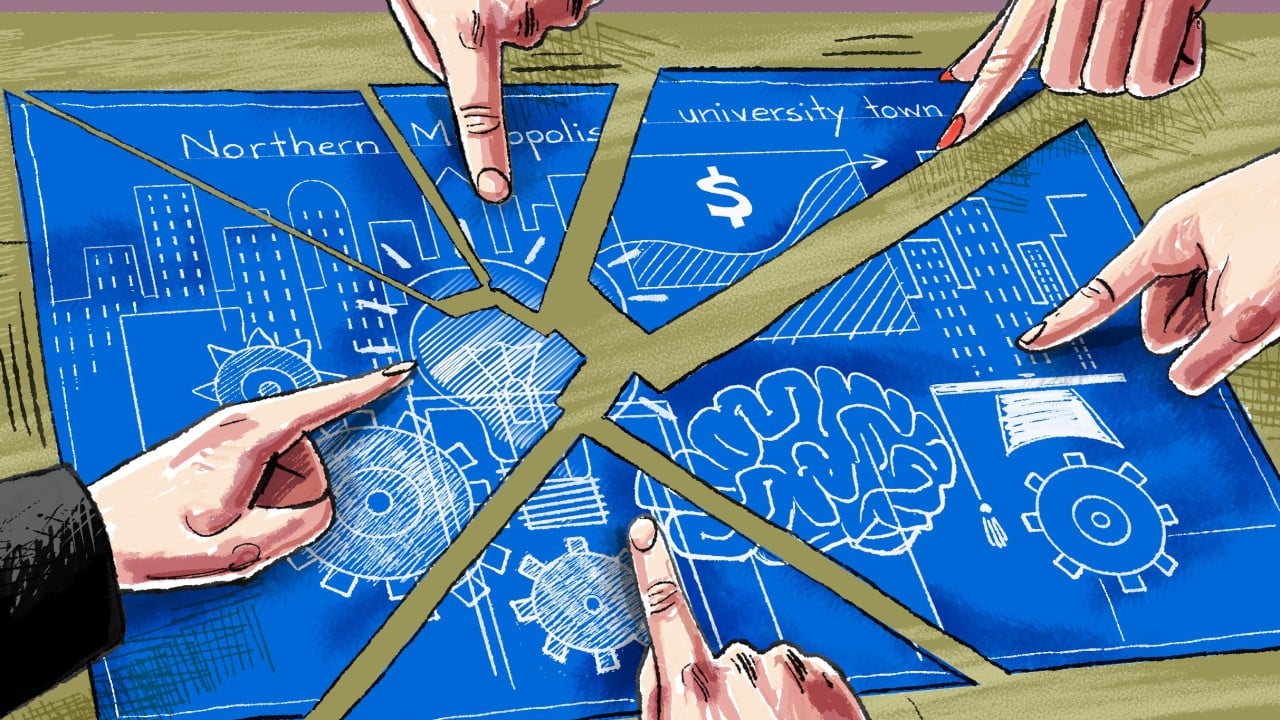
The blueprint for Hong Kong’s Northern Metropolis university town is built on a dangerous, expensive lie.
The lie is simple: if you build massive concrete campuses, offer subsidized rent, and pack thousands of academics into a designated geographic zone, commercial breakthroughs will spontaneously ignite.
It is a comforting, bureaucratic fantasy. It is also entirely detached from how actual commercial technology is born.
Governments worldwide suffer from an obsession with top-down planning. They look at Silicon Valley or Boston’s Route 128 and see universities next to corporate offices. They assume the proximity caused the success. They mistake the architecture for the engine.
I have watched cities dump billions into tech parks that ended up as glorified real estate plays or quiet commuter towns for researchers who commute back to downtown centers the moment their lectures end. The proposed mega-campus near the northern border is tracking toward the exact same fate. It is designed to produce research papers, not commercial giants.
If Hong Kong wants to actually dominate the technology sector, it needs to stop building academic theme parks and start fixing the structural flaws that choke its founders.
The Real Estate Illusion: Why Buildings Do Not Create Breakthroughs
The current consensus among planners is that physical space is the primary bottleneck for Hong Kong's technology sector. The narrative claims that because land is scarce in Central and Kowloon, moving higher education to the northern border will provide the breathing room necessary for development.
This is a fundamental misunderstanding of what a technology cluster requires.
Real tech ecosystems are messy, organic, and driven by market demand, not master plans. Consider Shenzhen’s Nanshan district or the chaotic garage culture of early California. They did not start with pristine zoning laws and state-of-the-art lecture halls. They started with cheap, flexible spaces where people could fail without consequence.
By turning the Northern Metropolis into a highly regulated, institutional enclave, the city is doing the exact opposite. It is creating an artificial environment.
When you subsidize real estate for specific institutions, you remove the Darwinian pressure that forces companies to build products people actually buy. Instead of competing for customers, entities in these zones end up competing for government grants and administrative approval. The primary skill becomes bureaucratic compliance, not commercial survival.
Imagine a scenario where a young software engineer wants to build a new logistics platform. They do not need a multi-million-dollar lab run by a university department chair. They need cheap coffee, reliable internet, access to hungry talent, and a regulatory framework that allows them to move fast. Placing them in a remote, sterile academic district miles away from the commercial heart of the city isolates them from the very market they need to validate their product.
The Border Trap: Proximity to Shenzhen is Not a Strategy
The second pillar of the current plan is geographic proximity to Shenzhen. Proponents argue that putting universities right on the border creates a natural bridge to mainland China’s manufacturing and supply chain engine.
This argument ignores the reality of modern cross-border economics.
Proximity is no longer measured in kilometers; it is measured in regulatory friction. Having a campus ten minutes from the border checkpoint means nothing if moving intellectual property, data, and capital across that border still requires mountains of paperwork. Shenzhen does not need Hong Kong for real estate or basic laboratory space. Shenzhen has plenty of its own. What Shenzhen looks to Hong Kong for is what happens south of the border: common law, free capital flows, and international connectivity.
By focusing so heavily on the physical border, the Northern Metropolis project risks turning into a second-tier satellite of the mainland tech scene rather than an international powerhouse.
Furthermore, the "bridge" argument assumes that talent wants to live and work in an artificial border zone. Top-tier international engineers and founders move to cities because of culture, density, and lifestyle. They want vibrant urban centers. Forcing them into a purpose-built border town ensures that the best minds will choose to stay in London, New York, or Singapore, leaving the northern campus populated only by those who have no other options.
The Academic Incentive Crisis: Professors Do Not Build Unicorns
The most flawed assumption of the university town model is that academic research naturally translates into commercial products.
It does not. The incentives of a university professor are diametrically opposed to the incentives of a startup founder.
- The Academic Goal: Secure tenure, publish papers in peer-reviewed journals, and win government research grants. Success is measured by citations and institutional prestige.
- The Founder Goal: Build a viable product, capture market share, achieve profitability, or scale to an exit. Success is measured by revenue and adoption.
When you base an innovation strategy entirely around a university town, you are putting the academics in charge. I have seen institutional technology transfer offices strangle promising spin-offs before they even launch. They fight over intellectual property percentages, demand board seats, and impose restrictions that scare away serious venture capital.
The heavy hitters of the tech world—the companies that actually move markets—rarely come out of structured university initiatives. They come from dropouts, renegade researchers who quit the system, or industry veterans who saw a flaw in their employer’s business model.
By centering the Northern Metropolis around established university hierarchies, Hong Kong is ensuring that any technology produced will be buried under academic red tape. A professor with a comfortable salary and tenured security is not going to take the existential risks required to scale a business. They will write the paper, claim the credit, and leave the hard work of commercialization to die in a drawer.
The Capital Disconnect: Where Risk Goes to Die
You cannot build a technology hub without risk capital. Hong Kong has vast amounts of wealth, but it has historically been deployed into low-risk, high-return sectors: real estate and traditional finance.
The capital problem in Hong Kong is not a lack of cash; it is a profound aversion to early-stage risk.
The current proposals for the Northern Metropolis suggest that state-backed funds and corporate partnerships will fill the gap. This is a misunderstanding of how venture funding works. Government funds are inherently risk-averse because they are accountable to public scrutiny. They prefer to invest in "safe" projects with predictable outcomes—which is a contradiction in terms when dealing with early-stage technology.
Corporate capital from traditional conglomerates is equally unsuited. These entities are built on optimization, not disruption. They invest to protect their existing monopolies, not to back a radical new idea that might make their current business models obsolete.
Without a thriving ecosystem of independent, aggressive venture capitalists who are willing to lose their entire investment on nine companies to find the one that returns a thousand times, the university town will just be an expensive sandbox. The best founders will take the research funded by Hong Kong taxpayers and move to Silicon Valley or Singapore to raise the money they need to scale.
The Counter-Intuitive Blueprint
If we stop pretending that real estate solves economic problems, we can focus on what actually works. To turn Hong Kong into a genuine center for technological development, the focus must shift away from zoning laws and toward systemic deregulation.
1. Strip Intellectual Property Rights Away from Universities
If a researcher develops a breakthrough using public funds on a campus, the intellectual property should belong to the creator, not the institution. The current system allows universities to sit on patents like hoarders. Forcing immediate, frictionless spin-offs would strip away the administrative friction that kills startups in their infancy.
2. Turn the Northern Metropolis into a Zero-Tax, Zero-Regulation Sandbox
Instead of building lecture halls, make the zone a regulatory free-fire area. Eliminate corporate tax for companies that generate revenue from original software or hardware design within the zone. Remove the hiring restrictions that make it difficult to bring in foreign technical talent. Do not build offices; build a regulatory environment where a company can pivot, fail, and hire globally within forty-eight hours.
3. Replace Grants with Direct Revenue Matching
Government grants breed dependency. They reward the ability to write proposals rather than the ability to build products. Stop giving out upfront grants for research that might never see the light of day. Instead, create a fund that matches commercial revenue dollar-for-dollar for the first three years of a company’s life. If the market wants what you are building, the city will back you. If the market does not care, neither should the taxpayer.
The fixation on building a sprawling university town in the Northern Metropolis is a symptom of a broader bureaucratic malaise. It is the belief that complex economic ecosystems can be ordered from an architectural firm and delivered on a schedule.
They cannot. Technology is the byproduct of friction, risk, and ambition. Until Hong Kong stops acting like a real estate developer and starts acting like a venture capitalist, the Northern Metropolis will remain a very expensive monument to old thinking.