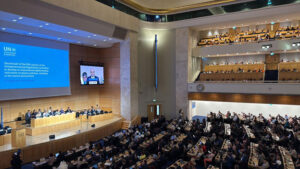
Norway just sent a shockwave through the international community that's louder than any protest banner. By cutting off financial support for the secretariat overseeing the UN Global Plastics Treaty, they've effectively called everyone’s bluff. It isn't just a budget tweak. It's a blunt admission that the current path toward a "plastic-free" world is stalled, bogged down by oil-producing nations and a lack of genuine ambition. If a country that's historically been the loudest cheerleader for environmental regulation stops writing checks, you know the ship is taking on water.
This move targets the heart of the Intergovernmental Negotiating Committee (INC). For years, these talks have dragged on, moving from Uruguay to Kenya to Canada and finally to South Korea. While the world watched turtles choke on straws, diplomats spent hours arguing over whether the treaty should be legally binding or just a list of polite suggestions. Norway’s withdrawal says they're tired of paying for a talking shop that refuses to produce results.
Why Norway Walked Away From the Checkbook
Norway hasn't suddenly decided they love plastic pollution. Quite the opposite. They’ve been leading the "High Ambition Coalition," pushing for a treaty that actually caps plastic production rather than just focusing on better recycling bins. But at the recent INC-5 session in Busan, the divide became a canyon. On one side, you have countries wanting to stop the problem at the source. On the other, a group of "Like-Minded Countries"—mostly major oil and gas exporters—who view any production cap as a direct attack on their GDP.
The Norwegian government basically signaled that they won't subsidize a process that has been hijacked. They're frustrated. You can see it in the way they’ve pivoted. When the talks in Busan ended without a clear, binding text, the momentum died. Norway’s funding was supposed to facilitate participation and administrative costs. By pulling it, they're forcing a crisis. It's a high-stakes gamble to see if other nations will step up or if the whole process will simply collapse under its own weight.
The Production Cap Problem Everyone is Avoiding
We can talk about "circular economies" until we're blue in the face, but it's all noise if we don't address the sheer volume of new plastic entering the market. The industry plans to double production by 2040. You can’t recycle your way out of an exponential curve.
The biggest point of contention in these negotiations is a "global target" for reducing primary plastic polymer production. Most scientists agree this is the only way to meet climate goals. Yet, at every turn, the negotiations get stuck on "Rules of Procedure." If you think that sounds boring, that’s the point. It’s a classic stalling tactic. By refusing to agree on how to vote, a small minority of countries can block the will of the majority. Norway’s funding cut reflects a refusal to keep paying for a game where the rules are rigged for a stalemate.
How the Private Sector is Reacting to the Chaos
Businesses actually hate uncertainty more than they hate regulation. Believe it or not, many major brands—the ones whose logos you see on the trash in the ocean—were actually rooting for a strong treaty. Companies like Unilever, Nestle, and Coca-Cola have made big public "sustainability" promises. They need a global level playing field. Without a unified treaty, they’re stuck navigating a messy patchwork of different laws in 190 different countries.
When Norway pulls back, it signals to the markets that a global standard might never happen. This is bad for green investment. If you’re a startup developing seaweed-based packaging, you need to know that plastic will eventually become more expensive or restricted. If the treaty fails, the "business as usual" crowd wins, and the incentive to innovate disappears. We’re left with a world where it’s always cheaper to just pump more oil and make more cheap, disposable junk.
The Human Cost of Diplomatic Gridlock
While diplomats in expensive suits argue over the placement of a comma in Busan or Nairobi, the reality on the ground is getting worse. This isn't just about messy beaches. It's about human health. Microplastics are in our blood, our lungs, and even the placentas of unborn babies.
Developing nations are often the ones bearing the brunt of this. They're the ones receiving "recyclable" waste from the West that ends up being burned in open pits. These countries don't have the infrastructure to deal with the sheer volume of waste the global North exports. Norway’s funding often helped representatives from these smaller, more impacted nations actually attend the meetings. Without that support, the voices of those most affected by plastic pollution get silenced. The table becomes even more dominated by the wealthy and the powerful.
The Reality of the Like Minded Countries Bloc
It’s easy to point fingers at "big oil," but the opposition is a coordinated bloc. Countries like Saudi Arabia, Russia, and China have been very clear. They see plastic as the future of their petro-economies as the world moves away from combustion engines. If we stop burning oil for cars, they need us to keep buying it in the form of bottles, wrap, and cheap toys.
They’ve used every trick in the book to slow things down. They argue that the treaty should only focus on "waste management." That's like trying to mop up a flooded bathroom without turning off the faucet. Norway’s exit from the funding role is a direct challenge to this narrative. It’s a way of saying: "If you want to turn this into a waste management treaty that does nothing, you pay for it."
What Happens if the Treaty Actually Fails
We're at a fork in the road. If the funding dries up and the enthusiasm vanishes, we don't just stay where we are. We slide backward. Without a global treaty, we’ll see a surge in "greenwashing" where companies make bold claims with zero accountability. We’ll see "waste colonialism" ramp up as wealthy nations look for new places to dump their trash.
But there's a slim chance Norway’s move works as a "shock to the system." Sometimes you have to let something break before people realize it’s worth fixing. If other ambitious nations—think Germany, France, or Canada—don't fill the gap, the UN Environment Programme (UNEP) will have a massive hole in its budget. The schedule for future meetings will slip. The window to act before the 2030 climate benchmarks hit will slam shut.
Practical Steps for the Path Forward
The diplomatic route is currently a mess, but that doesn't mean the movement is dead. If you’re tired of waiting for a treaty that might never come, the focus has to shift to local and national action.
- Push for Extended Producer Responsibility (EPR) laws. These force companies to pay for the cleanup and recycling of the packaging they create. It’s the only way to make them care about design.
- Support bans on "non-functional" plastics. We don't need plastic-wrapped bananas or tiny sachets for shampoo. These are design flaws, not necessities.
- Demand transparency in the "chemical recycling" space. A lot of what’s being sold as a miracle solution is just burning plastic for fuel. It’s a fake fix that keeps the production lines running.
- Watch the funding. Keep an eye on which countries step up to fill Norway’s shoes. If it’s the oil-producing bloc that starts funding the secretariat, you’ll know exactly what the final treaty will look like.
Norway’s decision is a wake-up call because it proves that "hope" is not a strategy. We’ve spent years hoping that every nation would eventually agree to do the right thing for the planet. They won't. Some will fight for their right to pollute until the very end. Norway just stopped pretending otherwise. It's time for everyone else to decide if they're going to let the plastics treaty die or if they’re willing to fight for a version that actually has teeth. The era of polite, funded disagreement is over.
:max_bytes(150000):strip_icc():focal(819x186:821x188)/Murdaugh-Family-e90854a716884d608fb6fd925e18d840.jpg)
