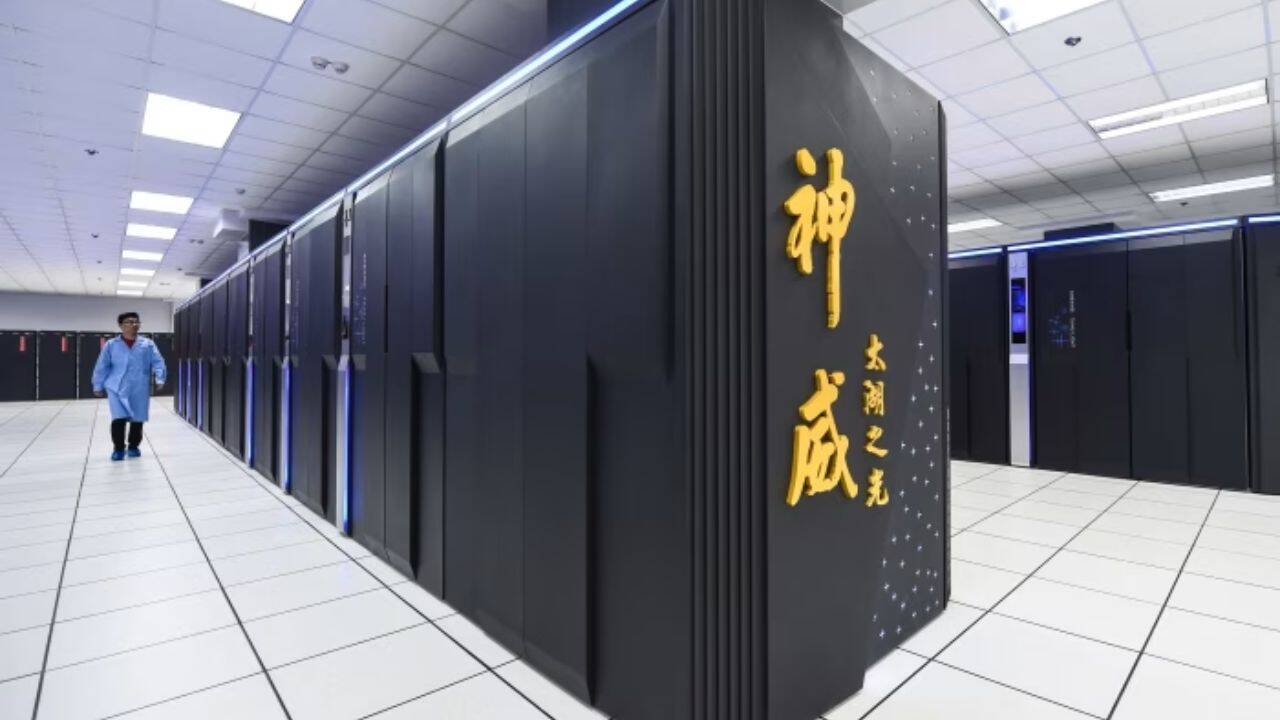
The global tech press is currently hyperventilating over China’s LineShine supercomputer snatching the crown from the United States in the latest TOP500 rankings. Headlines scream about an exascale arms race, national security emergencies, and the shifting tides of global technological supremacy.
It is a beautifully orchestrated circus. It is also completely irrelevant.
The tech industry has fallen for a lazy consensus that equates peak theoretical hardware performance with actual computing utility. We treat the TOP500 list like the Formula 1 standings, assuming the faster the car goes on a straight track, the better the entire industry is doing.
Having spent two decades auditing high-performance computing (HPC) infrastructure for enterprise and government clients, I can tell you the reality behind closed doors: these monstrous, multi-hundred-million-dollar systems are often the most inefficient, underutilized white elephants in the history of technology.
Winning the TOP500 race is not about innovation. It is about an expensive, politically motivated brute-force metric that has almost zero bearing on real-world scientific breakthrough or commercial viability.
The Linpack Lie: Measuring What Doesn’t Matter
To understand why the LineShine victory is a hollow triumph, you have to understand how these machines are ranked. The TOP500 relies on the High-Performance Linpack (HPL) benchmark.
Linpack solves a dense system of linear equations. It is a highly predictable, mathematically neat workload that utilizes dense matrix operations. It is the computational equivalent of putting a car on a treadmill, pinning the accelerator to the floor, and measuring the top speed.
It tells you absolutely nothing about how that car handles a rain-slicked hairpin turn.
Modern workloads—the ones that actually matter today, like large-scale deep learning, structural biology simulations, and chaotic climate modeling—do not look like Linpack. They are highly irregular. They require massive data movement, sparse matrix operations, and constant communication between nodes.
The Interconnect Bottleneck
When you scale a system to hundreds of thousands of cores to grab a headline, your biggest enemy is not raw compute power; it is the interconnect. Data must travel across cables between processors.
Imagine a scenario where you have 50,000 brilliant researchers in a room, but they can only communicate by passing handwritten post-it notes through a single door. It doesn't matter how fast individual researchers can think; the system slows down to the speed of the doorway.
This is the Von Neumann bottleneck writ large. While LineShine might boast staggering peak Flops (floating-point operations per second) on paper, its real-world efficiency on non-Linpack benchmarks like High-Performance Conjugate Gradients (HPCG) is likely a fraction of that number. The TOP500 list conveniently ignores this. We are celebrating a sprinter who can only run in a vacuum.
The Sovereign Vanity Project
Governments spend astronomical sums of taxpayer money to fund these exascale systems primarily for geopolitical posturing. It is PR masquerading as progress.
I have seen organizations burn through $150 million on a cluster just to realize the software stack required to run their specific workload efficiently on that specific architecture did not exist. The hardware sits idle or runs poorly optimized legacy code while the facility's electricity bill rivals that of a mid-sized city.
The cost of ownership for these massive systems is staggering, and it goes far beyond the initial silicon purchase:
| Cost Center | The Hidden Reality |
|---|---|
| Power Consumption | An exascale system can draw 30 to 40 megawatts. At standard commercial rates, just turning the machine on costs tens of millions annually. |
| Cooling Infrastructure | Liquid cooling loops require massive maintenance overhead and create single points of catastrophic failure. |
| Software Refactoring | Porting legacy scientific code to utilize thousands of custom accelerators takes years of specialized developer labor. |
When China or the US builds a new apex supercomputer, they are not doing it because a line of scientists is waiting with code that can magically utilize 100% of that specific cluster. They do it so politicians can point at a chart and claim dominance. It is sovereign vanity.
The Real Power Shift is Decentralized and Distributed
While the media stares at the shiny new monument in the TOP500 list, the real architectural revolution is happening completely out of sight. The future of computational supremacy does not belong to monolithic, centralized supercomputers housed in a single bunker. It belongs to distributed, highly specialized, hyper-scaled cloud infrastructure.
The premise that you need a singular, massive supercomputer to solve humanity's hardest problems is fundamentally flawed.
Look at how modern foundation models are trained. Companies are not building single, custom-engineered HPL-optimized supercomputers. They are linking massive pools of commoditized, highly efficient accelerators across distributed data centers. They prioritize interconnect bandwidth, fault tolerance, and software abstraction layers over raw, brittle peak Flops.
If you want to solve complex global optimization problems, stop looking at who has the biggest single machine. Look at who has the most agile, resilient software ecosystem that can orchestrate workloads across millions of smaller, heterogeneous nodes.
The Brutal Truth About Sovereign Silos
There is a dark side to this contrarian view that we must acknowledge: building specialized, distributed cloud infrastructure instead of massive national supercomputers makes you heavily reliant on global supply chains.
The monolithic supercomputer approach does have one advantage: it allows a nation to bundle whatever domestic silicon they can produce into a single, highly subsidized footprint to prove they can do it. It is a siege-mentality architecture.
But adopting that approach as a roadmap for commercial or scientific progress is operational suicide. It forces your brightest minds to work within the constraints of esoteric, poorly documented domestic hardware architectures rather than utilizing the global standard software tools that drive rapid iteration.
Dismantling the Premise
Whenever a new TOP500 list drops, the public immediately asks: How can we build a faster supercomputer to catch up?
This is entirely the wrong question. You are playing a rigged game designed by hardware vendors and politicians to get you to spend more capital on raw silicon.
Instead, the question should be: How do we maximize the computational yield per watt and per dollar of our existing infrastructure?
If you are an executive or a research director looking to solve massive computational problems, ignore the nationalistic chest-thumping over LineShine.
- Stop chasing raw Flops. Demand benchmarks based on your actual workloads, not synthetic Linpack tests.
- Invest in compilers and optimization, not just silicon. A 10% optimization in your software stack yields far better returns than buying 10% more unoptimized nodes.
- Embrace architectural heterogeneity. The era of the homogeneous CPU/GPU mega-cluster is yielding to specialized ASICs designed for specific mathematical operations.
Stop worshiping the monuments of the computing world. The future belongs to the networks, not the monoliths. Let the politicians have their rankings while you build systems that actually deliver.