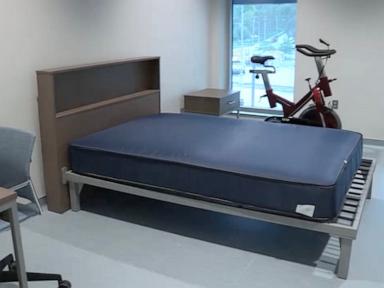
The federal government is once again leaning on a 20-bed facility in Omaha to solve a problem that the rest of the American healthcare infrastructure is fundamentally unequipped to handle. As a hantavirus outbreak ripples through the passenger manifest of the cruise ship M/V Hondius, 17 Americans are being funneled into the National Quarantine Unit (NQU) at the University of Nebraska Medical Center (UNMC). This is not a drill, nor is it a routine medical transfer. It is the activation of the nation’s only federally funded specialized quarantine resource, a facility born from the hard-learned lessons of the Ebola crisis and the early, chaotic days of the COVID-19 pandemic.
While headlines may describe the NQU as a high-end containment hotel, that description undersells the sheer mechanical and logistical violence required to keep a pathogen inside a building. The facility operates on a philosophy of absolute separation. This is the "why" behind Nebraska’s prominence in global health security: they have built a system where the air itself is a prisoner. You might also find this connected coverage useful: The Hantavirus Cruise Scare is a Masterclass in Medical Illiteracy.
The Mechanics of Containment
To understand the NQU, you have to look past the Wi-Fi and the exercise bikes provided to the passengers. The real work happens in the walls. Each of the 20 rooms operates under negative air pressure, a mechanical state where air can flow into the room but never out into the hallways. Every cubic inch of atmosphere inside these units is scrubbed through High-Efficiency Particulate Air (HEPA) filters before being vented.
This isn't just about fans. It’s about a $20 million infrastructure investment from the Department of Health and Human Services’ Administration for Strategic Preparedness and Response (ASPR). The NQU exists because standard hospital isolation rooms are designed for individual cases of MRSA or localized infections—not for clusters of passengers exposed to "high-consequence" pathogens. When the Diamond Princess became a floating petri dish in 2020, the world saw what happens when you keep people on a ship. The "quarantine" became an incubator. Nebraska is the correction to that mistake. As highlighted in detailed coverage by National Institutes of Health, the implications are widespread.
Why Hantavirus Changes the Equation
The current mission involves hantavirus, a pathogen typically associated with rodent droppings rather than luxury cruises. While human-to-human transmission of most hantavirus strains is considered rare, the "Andes" strain has proven it can jump between people. For federal health officials, the M/V Hondius situation represents an unacceptable risk of a new variant or a localized spike.
The move to Omaha is a strategic play to isolate the variable. By moving the 17 Americans to a controlled environment, the CDC effectively removes them from the general population and the standard hospital system, which lacks the specialized training to manage high-level biocontainment without risking staff exposure.
The Shadow of the Biocontainment Unit
It is vital to distinguish the National Quarantine Unit from its more intense sibling, the Nebraska Biocontainment Unit (NBU).
- The NQU (Where the passengers are going): Designed for people who are exposed but not yet symptomatic. It is a monitoring station with high-level containment.
- The NBU: This is where the actual "hot" patients go—those confirmed to have Ebola, Marburg, or in this case, confirmed Hantavirus Pulmonary Syndrome.
If a passenger in the quarantine unit spikes a fever, they don't just get an aspirin. They are moved through a dedicated, secure corridor to the NBU. This "tiered" approach is the blueprint for how the U.S. intends to handle future pandemics. However, the system is fragile. With only 20 beds in the NQU and a handful of specialized biocontainment beds, the entire national strategy for high-consequence outbreaks relies on a microscopic footprint in the middle of the country.
The Cost of Preparedness
Critics often point to the high price tag of maintaining these units when they sit empty. But the "empty" periods are when the real work happens. Staff at UNMC undergo constant "donning and doffing" drills, practicing the 20-minute process of putting on and taking off personal protective equipment (PPE) without touching a single square inch of their own skin.
A single mistake in doffing PPE is how healthcare workers became patients during the 2014 Ebola outbreak. In Omaha, that process is treated with the same reverence as a pre-flight checklist for a fighter pilot. The facility isn't just a building; it is a human system of reinforced habits.
The Geographic Paradox
There is a certain irony in the fact that the most sophisticated biological shield in the United States is located in Omaha, Nebraska, rather than a coastal hub like New York or Los Angeles. This was a deliberate choice. UNMC has spent decades quietly becoming the global leader in infectious disease response. When the federal government needed a place to send the first Americans back from Wuhan in early 2020, they didn't look for the biggest city; they looked for the most disciplined staff.
The arrival of the M/V Hondius passengers is a test of whether the lessons of 2020 have stuck. We are no longer in the era of "wait and see" with cruise ship outbreaks. The policy has shifted to aggressive extraction and centralized isolation.
The 17 Americans arriving in Omaha are entering a facility that represents the pinnacle of medical defense. They will be monitored by sensors, treated by experts who have spent years preparing for this exact scenario, and kept behind a curtain of negative pressure and HEPA filtration. It is an expensive, complex, and highly localized solution to a global problem. For now, it is the only one we have.
Learn more about the specific protocols of the National Quarantine Unit
This news report covers the immediate details of the passenger transfer and provides a visual overview of the Omaha facility's readiness.