The Auditor General of Ontario is preparing to pull back the curtain on a silent, multi-billion dollar shift in how the province governs its 15 million citizens. While the public focuses on political theatre in Queen’s Park, a far more consequential transformation is happening within the servers of the Ontario Public Service (OPS). Algorithms are now deciding who gets healthcare, how provincial transit lines are drawn, and which job applications reach a human desk.
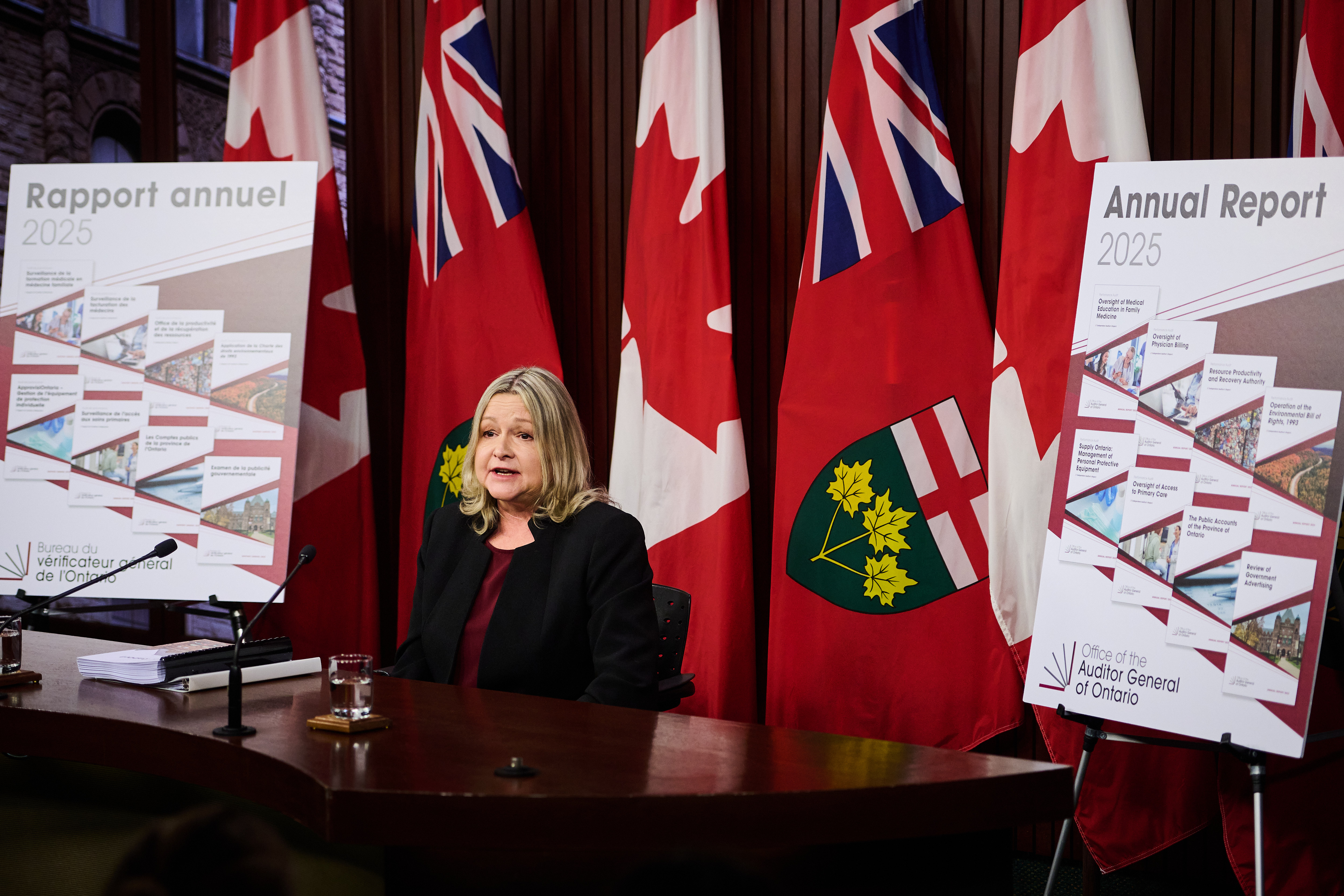
Auditor General Shelley Spence is set to release a definitive performance audit examining the province’s strategy—or lack thereof—regarding the integration of artificial intelligence. This is not a routine check of the books. It is a high-stakes investigation into a government that has rushed to adopt predictive technologies while its internal safeguards remain rooted in the 1980s. The core issue is not just that the government is using AI; it is that they are doing so without a cohesive governance framework, potentially exposing the province to massive legal liabilities and systemic bias.
The Ghost in the Health System
Nowhere is the danger of unmanaged AI more apparent than in the Ministry of Health. Recent audits already revealed a ministry struggling with a billing system that dates back to the Reagan era. Doctors are billing for 24-hour workdays because the current software cannot flag physical impossibilities. Into this antiquated environment, the province is introducing predictive analytics for patient triage and resource allocation.
When a machine learning model decides which surgical waitlist moves faster, it relies on historical data. If that data contains decades of systemic bias against rural populations or specific demographics, the AI does not fix the problem. It automates the exclusion. The Auditor General’s upcoming report is expected to highlight a massive gap between the province’s digital ambitions and its ability to audit the "black box" logic of these tools.
The Procurement Trap
Ontario is currently caught in a cycle of "vendor lock-in" that threatens to drain the public purse. Because the OPS lacks the internal technical depth to build these systems, they rely on third-party contractors. This creates a scenario where the government owns the results but doesn't fully understand the process.
The audit is tracking how "Supply Ontario" and other agencies have managed AI contracts. Historically, the province has a dismal track record with large-scale IT procurement—most notably the billion-dollar eHealth scandal and more recent mask-stockpile mismanagement. AI procurement is even more treacherous. If a vendor’s algorithm produces discriminatory outcomes in a social service setting, the legal responsibility falls on the Crown, not the software company. We are effectively outsourcing our decision-making to entities that prioritize profit over the Canadian Charter of Rights and Freedoms.
Algorithmic Policing and Privacy
Beyond healthcare, the audit is scrutinizing the "Justice sector," specifically the use of facial recognition and predictive policing. The Ontario Human Rights Commission has already sounded the alarm, noting that police services have experimented with tools like Clearview AI without clear provincial directives.
Predictive policing uses "hot spot" mapping to tell officers where crime might happen. However, if those maps are generated from historical arrest records—which are often skewed by over-policing in specific neighborhoods—the AI simply creates a feedback loop. It sends police back to the same areas, leading to more arrests, which then "proves" the AI was right. This isn't intelligence. It’s high-tech profiling. Spence’s report will likely demand a unified provincial standard for these technologies to prevent a patchwork of surveillance that varies from one municipality to the next.
The Productivity Mirage
The Ford government’s primary justification for AI adoption is economic productivity. Bill 61, the Ontario Artificial Intelligence, Talent and Innovation Strategy Act, 2025, was designed to turn the province into a global tech hub. But productivity in the private sector is measured in dollars, while productivity in government must be measured in service quality and fairness.
There is a real risk that the government is chasing "efficiency" at the cost of "effectiveness." Automating a broken process doesn't fix it; it just makes the errors happen faster. For example, the Auditor General found that the province expanded medical school seats without enough training clinics. No amount of AI scheduling can solve a physical shortage of doctors. The concern is that the government is using AI as a "shiny object" to distract from fundamental infrastructure failures.
Lack of Human Oversight
The most damning part of the upcoming investigation centers on the "human in the loop" principle. For AI to be safe, a human must be able to explain why a decision was made. Currently, many provincial systems lack this transparency. If an AI denies a citizen a specific social benefit, that citizen has a right to know why. If the answer is "the computer said so," the government has failed its most basic duty of accountability.
Spence is looking for evidence that the OPS has trained its staff to challenge algorithmic outputs. So far, the evidence suggests the opposite. Staff are often encouraged to trust the "data-driven" results, even when those results defy common sense. This creates a culture of "automation bias," where the software is treated as infallible despite being built on flawed assumptions.
The Fiscal Reality
Taxpayers should be wary. The province recently recorded a $1.1 billion deficit, yet it continues to pour money into "digital transformation" without clear metrics for success. The Auditor General’s role is to ensure value for money. If these AI systems aren't actually reducing wait times or improving service delivery, they are just expensive experiments.
The report will likely call for a mandatory AI Impact Assessment for every new project. This would force ministries to prove that a tool is safe and effective before it goes live. It’s a common-sense measure that the government has largely ignored in its rush to appear modern.
Ontario stands at a crossroads. We can either build a transparent, ethical framework for AI that serves the public interest, or we can continue down a path of shadow governance where algorithms make life-altering decisions behind closed doors. The Auditor General’s report is the final warning. If the government fails to implement a robust governance framework now, the cost—both in dollars and in public trust—will be astronomical.
The province needs to stop treating AI as a magic wand and start treating it like the high-risk infrastructure it actually is. Audit the code. Question the data. Hold the humans accountable. Anything less is a dereliction of duty.