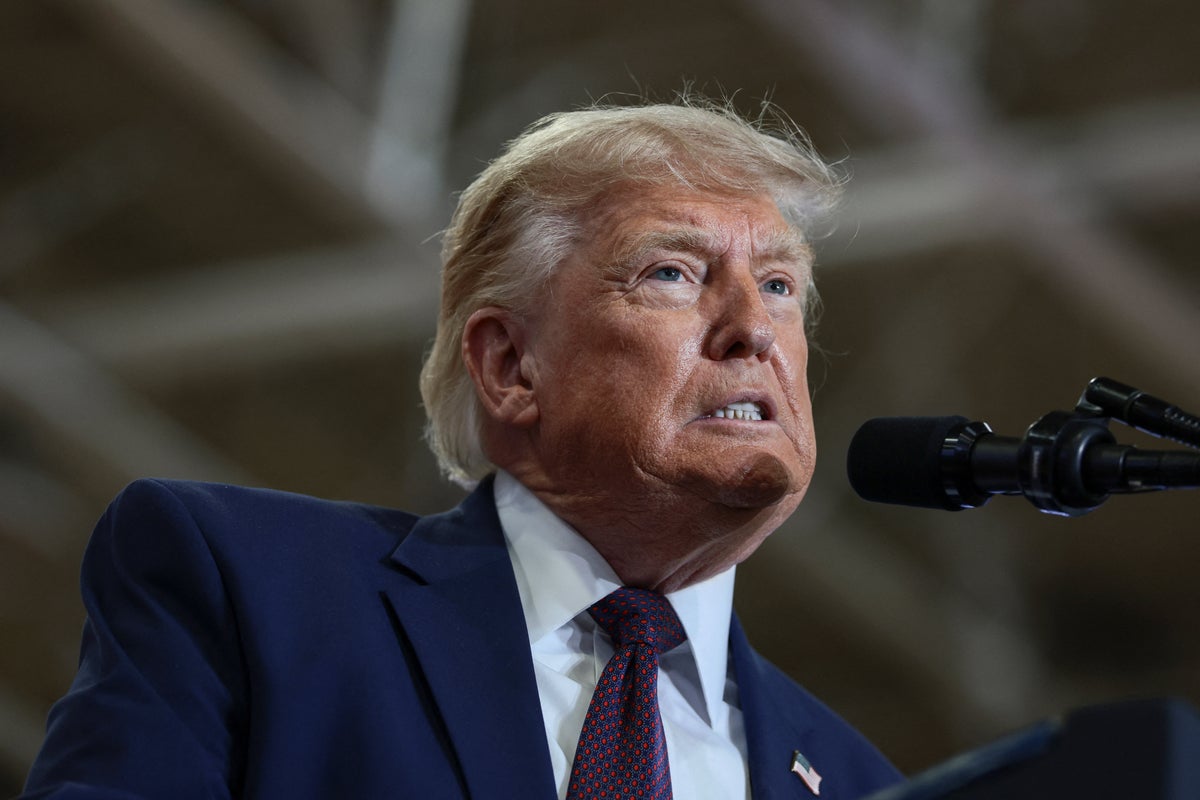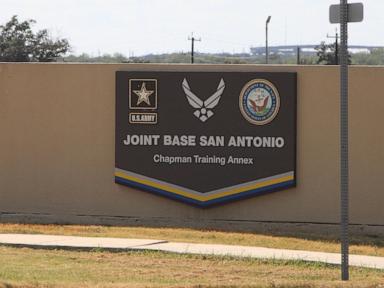
Epidemiological stability inside military training facilities functions as a direct prerequisite for national security infrastructure. When Defense Secretary Pete Hegseth rescinded the Department of Defense's long-standing universal influenza vaccine mandate in April 2026, the policy shift was framed as a restoration of medical autonomy. However, the subsequent outbreak at Joint Base San Antonio-Lackland, which compromised the health of nearly 160 basic trainees within weeks, exposes a fundamental misunderstanding of viral transmission mechanics in high-density, closed environments. The rapid return to compulsory immunization by the Air Force, Army, and Navy via Exceptions to Policy (ETPs) provides an empirical case study on why individual autonomy models fail when applied to operational readiness frameworks.
The Epidemiological Vulnerability of Basic Training
Basic military training environments operate under a distinct set of environmental constraints that systematically elevate the basic reproduction number ($R_0$) of respiratory pathogens. Under standard civilian conditions, seasonal influenza carries an $R_0$ typically ranging from 1.2 to 1.4. In a military cohort, this value scales exponentially due to specific structural variables.
- High Population Density: Recruits share communal open-bay dormitories, utilize centralized hygiene facilities, and ingest meals in highly concentrated dining facilities. This physical proximity removes the spatial buffers that naturally suppress aerosol and droplet transmission in civilian life.
- Physical and Physiological Stress: The rigorous physical conditioning regimen of basic training deliberately induces systemic fatigue. Elevated cortisol levels over sustained periods suppress cell-mediated immunity, rendering individuals more susceptible to viral replication upon exposure.
- Immune Naivety Mixing: Training wings aggregate young adults from highly diverse geographic and socio-economic backgrounds. This creates a highly volatile immunological mixing bowl, introducing distinct regional viral strains to a population with varying baseline antibody profiles.
When the Department of Defense eliminated the mandatory vaccine policy, the immediate behavioral response altered the system's baseline herd immunity. According to Air Force official records, the immunization rate among incoming recruits cratered from virtually 100% down to approximately 40%.
Mathematical models of herd immunity state that the critical vaccination threshold ($V_c$) required to halt an outbreak is calculated by the formula:
$$V_c = 1 - \frac{1}{R_0}$$
Assuming a conservative civilian $R_0$ of 1.3, the required immune threshold is roughly 23%. However, in the high-density vector of Lackland's 37th Training Wing, where the effective $R_0$ can easily surge past 2.5 due to proximity and stress, the required herd immunity threshold rises past 60%. Dropping the actual vaccination rate to 40% guaranteed that any introduced strain would spark sustained, exponential transmission.
The True Cost Function of Dropped Mandates
Evaluating health policy through an exclusively ideological lens obscures the tangible operational penalties incurred by disease outbreaks. The sidelining of 159 recruits at Lackland represents a localized system failure with cascading downstream effects on force generation.
The primary operational cost is measured in training days lost. When a recruit presents with influenza symptoms, public health protocols require immediate isolation and treatment with antiviral medications such as oseltamivir. This disrupts the highly synchronized, block-scheduled curriculum of basic military training. Trainees cannot simply skip a week of instruction; missing critical weapon qualifications, tactical drills, or CBRN (Chemical, Biological, Radiological, and Nuclear) defense training requires them to be recycled into a later training cohort.
This creates a severe logistical bottleneck. The 37th Training Wing is responsible for processing all enlisted personnel entering the Air Force, Space Force, Air Force Reserve, and Air National Guard. Delaying hundreds of recruits ripples through the entire personnel pipeline, pushing back specialized technical school start dates and leaving operational units undermanned for longer durations.
The secondary cost centers manifest in medical asset reallocation. Managing a localized outbreak shifts the 59th Medical Wing’s resources away from routine healthcare, preventative screenings, and deployment readiness evaluations toward acute triage, contact tracing, and quarantine management.
The Policy Exception Mechanism
The speed with which the Pentagon approved Exceptions to Policy to restore mandatory vaccinations underscores the friction between political directives and operational realities. While the overarching policy remains voluntary at the civilian leadership level, the military chain of command retains the structural mechanism to override these directives when localized conditions threaten mission capability.
The approval of ETPs for the major branches confirms that localized risk assessments universally pointed to a singular conclusion: voluntary immunization programs are incompatible with the structural realities of initial entry training. The voluntary model relies on a baseline assumption of rational self-interest calculated under normal risk conditions. In a recruit population, where institutional compliance is demanded in all other spheres, making an isolated variable optional introduces decision fatigue and vulnerabilities to misinformation.
The immediate re-implementation of the mandate at training bases establishes an operational double standard. Recruits are forced to undergo immunization to ensure the integrity of the training pipeline, yet the permanence of this protection remains uncertain once they transition to the wider operational force where the voluntary policy still stands.
Force Protection Optimization
Relying on reactive ETPs after an outbreak has already occurred is an inefficient strategy for force health protection. To stabilize the force generation pipeline without triggering constant policy reversals, the Department of Defense must adopt a formalized, data-triggered immunization architecture.
First, initial entry training facilities must be classified as High-Transmission Risk Zones, permanently exempted from civilian or political adjustments to standard medical protocols. The environmental variables of basic training are fixed; therefore, the medical countermeasures must remain fixed.
Second, if voluntary frameworks are mandated by civilian oversight, the military must implement a mandatory risk-education protocol during the initial processing phase. If a recruit opts out of vaccination, they must sign an operational liability waiver acknowledging that contracting a preventable illness leading to training delays will result in immediate recycling, extending their period of unrated service.
Ultimately, the events at Lackland Air Force Base demonstrate that micro-level biological systems do not adapt to macro-level political philosophies. Viruses exploit density and stress with mathematical certainty. The cost of prioritizing abstract autonomy over proven epidemiological shields is paid in compromised readiness, strained medical infrastructure, and disrupted operational pipelines. Force protection requires objective risk management, not ideological experimentation.