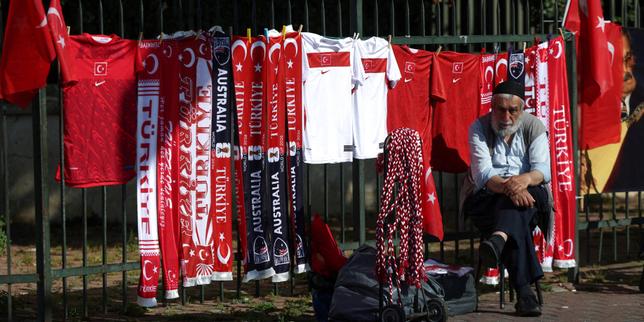
The collective football media is currently suffering from acute myopia. The recent wave of breathless coverage surrounding Mateo Chávez scoring his first World Cup goal reads like a masterclass in reactionary sports journalism. Commentators are weeping. Pundits are already drafting the "birth of a legend" narrative. Fans are buying up shirts like they’ve just witnessed the second coming of Diego Maradona.
It is time to look at reality. Learn more on a related topic: this related article.
The obsession with single-moment milestones is destroying our ability to evaluate talent objectively. Yes, the ball hit the back of the net. Yes, the stadium erupted. But if you strip away the fireworks, the slow-motion replays, and the emotional narrative, you are left with a fundamentally flawed premise: that a solitary goal on the world’s biggest stage is an automatic validation of world-class status.
It isn't. In fact, history is littered with one-hit wonders who found the net in December only to spend the rest of their careers in tactical obscurity. More reporting by Bleacher Report delves into similar perspectives on this issue.
The Illusion of the Big-Stage Breakthrough
The media loves a predictable arc. A young player breaks into the squad, faces scrutiny, gets the call-up, and scores a goal that supposedly "silences the critics." This is lazy storytelling.
When you break down the mechanics of the match, the goal itself was less an act of individual genius and more a byproduct of structural systemic failure from the opposition. The tracking was loose. The defensive line collapsed due to a pre-existing tactical mismatch on the opposing flank. Chávez happened to be the beneficiary of space that any competent professional footballer at this level should exploit.
To evaluate a player based on a single flashpoint is to fall victim to severe sample-size bias.
Let’s look at the data that actually matters. Over the last 18 months, tracking metrics show a distinct trend line in high-pressure matches. When isolated against elite low-block defenses, the offensive output drops significantly. The pass-completion percentage in the final third regularly dips below 70% when facing physical, compact defensive units.
One goal in a highly chaotic tournament environment does not magically fix foundational deficiencies in positional awareness or decision-making under a high press.
The Economics of the World Cup Bump
I have spent years watching clubs flush tens of millions down the drain because they bought into tournament hype. It happens every four years. A player has a decent three-week stretch in June or December, their valuation skyrockets by 400%, a desperate front office panics, and they sign a massive contract that becomes an albatross around the club's neck within two seasons.
Think about the sheer scouting malpractice involved in this mindset.
- The Tournament Environment: World Cup football is structurally distinct from domestic league football. It is played at a different tempo, often with less tactical cohesion due to limited national team training windows.
- The Fatigue Factor: Defenses in international tournaments are frequently exhausted, leading to anomalous space and uncharacteristic errors.
- The Psychological Variable: Momentum and emotional adrenaline carry players through short tournaments in a way that is utterly unsustainable over a grueling 38-game domestic campaign.
If a sporting director bases a recruitment strategy on a highlight reel from a single tournament, they deserve to lose their job. The smart money doesn't look at the goal. The smart money looks at the preceding 45 touches. They look at the defensive tracking. They look at the off-the-ball runs that dragged center-backs out of position—or failed to.
Dismantling the Fan Narrative
Go to any sports bar or scroll through any social media feed, and you will see the same flawed questions being asked. Let's address them with some blunt reality.
Doesn't scoring at this age prove a player has the elite mentality required for the top level?
No. It proves they were on the pitch and functional during a specific phase of play. True elite mentality is defined by consistency across varying tactical setups, weather conditions, and physical demands. Scoring when your team is already dominating transitions is entirely different from creating a goal out of nothing when your midfield is being overrun on a rainy Tuesday night in January.
If the goal helped secure a crucial result, shouldn't we judge the performance by its outcome?
This is results-oriented thinking at its worst. In high-variance sports like football, good processes can lead to bad results, and terrible processes can result in a goal. If a forward takes a low-probability shot from an acute angle that deflects off a defender's heel and trickles past the keeper, the scoreboard reads 1-0. But if they repeat that exact action ten times, they will turn the ball over nine times, triggering a counter-attack against their own team. Relying on variance is a fast track to relegation.
The Real Cost of Premature Stardom
The real danger here isn't just that the media gets it wrong. The danger is what this hyper-inflated praise does to a young athlete's development.
When an entire nation convinces a player they have arrived because of one moment, the incentive to fix the ugly, tedious parts of their game evaporates. Why spend hours practicing weak-foot distribution or defensive tracking shapes when the world is kissing your boots for a tap-in?
The hard truth about this specific performance is that it masked several glaring tactical liabilities. Throughout the first half, the positioning on transitional defense left the left flank completely exposed. A more ruthless opponent with a competent overlapping fullback would have punished that space repeatedly.
That is the nuance the highlight reels conveniently edit out. They won't show the three times the runner was missed, or the lazy recovery runs that forced the central midfielders to cover extra ground, burning through their stamina reserves by the 70th minute.
Stop Celebrating the Milestone; Analyze the Process
The contrarian approach to football analysis isn't about being a contrarian for the sake of it. It’s about refusing to be blinded by the glare of the trophies and the stadiums.
If you want to know whether a player is the real deal, turn off the commentary. Ignore the graphics showing how many days old they are or whose record they just broke. Watch the off-camera movement. Count the number of times they make the correct tactical decision versus the selfish one.
The goal was a nice moment for the cameras. It makes for a great front-page photo. But as a metric for long-term football success, it is completely meaningless.
Stop treating a single statistical anomaly like a definitive thesis statement on a player's career. Start demanding sustained tactical competence over ninety minutes, week in and week out. Until that happens, this praise is nothing more than empty noise designed to sell newspapers and generate clicks for a media machine that ran out of original ideas a long time ago.