The pen is supposed to be a tool of safety. You sign a permission slip for a field trip. You sign a lease for a home. You sign a document provided by a social worker because you are drowning in exhaustion, your child has complex special needs, and you desperately need a lifeline. They call it a Voluntary Care Agreement. It sounds gentle. It sounds cooperative.
Then you try to hand the pen back, and you realize the trap has already sprung.
In British Columbia, a mother is currently learning just how sharp the edges of that paperwork can be. Her name is withheld to protect her son, a boy who navigates the world with significant developmental vulnerabilities. For months, she has been fighting a bureaucratic machine that transformed a temporary plea for breathing room into a permanent separation. She thought she was asking for help. The system treated it as a surrender.
This is not an isolated horror story. It is the predictable outcome of a child welfare apparatus that routinely mistakes poverty, burnout, and a lack of community resources for parental failure.
The Illusion of the Safety Valve
When a child requires intensive medical, behavioral, or developmental support, the caregiving environment ceases to be a normal household. It becomes a 24-hour triage unit. Sleep vanishes. Marriages fray. Financial stability erodes under the weight of specialized therapies and specialized diets.
In these moments of acute crisis, the provincial government offers what looks like an escape valve: the Voluntary Care Agreement (VCA).
Under a VCA, a parent temporarily transfers guardianship of their child to the Ministry of Children and Family Development (MCFD). The underlying logic seems sound. The ministry steps in to provide specialized residential care or intensive respite, allowing the parent to rest, stabilize their life, and prepare for the child’s return. It is marketed as a partnership.
But partnerships require equal power. Here, the power balance is entirely lopsided.
Consider what happens next. The crisis passes. The mother goes back to the ministry, her home quieted, her energy restored, ready to welcome her son back to his own bed. She assumes the word "voluntary" works both ways. If she voluntarily entered the agreement, she should be able to voluntarily exit it.
Instead, she is met with a wall of shifting requirements. The ministry decides the home is not quite ready. They demand a new psychological assessment. They express vague "concerns" about her capability. Suddenly, the voluntary agreement becomes a justification for apprehension. The child remains in a foster home or a specialized facility, growing more distant by the day, while the clock ticks toward a permanent order.
The system shifts the goalposts while you are still running the play.
When Support Becomes Subversion
The fundamental flaw in this mechanism is the conflation of a need for support with a lack of capacity.
If a wealthy family experiences a crisis with a high-needs child, they hire private nursing, behavioral consultants, and overnight care. The state does not intervene because the family’s wealth acts as a shield. When a working-class or low-income family faces the exact same crisis, their only recourse is the public system. And the public system often demands a pound of flesh in exchange for resources: custody.
Why must a parent give up their rights just to access the funding and care their child is legally entitled to receive?
This question exposes the deepest hypocrisy of the child welfare system. The ministry will spend thousands of dollars a month to maintain a child in a foster placement or a staffed group home. Yet, they rarely offer that same level of direct financial and logistical support to the biological parent to keep the family intact. The money follows the bureaucracy, not the bloodline.
For the mother in British Columbia, the emotional toll of this paradigm is agonizing. Every visit with her son is supervised, a clinical observer taking notes on her parenting as if she were a stranger being vetted for a job. Her son is confused. He asks when he is coming home. She has to look into his eyes and give answers that are strangled by legal jargon she barely understands herself.
The bond is systematically eroded under the guise of protection.
The Shadow of the Family Court
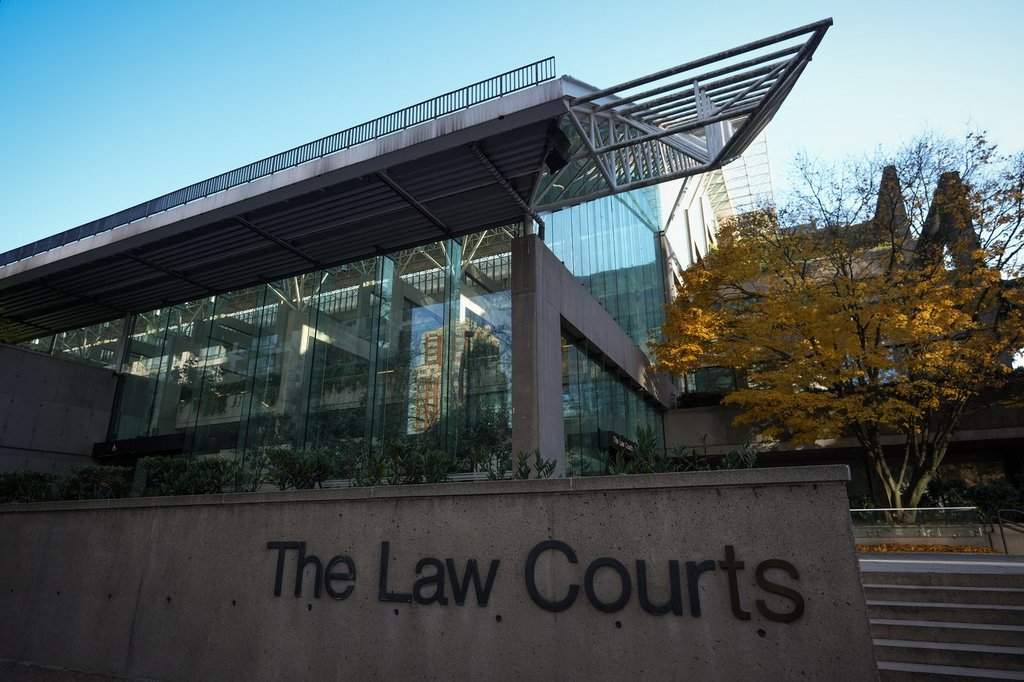
Once a VCA expires or is challenged, the battlefield shifts to the courtroom. For an individual parent, stepping into family court against the government is like bringing a knife to a laser fight.
The ministry arrives with staff lawyers, historical case files, and the institutional weight of the state. The parent is often reliant on underfunded legal aid or representing themselves, drowning in affidavits and strict disclosure timelines.
In theory, the court is guided by the "best interests of the child." In practice, the system develops a profound inertia. The longer a child remains in a temporary placement, the more the ministry argues that moving them back home would disrupt their stability. The system creates the very instability it claims to protect against, then uses that instability as evidence to keep the child away.
It is a closed loop of bureaucratic logic.
We must look closely at what we are sacrificing on the altar of this procedural efficiency. Children who grow up in the care system face dramatically higher rates of homelessness, mental health struggles, and intersection with the criminal justice system later in life. The state is a notoriously poor parent. Yet, the mechanism of the VCA allows the state to acquire children under the banner of charity, bypassing the rigorous legal scrutiny that accompanies a forced removal from the home.
The mother in B.C. continues to show up to court dates. She continues to sign the visitor logs at the ministry office. She keeps her son’s bedroom exactly as he left it, the toys waiting on the shelf, a monument to a life put on hold by a signature on a grid of fine print.
The system functions precisely as it was designed to, grinding along on policy manuals and risk-assessment matrices. But families do not live in matrices. They live in the quiet spaces between a mother's voice and a child's laughter, spaces that, once cleared out by the state, are almost impossible to rebuild.


