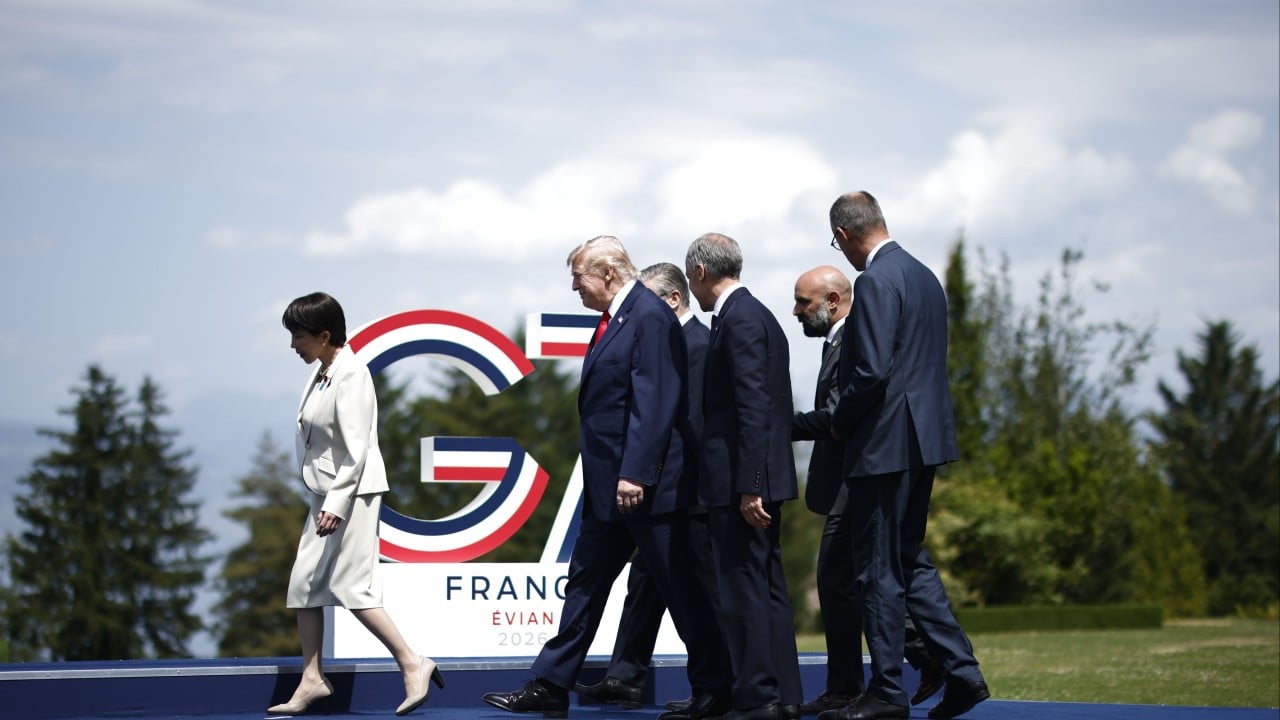
You have probably seen the headlines screaming about Japan forcing a rare earth showdown at the G7 summit in Evian, France. The popular narrative is simple, clean, and completely missing the point. Critics claim Prime Minister Sanae Takaichi’s aggressive push for a joint strategic stockpile and guaranteed price floors is just a reckless gamble that risks spiking regional tensions with China.
They say it is going to provoke Beijing. They say it will tear apart Asian trade partnerships.
Honestly? They are wrong. This is not about starting a fight. It is about survival.
When China choked off rare earth supplies to Japanese military-linked entities earlier this year, domestic prices in Japan tripled overnight. Think about that. A single policy shift in Beijing instantly crippled manufacturing costs for tech that drives everything from defense systems to electric vehicles. Japan did not wake up and choose conflict; they realized they were standing on a trapdoor, and China held the lever.
The reality of critical mineral diplomacy is far messier than Western headlines suggest. Japan is not looking to stir up a regional war. They are trying to build an economic shield before the next supply shock destroys their industrial base.
The Flawed Logic of the Provocation Argument
The main argument against Tokyo's proposal is that pushing for an allied mineral bloc will force China’s hand, leading to harsher export controls. It sounds logical on paper. If you corner a dominant supplier, they strike back.
But this view completely ignores the history of the critical minerals market. China has spent decades intentionally undercutting global prices to achieve absolute market concentration. Today, Beijing controls roughly 70% of extraction and a staggering 90% of global processing capacity for rare earths. Even worse, they control 93% of permanent magnet production.
You cannot provoke a monopoly that is already actively weaponizing its leverage.
The G7 finally agreed to a target in their joint declaration: reduce dependence on any single non-G7 supplier for rare earths and permanent magnets to below 60% by 2030, with a goal of hitting 50% later. It looks great in a press release. But the underlying friction between the upstream producers and downstream buyers reveals why this strategy is facing a brutal uphill battle.
The Multi-Million Dollar Pricing Trap
Here is what the standard analysis misses: the crippling economics of refining rare earths outside of China.
Japan wants the G7 to establish price floors. Under this mechanism, allied nations would commit to buying rare earths at a guaranteed minimum price. This ensures that a mining company in Australia, Brazil, or the US can actually survive if Beijing decides to flood the market and crash prices to wipe out competition.
It makes perfect sense for national security, but it is a nightmare for the private sector.
Consider the raw math. Building a rare earth processing facility outside of China easily runs upward of $400 million in sunk capital. You are building unproven, commercial-scale technology from scratch. By the time the factory is operational, the final product can cost more than double the price of equivalent Chinese supply.
This creates an immediate, fierce clash of interests:
- Upstream Miners & Refiners: They desperately need price certainty and price-gap subsidies to attract private investment.
- Downstream OEMs (Original Equipment Manufacturers): Automakers and tech giants compete on a ruthless global stage. If their input costs double because they are forced to buy "allied-sourced" magnets, their market position vanishes.
If governments use contracts-for-difference or tax incentives to absorb that cost, the burden simply shifts to the taxpayer. If they do nothing, the projects fail, and the 60% dependency target by 2030 becomes a joke.
The Supply Chain Under Fire
To make matters more complicated, you cannot isolate the rare earth crisis from global geopolitical chaos. The ongoing conflict in the Middle East has sent sulfur prices skyrocketing by more than 50%, while sulfuric acid prices have more than doubled in certain regions.
Why does that matter for your smartphone or EV battery? Because sulfuric acid is the baseline chemical input needed to process lithium, nickel, copper, and rare earths.
Refiners outside of China were already struggling with prohibitive cost structures. Now, their core chemical inputs are prohibitively expensive due to supply chain chokepoints. China, with its massive domestic chemical industry and state-subsidized supply chains, can absorb these shocks. Western startups cannot.
Japan knows this firsthand. They have spent 15 years trying to de-risk after a previous 2010 embargo. They invested in deep-sea mud extraction trials near Minamitorishima Island, 6,000 meters down. They signed memorandums of understanding with the state of Goiás in Brazil to tap into their massive reserves. Yet, despite over a decade of aggressive diversification, Japan remained the world's largest importer of Chinese rare earth metals recently.
Capital allocations and political speeches do not magically build factories.
Your Next Strategic Moves
If you are running a business reliant on permanent magnets or high-tech components, you cannot afford to wait for the G7 to figure out who pays the bill. The regional tension is a symptom, not the problem. The problem is a fragile supply chain.
Audit your tier-two and tier-three suppliers immediately. Map out exactly where your sub-components get their raw inputs. If your manufacturers rely on magnets processed in China—even if the final assembly happens in Europe or Southeast Asia—you are exposed.
Begin qualifying alternative suppliers now. Look toward companies tapping into emerging regional hubs like Vietnam, Australia, or the newer projects kicking off in Brazil.
Diversification is expensive, and your margins will take a hit. But as Japanese manufacturers learned the hard way when prices tripled, paying a premium for supply security is always cheaper than a total production shutdown.
Japan PM G7 rare earths proposal analysis
This broadcast covers the domestic Japanese perspective on Prime Minister Takaichi's strategic minerals push directly ahead of the G7 meetings, detailing Tokyo's unique position as the only member with an active national stockpiling framework.