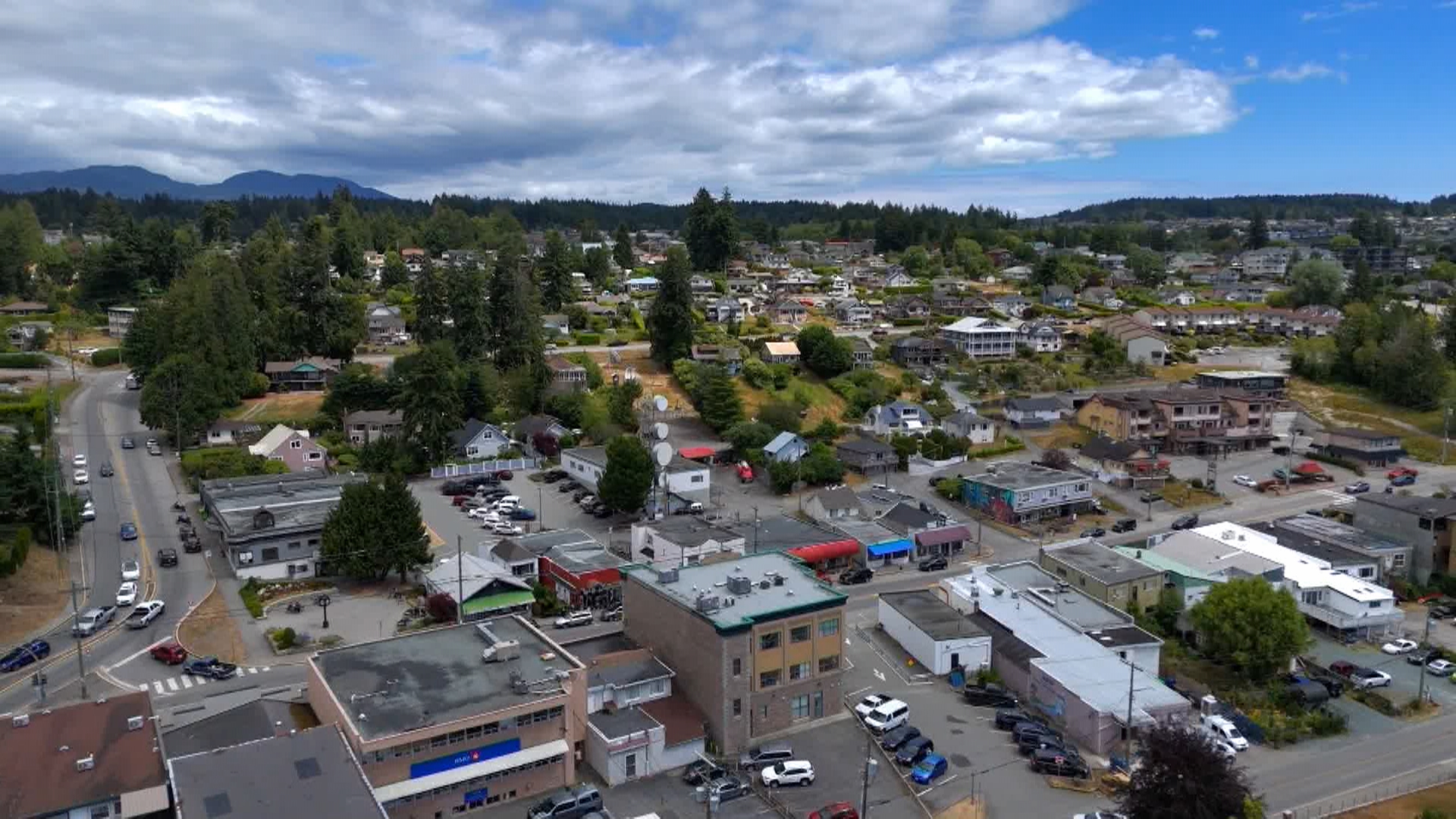
The defeat of a recent municipal bylaw amendment in Powell River has exposed a deep, systemic rift that small towns across the country are failing to bridge. When local councillors voted down changes to the public spaces regulations, they triggered a wave of public fury from residents tired of unhoused encampments taking over local parks. But the anger on both sides obscures a harsher reality. Municipalities are trapped in a legal and financial vice, forced to manage a severe housing disaster with tools designed for mowing lawns and fixing potholes.
The immediate flashpoint was a proposed amendment that would have restricted overnight sheltering in specific municipal parks. Residents Packed council chambers, demanding safety, accountability, and the restoration of public spaces. The motion failed anyway.
To understand why this happened is to understand the gridlock gripping municipal governance. Local governments are bound by constitutional rulings that protect the right of unhoused individuals to shelter overnight when adequate indoor housing is unavailable. City hall did not vote down the bylaw out of indifference to public frustration. They did so because passing an legally unenforceable ban invites costly litigation that the municipal tax base cannot support.
The Legal Framework Binding Local Hands
Municipalities do not operate in a vacuum. A series of landmark British Columbia Supreme Court decisions established that denying unhoused individuals the right to erect temporary shelter on public land violates Section 7 of the Canadian Charter of Rights and Freedoms, provided there is a lack of accessible indoor beds.
When a council attempts to draft a bylaw restricting tents, they must navigate a complex legal minefield. The proposed Powell River amendments sought to designate specific zones where overnight sheltering would be prohibited. Critics and legal advocates quickly pointed out that if the remaining available land is unsafe, inaccessible, or non-existent, the bylaw is unconstitutional on its face.
This creates a circular trap. The town cannot enforce a ban without offering housing. The province is responsible for building housing, but builds it too slowly. Meanwhile, the local council takes the heat for the visible consequences on the street.
The financial risk of getting this wrong is substantial. Small cities that have tried to aggressively clear camps without adequate alternatives have found themselves dragged into court by civil liberties groups. The resulting legal bills drain municipal reserves that should be spent on infrastructure or local social services. For a community the size of Powell River, a single prolonged constitutional challenge can disrupt an entire annual budget.
The Reality of the Sheltering Gap
The core problem is mathematical. There are simply more people experiencing homelessness in the region than there are available emergency shelter beds or supportive housing units.
When a shelter is consistently at maximum capacity, the overflow has nowhere to go but public property. Forcing people out of one park merely migrates the encampment to another neighborhood, often one less equipped to handle the footprint. This game of geographic musical chairs satisfies no one, least of all the businesses and homeowners living adjacent to the shifting sites.
Local business owners report a measurable drop in foot traffic when camps establish nearby. Property damage, discarded refuse, and unpredictable behavior create an atmosphere of anxiety. These are tangible, valid economic grievances. Pretending these frustrations are merely a lack of empathy does a disservice to working people trying to maintain their livelihoods.
Conversely, the individuals inside the tents face extreme vulnerability. Exposure to weather, lack of sanitation, and the constant threat of displacement compound mental health challenges and substance dependencies. Moving them by force does not cure addiction, nor does it generate a security deposit for an apartment. It merely scatters a vulnerable population, breaking their connections with outreach workers and making intervention far more difficult.
The Provincial Housing Deficit
The provincial government holds the purse strings for housing development, yet their deployment of resources rarely matches the speed of the crisis on the ground. BC Housing has initiated projects across the province, but the bureaucratic pipeline is notoriously slow.
Securing land, conducting environmental assessments, managing public consultations, and finalizing construction agreements takes years. An encampment can form over a weekend. This mismatch in velocity means local communities are left to manage the fallout of a macro-economic crisis using micro-level resources.
Consider the logistics of a standard supportive housing project. Even when funding is approved, local opposition frequently stalls development. The phenomenon of community pushback often delays breaking ground for months or years. By the time the doors finally open, the unhoused population has grown, rendering the new facility insufficient before it even welcomes its first resident.
Small towns face an additional hurdle. Large urban centers like Vancouver and Victoria consume the lion’s share of provincial attention and emergency funding. Rural and semi-isolated coastal communities are frequently left to fight for the scraps of provincial housing budgets, despite experiencing identical per-capita rates of homelessness and addiction.
The Illusion of Enforcement
Many protesting residents demand a strictly punitive approach, calling for increased policing and immediate encampment removals. This perspective assumes that law enforcement possesses the authority and capacity to solve a social welfare crisis.
They do not. The police cannot arrest someone for being poor, nor can they lock someone up indefinitely for sleeping in a park. When police clear a site under a municipal trespass order, they are performing a temporary sanitation exercise, not a permanent solution.
+-----------------------------------------------------------------+
|              The Cycle of Ineffective Management                 |
+-----------------------------------------------------------------+
|                                                                 |
|     [ Encampment Forms ]                                        |
|              │                                                  |
|              ▼                                                  |
|     [ Public Protest & Political Pressure ]                     |
|              │                                                  |
|              ▼                                                  |
|     [ Encampment Cleared by Force/Bylaw ]                       |
|              │                                                  |
|              ▼                                                  |
|     [ Population Disperses to New Public Space ]                |
|              │                                                  |
|              └──────────────────────────────────────────────────┘
+-----------------------------------------------------------------+
This cycle costs tens of thousands of dollars per enforcement action. Public works crews must be deployed to haul away abandoned belongings, hazardous materials, and debris. Police officers must stand guard to prevent altercations. Within days, the same individuals pitch tents a few blocks away, and the spending cycle starts over. It is an expensive way to accomplish absolutely nothing.
The frustration expressed by Powell River residents is a natural reaction to this visible futility. They see their tax dollars diverted into temporary remediation efforts that yield zero long-term improvement in community safety or public cleanliness.
Bridging the Town Divide
The defeat of the bylaw amendment should be viewed as an uncomfortable moment of honesty. By refusing to pass an unworkable law, the council acknowledged that they cannot legislate poverty out of existence.
True progress requires shifting the strategy away from symbolic bylaws and toward aggressive, localized partnerships. Municipalities must stop waiting for provincial agencies to save them and instead demand direct control over targeted, micro-scale housing solutions.
This means establishing sanctioned, serviced overnight sites with basic sanitation, running water, and structured oversight as an interim measure. It is an imperfect compromise that pleases neither side. Residents dislike the formalization of tent cities, and advocates dislike anything short of permanent housing. However, managed sites dramatically reduce the chaotic footprint of scattered encampments, lower policing costs, and provide a stable point of contact for social services.
The current impasse in Powell River is the predictable outcome of treating a structural economic failure as a local zoning dispute. Until the community confronts the mathematical reality of its housing deficit, public spaces will remain a battleground, council meetings will remain theaters of anger, and the tents will stay right where they are.