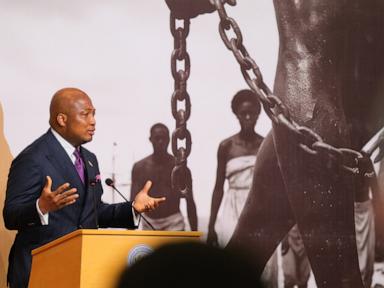
The recent diplomatic gathering in Accra, Ghana, marks a sharp departure from decades of vague historical remorse, transforming the moral debate over the transatlantic slave trade into an aggressive, structured demand for financial reparations. African and Caribbean states are no longer asking for polite expressions of regret from former colonial powers. Instead, they are presenting a unified geopolitical front to demand trillions of dollars in compensation for centuries of systemic exploitation. This represents a calculated shift from cultural grief to hard international law, forcing Western capitals to confront an economic ledger they have spent generations trying to ignore.
For generations, the conversations around global black history focused on memorialization. Museums were built. Plated statues were erected. Speeches were delivered by European monarchs and prime ministers expressing profound sorrow. But sorrow does not pay for crumbling infrastructure, broken health systems, or the generational wealth gap that persists between the global north and the global south. The Accra initiative intends to change that by treating the slave trade not as an ancient tragedy, but as a massive, unpunished corporate crime with surviving beneficiaries.
The Financial Blueprint Beyond Symbolic Apologies
When the African Union teamed up with Caribbean nations at the Accra summit, the immediate challenge was translating centuries of human suffering into concrete numbers. Critics often dismiss reparations as an abstract concept impossible to calculate. To counter this, economists and legal scholars are utilizing sophisticated actuarial models to determine the precise economic drain inflicted on Africa during the transatlantic trade.
The baseline figures are staggering. Economic reports discussed during the summit estimate that the financial liability of slave-trading nations runs into the tens of trillions of dollars. These calculations are not pulled from thin air. They are based on the calculated economic value of the labor extracted from millions of enslaved Africans, compounded over centuries with interest, alongside the deliberate destruction of local African economies during the colonial scramble.
Consider the mechanics of the British Empire. The wealth generated by Caribbean sugar plantations and American cotton fields fueled the Industrial Revolution in Manchester and London. Banks like Barclays and the Bank of England, alongside major insurance markets like Lloyd's of London, grew directly from the financing and insuring of human cargo. The Accra framework argues that because these institutions still exist and still hold capital descended from those profits, the liability remains active.
Western governments prefer to treat the slave trade as a closed chapter of human history. They argue that the individuals who committed these acts are long dead, and the individuals who suffered are equally gone. The legal counter-argument raised in Ghana is that states, unlike individuals, have perpetual legal personalities. A government or a crown corporation cannot escape its debts simply because time has passed. If a modern state honors the treaty debts and financial bonds incurred by its nineteenth-century predecessors, it must also honor the liabilities generated by those same predecessors.
The Legal Precedents Weaponized by African Nations
The push for reparations is often portrayed by its opponents as a radical, unprecedented demand that lacks any basis in international law. This view ignores a long history of state-to-state compensation for mass atrocities and illegal occupations. The legal teams working alongside African governments are drawing directly on established twentieth-century precedents to build their case.
The most obvious parallel is the compensation paid by Germany to survivors of the Holocaust and the state of Israel. Through the Luxembourg Agreement of 1952, West Germany acknowledged the state’s responsibility for the systematic murder of millions and agreed to pay billions of marks. This established a clear modern framework showing that a successor state can, and should, pay financial restitution for state-sponsored crimes against humanity.
Another critical precedent is the Mau Mau litigation in the United Kingdom. In 2013, the British government agreed to pay a settlement to thousands of elderly Kenyans who were tortured by colonial forces during the 1950s uprising. This settlement was small, but it shattered the illusion that the British state was immune to legal claims arising from its colonial past. It proved that British courts could be used to hold the government accountable for historic abuses overseas.
The most tragic historical precedent, however, is one where reparations flowed in the wrong direction. Following the Haitian Revolution, France sent a fleet of warships to the newly liberated nation in 1825. Under the threat of invasion, France forced Haiti to pay 150 million francs to compensate former French slaveholders for their lost property. It took Haiti over a century to pay off this independence debt, crippling its economy and denying generations of citizens basic public services. The Accra coalition points to this specific historical extortion as absolute proof that Western powers have always understood the concept of financial compensation for slavery. They simply chose to enforce it to protect the perpetrators rather than the victims.
The Deep Resistance in Western Capitals
The diplomatic response from Washington, London, Paris, and Lisbon has been a masterclass in bureaucratic evasion. The strategy relies on a careful choreography of public grief combined with absolute legal stonewalling. European leaders are willing to use words like "stain on our history" or "profound regret," but they strictly avoid any language that could be interpreted as an admission of legal liability.
This hesitation is entirely financial. If a European leader offers a formal, unconditional apology on behalf of the state, that statement can be used in international courts as an admission of guilt. Once guilt is admitted, the path to mandatory financial compensation becomes much shorter. Therefore, diplomatic corps are instructed to draft statements that look like apologies to the casual observer but hold zero legal weight.
The United Kingdom has been particularly aggressive in its resistance. When Caribbean nations raised the issue of reparations at recent Commonwealth meetings, British officials quickly moved to keep the topic off the official agenda. The standard talking point is that the country should focus on shared future challenges rather than looking back at the past. This perspective conveniently ignores how the past directly shaped the current global distribution of wealth.
In the United States, the resistance takes a more polarized domestic form. While some local municipalities have initiated micro-reparations programs, federal action remains completely stagnant. The political cost of approving multi-trillion-dollar payouts to descendants of enslaved people is considered a non-starter for both major political parties. The strategy here is delay. By calling for endless study commissions and academic debates, federal authorities ensure that no actual capital ever moves.
The Logistics of Distribution and the Sovereignty Trap
Even if the political resistance in the West collapsed tomorrow, the implementation of a global reparations framework faces massive logistical and political hurdles within Africa and the Caribbean. The core question shifts from who pays to who receives.
One faction within the movement argues that reparations must take the form of direct cash transfers to the descendants of enslaved Africans. This approach aims to fix the racial wealth gap at the household level. However, tracking lineage across four hundred years of forced migration, undocumented births, and systemic erasure is an administrative nightmare. In many cases, the paperwork simply does not exist.
The alternative approach, favored by many governments at the Accra summit, involves direct state-to-state transfers. Under this model, Western nations would fund massive development projects, write off sovereign debts, and invest in educational and healthcare infrastructure across Africa and the Caribbean. This approach treats the damage as a systemic structural problem that requires a structural solution.
This strategy introduces what critics call the sovereignty trap. Many African nations currently struggle with systemic corruption and poor financial management. There is deep skepticism among civil society groups that billions of dollars flowing directly into state treasuries would actually benefit the average citizen. Without strict, independent oversight, there is a very real danger that reparation funds could be misallocated by ruling elites, leaving the descendants of the enslaved no better off than before.
Furthermore, the relationship between the African continent and the diaspora is complex. For centuries, the focus of the reparations movement was driven by African Americans and Afro-Caribbean communities. The active involvement of African governments is a relatively recent development. Some diaspora activists worry that continental governments might prioritize their own national development goals, such as debt relief, over the specific reparative needs of communities whose ancestors survived the Middle Passage and generations of Jim Crow or colonial plantation labor.
The Shift Toward Unilateral Economic Pressure
Recognizing that voluntary payouts from the West are highly unlikely, the architects of the Accra framework are exploring alternative methods of economic leverage. The traditional path of asking politely through the United Nations has yielded few results. The new strategy focuses on legal and financial pressure points that can be exerted unilaterally.
One avenue involves international trade and maritime law. African and Caribbean nations control critical shipping lanes and possess vast reserves of the raw minerals required for the global transition to green energy. There is growing discussion about tying access to these resources to historical accounting. While no nation has yet explicitly blocked an oil lease or a mining permit over reparations, the threat of doing so is beginning to enter the calculus of resource nationalism.
Simultaneously, human rights lawyers are targeting private corporations. Many of the world’s oldest insurance companies, shipping lines, and banks built their initial capital structures on the slave trade. Unlike sovereign states, these corporations are vulnerable to shareholder pressure, consumer boycotts, and targeted lawsuits in domestic courts. By exposing the specific historical ledgers of individual companies, activists can force corporate settlements outside of the slow-moving diplomatic arena.
The moral argument has been won. Virtually no serious historian or political figure denies the horror of the transatlantic slave trade or its role in building the modern Western economy. The battle now is entirely about the money. The Accra conference succeeded because it stopped treating reparations as a debate about ethics and started treating it as an enforcement of an overdue debt. The nations that grew wealthy on the backs of enslaved human beings will continue to delay, deflect, and deny. But the diplomatic coalition formed in Ghana has made it clear that the bill is on the table, and it is not going away.