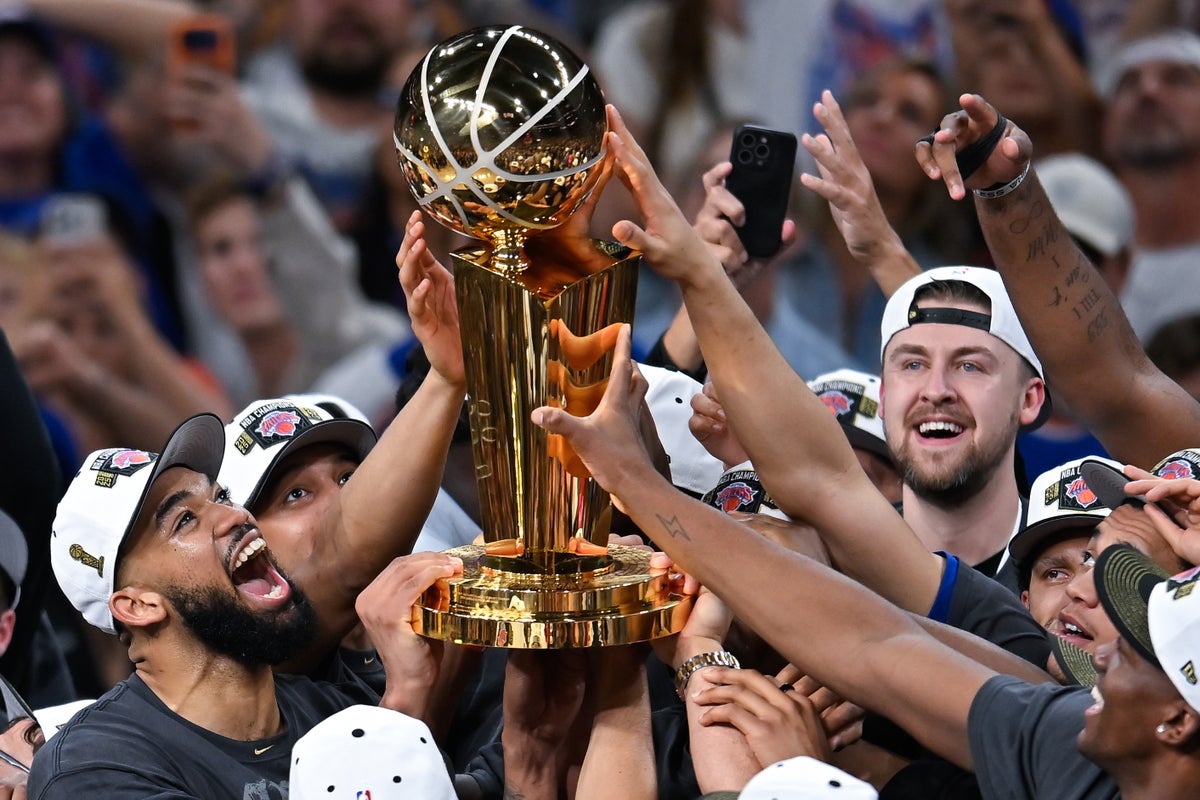
The ticker tape has barely cleared from Broadway. For fifty-three years, New York City nursed the phantom bruise of 1973, waiting for a collection of basketball players to pull the franchise back into the light. When the buzzer sounded on Saturday night and the Knicks finally clinched the NBA championship, the collective roar from Manhattan to the outer boroughs felt less like a celebration and more like an exorcism.
But euphoria in sports has a terrifyingly short shelf life. If you found value in this article, you should read: this related article.
By Wednesday afternoon, the conversation shifted entirely. The heavy, metallic tang of stale beer on the Madison Square Garden floor was replaced by the cold scent of political calculation. James Dolan, the billionaire owner who has spent decades warring with fans, local media, and his own public image, called into WFAN sports radio. He had an announcement. The White House had extended an formal invitation to the champions.
Dolan accepted it. For another look on this event, check out the latest update from CBS Sports.
"I've known the president thirty years," Dolan said, his voice flat but resolute through the radio waves. "And I'm very proud to bring the team to the White House."
With those few words, a sporting triumph was pulled back down into the muddy gravity of American culture wars. For nearly a decade, the traditional championship trek to the nation’s capital has functioned as a cultural fault line. Across Donald Trump’s two non-consecutive terms in office, no NBA champion has walked through the doors of the Oval Office. The Golden State Warriors skipped it. LeBron James openly called the president a "bum" on social media. Even the small-market Oklahoma City Thunder quietly pleaded a "timing issue" earlier this year to avoid the building entirely.
The Knicks are breaking the embargo. But the owner who accepted the invite does not wear the jersey.
Imagine a twenty-something guard sitting in the locker room right now. Let us call him Marcus—a composite of the young, hyper-talented, predominantly Black workforce that actually puts their bodies through the meat grinder of an eighty-two-game season to win a title. Marcus grew up in an neighborhood where the political rhetoric coming out of Washington felt like a direct threat to his family. His social media feeds are full of fans begging him to stand his ground, to boycott, to refuse to be a prop in a political photo-op. On the other side of the ledger is his boss, a billionaire friend of the president who signs his multi-million-dollar paychecks.
What does Marcus do when the team bus pulls up to 1600 Pennsylvania Avenue?
The fracture lines are already visible if you look closely at the roster. Guard Jose Alvarado was cornered by cameras on Wednesday and offered a masterclass in professional diplomacy. "If there’s a chance, I’m going wherever my teammate goes," he said. It was a tactical retreat into the safety of the collective. But the collective is already split. Forward Josh Hart famously celebrated Joe Biden's 2020 election victory on social media with blunt, unvarnished hostility toward Trump. Meanwhile, backup center Mitchell Robinson, a registered Republican, watched the president sit courtside at Game 3 and later called the experience "cool, I guess."
That Game 3 appearance was a preview of the tension now hanging over the franchise. When the president entered Madison Square Garden as Dolan's personal guest, sitting side-by-side in Luxury Suite 47, the arena did not unite in reverence. The jumbotron flashed the president's face during the national anthem, and a deafening wave of boos cascaded down from the blue seats.
New York City voted overwhelmingly for Kamala Harris in 2024. The Garden is a secular cathedral for a deeply progressive, diverse fan base. For those fans, the extra security lines, the Secret Service checkpoints that delayed entrance into their own building, and the presence of the administration felt like a hostile takeover of their joy. The Knicks lost that game. It was their only loss of the series, an ironic detail not lost on a superstitious fan base that claimed the "vibes" had been fundamentally compromised.
Now, those same fans are being asked to watch their heroes smile for cameras in the East Room.
The conflict reveals the fundamental lie we tell ourselves about modern sports: the idea that we can keep the game in a vacuum. We want the baseline drives, the sweat, the pure meritocracy of the scoreboard. We don’t want to think about who owns the court.
Dolan’s perspective is simple, unburdened by the nuance his players must navigate. To him, this is transactional and personal. He is a donor; the president is a friend. A New Yorker honoring a New Yorker. But the men who actually won the Larry O'Brien trophy are the ones who will bear the public weight of the choice. If they go, a segment of their home city will view it as a betrayal. If they stay on the bus, they create an uncomfortable, potentially expensive rift with the man who controls their professional destiny.
There is no elegant way out of this corner.
The upcoming visit will be a historic first for the modern NBA, but it will lack the easy, celebratory warmth of championships past. When the team eventually stands on that historic carpet, the cameras will click, the smiles will be tight, and the silence from the players who chose to stay home will speak louder than any statement issued by the front office.
A championship ring is forged in gold, but its weight is carried in human choices.
,webp/026/734/750/1280x720.17497250.jpg)