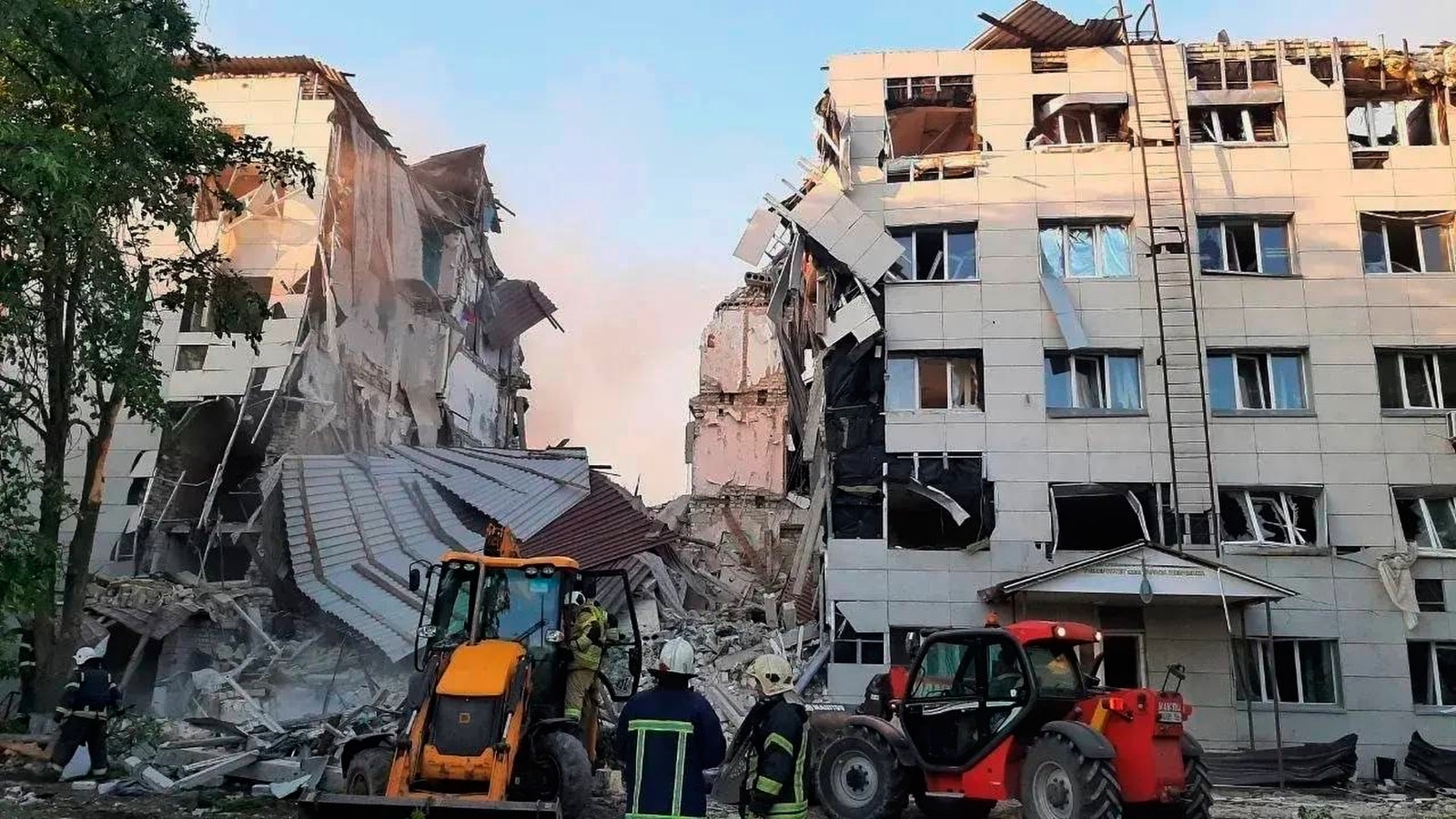
Vladimir Putin is using a devastating drone strike on a civilian dormitory to completely reshape the narrative of the war. Russia claims a Ukrainian drone hit a residential facility, killing 10 people and wounding dozens more. Putin immediately ordered retaliation. He called it a calculated act of terror targeting innocent civilians.
But there is a lot more to this story than the Kremlin is letting on.
When you look closely at the geography and the military assets in the region, a different picture emerges. The Kremlin wants the world—and its own citizens—to see this as a unprovoked attack on a soft target. Ukraine maintains it only targets military logistics, oil refineries, and command centers. Who is telling the truth? To understand what actually happened, we have to look at how these long-range drone strikes operate and why this specific incident is driving Moscow into a frenzy.
The Reality Behind the Dormitory Drone Strike
The strike hit a facility that Russia describes as a purely civilian dormitory. Ten lives were lost in the blast. Images from the ground show a heavily damaged multi-story building, shattered windows, and scorched brickwork. It is a tragedy. Moscow immediately seized on the imagery to paint Ukraine as a rogue state committing war crimes.
Independent intelligence analysts and open-source investigators point out a pattern Russia always hides. Throughout this conflict, Russia has frequently used civilian infrastructure, including student dormitories and school campuses, to house newly mobilized soldiers, military instructors, and drone technicians.
We saw this clearly in January 2023 during the Makiivka strike, where hundreds of Russian recruits were stationed in a vocational school next to an ammunition dump. When Ukraine hit it, Russia claimed it was a barbaric strike on an educational institution. They omitted the fact that it was packed with troops.
Did Ukraine deliberately target civilians? It is highly unlikely. Ukrainian long-range strike capabilities rely on expensive, precision-guided loitering munitions. They do not waste these limited assets on random apartment buildings. They hit high-value targets. If a dormitory was struck, it was either being used for military billeting, or Russian air defense systems intercepted the drone, knocking it off course and causing it to crash into a civilian area.
Putin Orders Retaliation to Mask Internal Failures
Putin quickly held a televised meeting with his security council. He looked furious. He ordered the Russian Ministry of Defense to prepare immediate retaliatory strikes against Ukrainian decision-making centers.
This reaction is pure political theater.
Russia does not need an excuse to strike Ukraine. Moscow launches Iranian-designed Shahed drones and cruise missiles at Ukrainian cities almost every single night. Ordering retaliation is a calculated public relations move. It serves two distinct purposes for Putin's regime.
First, it deflects blame from Russia's catastrophic air defense failures. The fact that a Ukrainian drone could fly hundreds of kilometers inside Russian airspace undetected is deeply embarrassing for the military leadership. It shows that the elite air defense networks protecting the Russian heartland are full of holes. By focusing public attention on the tragedy of the deaths and the promise of revenge, Putin shifts the conversation away from his military's incompetence.
Second, it rallies a tired domestic population. The war has dragged on far longer than anyone in Moscow anticipated. Casualties are mounting. Economic sanctions are squeezing everyday life. A strike on what is framed as a civilian dormitory creates a sense of existential threat inside Russia. It makes ordinary Russians feel like they are under attack, which helps the Kremlin justify further mobilization drives and higher military spending.
How Ukraine's Deep Strike Strategy Actually Works
Ukraine has radically scaled up its domestic drone program. Kyiv had to innovate because Western allies placed strict limits on using NATO-supplied weapons inside Russian territory. To bypass these restrictions, Ukrainian engineers developed long-range attack drones capable of flying over 1,000 kilometers deep into Russia.
These are not random attacks. Kyiv is executing a highly coordinated strategy aimed at crippling Russia's war machine. The primary targets include:
- Oil Refineries and Depots: Cutting off the fuel supplies that power Russian tanks and fighter jets, while simultaneously draining the Kremlin's economic engine.
- Military Airfields: Destroying Russian bombers on the tarmac before they can take off to launch glide bombs at Ukrainian frontline positions.
- Factory Complexes: Striking facilities that assemble electronics, microchips, and explosives used in Russian weaponry.
The drones fly low to avoid radar detection. They use complex flight paths that weave around known Russian air defense batteries. When Russia tries to jam their GPS signals, advanced drones switch to optical terrain mapping to find their targets.
When things go wrong, the results are catastrophic. If a Russian Pantsir or S-400 missile system clips a Ukrainian drone over a populated area, the drone's warhead does not just disappear. It plummets to the ground. That appears to be the most plausible explanation for many of these border-region tragedies.
Navigating the War of Information
You cannot take any statement from the Russian Ministry of Defense at face value. They have a long history of fabricating narratives to suit their political needs. At the same time, war is chaotic, and no military is perfectly precise.
To find the truth in these situations, look at the aftermath through independent verification. Watch for satellite imagery updates from companies like Maxar or Planet Labs. These images do not lie. They will show whether the targeted building had military vehicles parked nearby, or if it was surrounded by secure perimeters. Look at local social media chatter on Telegram. Local residents often post raw videos or complaints that contradict the official government narrative before state censors can scrub them.
The conflict is entering a dangerous new phase where the Russian interior is no longer safe from the realities of the war. Putin's promises of easy security have vanished. Expect Moscow to use this dormitory strike to justify an escalation in missile terror against Ukrainian infrastructure. The cycle of strikes will continue, but the strategic reality remains unchanged. Ukraine will keep hunting military targets deep inside Russia, and Putin will keep using the collateral damage to fuel his propaganda machine.