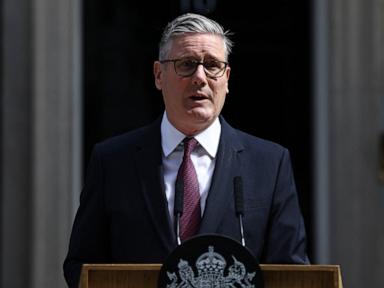
The black door of Number 10 Downing Street does not slam. It clicks. It is a heavy, precise sound, muffled by centuries of glossy paint and the absolute weight of British history. For a Prime Minister, that click is the soundtrack to the ultimate isolation. Inside, the corridors smell faintly of old floor wax and nervous sweat. Outside, the cameras are waiting, their lenses tracking the movement of curtains like hawks watching a field.
Keir Starmer stood in the vestibule, adjusting his tie in a mirror that had reflected the anxious faces of Churchill, Thatcher, and Blair. The rumor mill had been grinding for hours, but the public only sees the final act. When a leader decides to step down, the transition from apex predator of Westminster to historical footnote happens in the span of a single breath.
He walked out into the gray London drizzle. There was no defiance in his posture, no theatrical rage against the dying of the political light. Instead, there was something far rarer in modern politics.
Good grace.
To understand why this moment felt less like a standard political execution and more like a quiet tragedy, you have to look past the scrolling tickers on the news networks. You have to look at the anatomy of a breaking point.
The Weight of the Modern Crown
Every politician enters office believing they can bend the bureaucracy to their will. They treat the premiership like a chess game where they control the pieces. But Downing Street is less of a chessboard and more of an apex pressure cooker.
Consider the sheer volume of a single day in that office. At 8:00 AM, you are briefed on a cyber threat that could paralyze the nation’s hospitals. By 10:00 AM, your Chancellor is presenting a spreadsheet of economic indicators that look like a cliff face. By noon, your own backbenchers are whispering to journalists about a rebellion over a minor planning bill. The telephone on the desk doesn’t just ring; it demands pieces of your soul.
For Starmer, a man whose entire career was built on the meticulous, cautious foundation of the law, the chaotic, improvisational nature of political survival must have felt like trying to perform surgery in a hurricane. He was a prosecutor by trade. Prosecutors like evidence. They like order. They like a clear narrative where the facts lead to an inevitable conclusion.
Politics doesn’t care about your evidence.
The pressure builds invisibly. It shows in the deepening lines around the eyes, the slight stoop in the shoulders, the way a voice loses its resonance during a hostile interview. We watch these leaders on our screens while sitting on our sofas, judging their performance as if it were a reality television show. We forget the human heart beating beneath the dark suit. We forget that the man standing at the podium hasn't slept properly in three years.
The Turning of the Tide
The decision to resign is rarely a sudden epiphany. It is a slow accumulation of small defeats. It is the realization that the levers you are pulling are no longer connected to the machinery of government.
Imagine a hypothetical backbencher—let’s call him Arthur. Arthur has spent twenty years on the green benches of the House of Commons. He has seen four Prime Ministers come and go. He knows how to smell political death before the leader even knows they are bleeding. When Arthur stops answering calls from the whips, when he smiles a little too warmly at the leader of the opposition during a division vote, the writing is on the wall.
Starmer looked around his cabinet table and likely saw a dozen versions of Arthur. The authority had evaporated. In the British system, once the perception of power goes, the actual power vanishes instantly. You are left holding an empty briefcase.
The public anger over public services, the stubborn persistence of inflation, the endless, grinding friction of a restless electorate—these are not problems that can be solved with a brilliant legal brief. They require a political magic that Starmer, for all his intellectual depth, simply did not possess. He was a manager in an era that demanded a prophet, or perhaps a magician.
When the numbers in the polls refuse to budge despite your best efforts, a profound loneliness sets in. You realize that you have become the lightning rod for every frustration of sixty-seven million people. Every delayed train, every long wait in an emergency room, every rise in the mortgage rate is suddenly your fault.
The Exit Strategy
When the end came, it lacked the chaotic drama of his predecessors. there were no midnight flits, no tears on the tarmac, no furious denunciations of treacherous colleagues.
Instead, there was a statement delivered with the calm dignity of a man who had reached the end of a long, exhausting road and was simply glad to sit down. He spoke of service. He spoke of country. He spoke of leaving with "good grace."
In an era defined by political narcissism, where leaders frequently try to burn down the institution on their way out the door, this quiet exit was shocking. It was a deliberate choice to prioritize the stability of the state over personal pride. It was an admission that the project had failed, but the country must continue.
The journalists in the press gallery, used to feeding on conflict, seemed momentarily thrown by the lack of blood. They looked for the hidden motive, the secret scandal, the knife in the back. But sometimes the truth is simpler and far more devastating: the man was just tired. The job had consumed everything he had to give, and the tank was empty.
The Empty Desk
By afternoon, the removal vans were already idling in the side streets around Whitehall. The efficiency of the British state during a transition of power is terrifyingly cold. One minute you are the most powerful person in the country, surrounded by civil servants who jump at your every word. The next, you are packing your books into cardboard boxes while a junior aide checks the inventory.
The next tenant will arrive soon. They will walk through that same black door, smile for the cameras, wave to the crowd, and step into the vestibule. They will look in the same mirror and believe, as every leader before them has believed, that their fate will be different. They will think they have the strength to survive the cooker.
But the room remains the same. The telephone will ring at 8:00 AM. The spreadsheets will still look like a cliff face. And the heavy black door will click shut, trapping another soul inside.
Starmer’s car pulled away from the curb, its tires splashing through the puddles on Downing Street. The crowd of protestors and reporters began to disperse, wrapping their coats tighter against the cold rain. The street grew quiet again, leaving only the armed police officers guarding an empty doorstep, waiting for the next story to begin.


