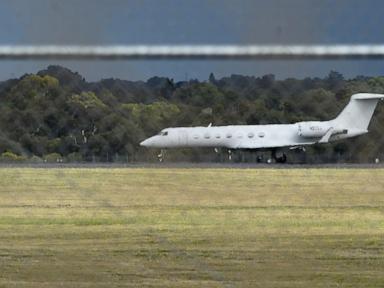
Six airline passengers landed at RAAF Base Pearce outside Perth on Friday morning, completely symptom-free and testing negative for disease, only to be immediately loaded onto a secure bus and driven to a high-security isolation compound.
This extreme response by the Australian government represents the most aggressive quarantine measure enacted globally since the height of the 2020 pandemic. The six individuals—five Australians and one New Zealander—were evacuated from the MV Hondius, an expedition cruise ship recently struck by a lethal outbreak of hantavirus. While the United States and European nations are allowing their returning citizens to bypass centralized isolation after a few days of observation, Australia is locking its doors for a minimum of three weeks, with an eye toward extending that to 42 days.
The severity of Canberra's reaction highlights an uncomfortable truth about global biosafety. Governments are deeply terrified of the specific viral strain brewing on that ship, and the public health infrastructure remains structurally fragile.
The Ghost Variant on the MV Hondius
The MV Hondius was navigating the isolated waters of the South Atlantic, charting a course from Argentina to Antarctica, when the first passengers began dying. Of the 11 confirmed cases on board, three have resulted in fatalities. A mortality rate hovering near thirty percent is enough to trigger international alarm, but the true panic lies in the genetics of the pathogen itself.
Most hantaviruses are a dead end for humans. Typically contracted by inhaling aerosolized dust contaminated with wild rodent droppings, the virus usually stops with the patient.
Not this time.
The World Health Organization confirmed that the ship outbreak involves the Andes variant. Discovered in South America, Andes virus is the only known hantavirus strain capable of human-to-human transmission. It spreads through close contact, droplets, and shared confined spaces.
Placing 150 people from 23 different countries inside a steel hull with an airborne-adjacent, lethal pathogen transformed a luxury vacation into a floating incubator. Cruise ships feature recirculated air, communal dining, and narrow corridors. They are built for optimization, which inadvertently makes them highly efficient environments for viral transmission.
Unlocking a Pandemic White Elephant
The six evacuees are being held at the Bullsbrook quarantine facility. The compound is a sprawling, clinical collection of modular units built by the federal government in 2022 at a cost of hundreds of millions of dollars.
It was completed just as the initial threat of COVID-19 waned, leaving it to sit empty for four years as an expensive political monument to a past crisis. Local officials debated turning it into social housing, or even a low-security prison facility. Both ideas were rejected.
Now, the white elephant has a purpose. Australian Health Minister Mark Butler explicitly stated that the nation chose a far more severe path than its global peers. The three-week stint at Bullsbrook is merely the first phase. The incubation period for the Andes strain can last up to 42 days, leaving a critical three-week policy gap that health authorities still have not figured out how to police.
The decision to seal these passengers away is a direct reflection of Australia's geographic isolation strategy. The country's strict border policies during previous health crises became a blueprint for total containment, but they also created a population with zero baseline immunity to exotic pathogens.
The Logistics of Fear
Bringing these six people back to Australian soil required intense behind-the-scenes diplomatic maneuvering. The Department of Foreign Affairs and Trade had to charter a private Gulfstream long-range business jet to fly the passengers out of the Netherlands, where the MV Hondius is currently sailing to be gutted and disinfected.
Finding an aviation crew willing to staff the flight was exceptionally difficult. The conditions required the pilots, flight attendants, and an onboard medical doctor to wear full personal protective equipment for the entire duration of the long-haul journey. Furthermore, the flight crew had to agree to enter isolation themselves upon landing.
This level of operational friction reveals the hidden cost of modern biosecurity. When a highly lethal agent with human-to-human capabilities enters the equation, routine international transport stalls completely.
Why a Two Day Quarantine Fails the Science
The United States and the United Kingdom are opting for a managed quarantine of just forty-eight to seventy-two hours before releasing their citizens to self-monitored home isolation. This policy relies entirely on an honor system, assuming individuals will accurately report sudden fevers or respiratory distress.
History suggests otherwise. Human behavior is notoriously unreliable under self-isolation mandates, and the Andes virus moves with devastating speed once symptoms manifest. The illness begins with standard flu-like fatigue and aches, but can rapidly deteriorate into Hantavirus Pulmonary Syndrome, where the lungs fill with fluid, causing asphyxiation.
By enforcing a hard three-week barrier at a dedicated facility, Australia is treating the incubation timeline as a mathematical certainty rather than a policy variable. If a passenger develops the infection on day 18, they will be inside a negative-pressure zone in Bullsbrook, not in a suburban neighborhood.
The policy is not flawless. The World Health Organization's 42-day window means that even after the three weeks at Bullsbrook expire, the passengers will still be within the danger zone for another 21 days. Forcing citizens to stay in a government compound for nearly a month and a half presents severe legal and ethical challenges regarding wrongful detention.
The MV Hondius is currently manned by a skeleton crew of 30 workers, chaperoned by a Dutch medical team, crossing the ocean toward its final cleaning berth. The ship will be sterilized, but the geopolitical precedent has already shifted. Australia's sudden reactivation of its pandemic infrastructure proves that the systems designed to isolate the country from the rest of the world were never truly dismantled; they were simply waiting for the right pathogen to come along.