Cypriot social media star Fidias Panayiotou announced he will retain his seat in the European Parliament despite winning a concurrent seat in the Cyprus House of Representatives. By relinquishing his domestic position to runner-up Yiannis Laouris, the 26-year-old YouTuber protected his lucrative and highly visible post in Brussels. Yet, while his newly formed Direct Democracy party secured 5.4% of the vote and four seats in the national legislative elections, the outcome exposes a massive decline from his peak popularity. The calculated maneuver reveals the deep limitations of treating national governance as a secondary platform for content creation.
Behind the tactical decision to stay in Brussels lies a harsher reality. The anti-establishment wave that carried Panayiotou to a stunning victory in the 2024 European elections, where he captured nearly 20% of the vote without a political platform, is fracturing. His transition from an independent political disrupter to a party leader forced him to engage with the mechanics of structural organizing. The results show that the initial novelty has worn off, giving way to governance challenges that algorithms cannot fix.
The Friction of Actual Organizing
Running as a lone independent in a pan-European election requires little more than high engagement and a broad anti-system narrative. Building a domestic political party requires infrastructure. Six months ago, Panayiotou launched Direct Democracy with the promise of bypassing traditional political elites through a proprietary mobile voting application called Agorà. The concept allowed ordinary citizens to register, formulate policy, and select candidates directly via their smartphones.
It failed under the weight of basic administrative competence.
An independent technical audit verified that the Agorà application suffered from severe security flaws, exposing the personal data of nearly 40,000 registered users. Unprotected digital endpoints leaked dates of birth, phone numbers, and email addresses. For an organization built entirely on digital trust, the breach struck at the core of its credibility. Cyprus Data Protection Commissioner Maria Christofidou formally requested the suspension of the application due to non-compliance with data protection impact assessments. Panayiotou dismissed the warnings as political persecution, but the institutional damage was done.
The structural failure demonstrated that digital populism struggles when forced to deliver secure, functional alternatives to traditional party machines.
The Brussels Safety Net
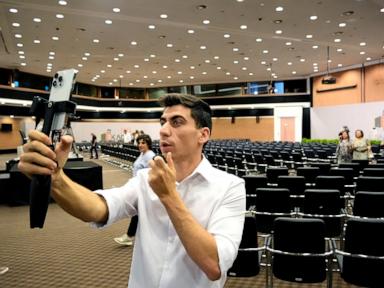
The decision to remain in the European Parliament is a strategic retreat to safer, more profitable ground. Brussels provides an institutional shield and an unmatched laboratory for digital content generation. As an independent MEP, Panayiotou faces few party-line constraints. He uses his committee access and parliamentary privileges to pull back the curtain on EU bureaucracy, filming the inner workings of European chambers to feed his millions of social media followers.
It is an incredibly efficient business model. The European Parliament pays a base monthly salary of over 10,000 euros, supplemented by generous general expenditure allowances, travel budgets, and staff allocations. For an influencer, this is not just a political mandate; it is a fully subsidized production studio funded by European taxpayers.
Returning to Nicosia to sit in a 56-member domestic parliament would mean trading international visibility for grueling local legislative battles. In Cyprus, he would be forced to vote daily on mundane regulatory bills, tax adjustments, and local zoning laws under the close scrutiny of a cynical domestic press corps. By ceding the national seat to Yiannis Laouris, Panayiotou keeps the Direct Democracy brand alive at home while maintaining his primary stage in Brussels.
The Slump and the Rise of Hard Nationalism
The numbers from the latest election show that influencer politics is experiencing diminishing returns. The 5.4% captured by Direct Democracy represents a steep drop from the 20% Panayiotou commanded just two years prior. Voters seeking a genuine rejection of the status quo are moving elsewhere.
While Panayiotou focused on digital direct democracy and viral videos, the ultranationalist National Popular Front, known as ELAM, captured the momentum. ELAM secured nearly 11% of the total vote, doubling its parliamentary presence to eight seats. The far-right party capitalized on deep systemic anger over immigration and inflation by offering structured, ideological opposition rather than digital experiments.
Disenchanted voters who used Panayiotou as a protest vote in 2024 are discovering that a lack of clear political positions offers no protection against deteriorating economic realities. When a movement prides itself on having no ideology, it leaves its base vulnerable to factions that possess highly disciplined, aggressive ones.
The Liabilities of Trial and Error Governance
Operating a political career through a philosophy of trial-and-error has generated severe reputational liabilities. In Brussels, Panayiotou has faced intense blowback for a series of erratic policy stances and public statements that alienated mainstream European factions.
He courted severe pushback by advocating for open negotiations with Russia and publicly questioning the International Criminal Court regarding the unlawful deportation of Ukrainian children. Furthermore, the European Parliament Disability Intergroup formally requested disciplinary action against him following derogatory remarks he made during a podcast regarding individuals with intellectual disabilities. The resulting institutional backlash from the Cyprus Paralympic Committee and European lawmakers underscored a fundamental truth. A provocative remark that generates millions of views on TikTok can trigger an institutional crisis in an international parliament.
The decline of Direct Democracy's electoral strength indicates that European electorates are beginning to differentiate between authentic anti-establishment critique and mere political amateurism. The strategy of staying in Brussels preserves Panayiotou’s career for now, but it signals the end of the uncritical honeymoon period for Europe's influencer politicians. Electorates are learning that when you vote for a performer, the performance eventually replaces the policy.